Moving to St Albans? The Complete 2026 Guide to Living in St Albans
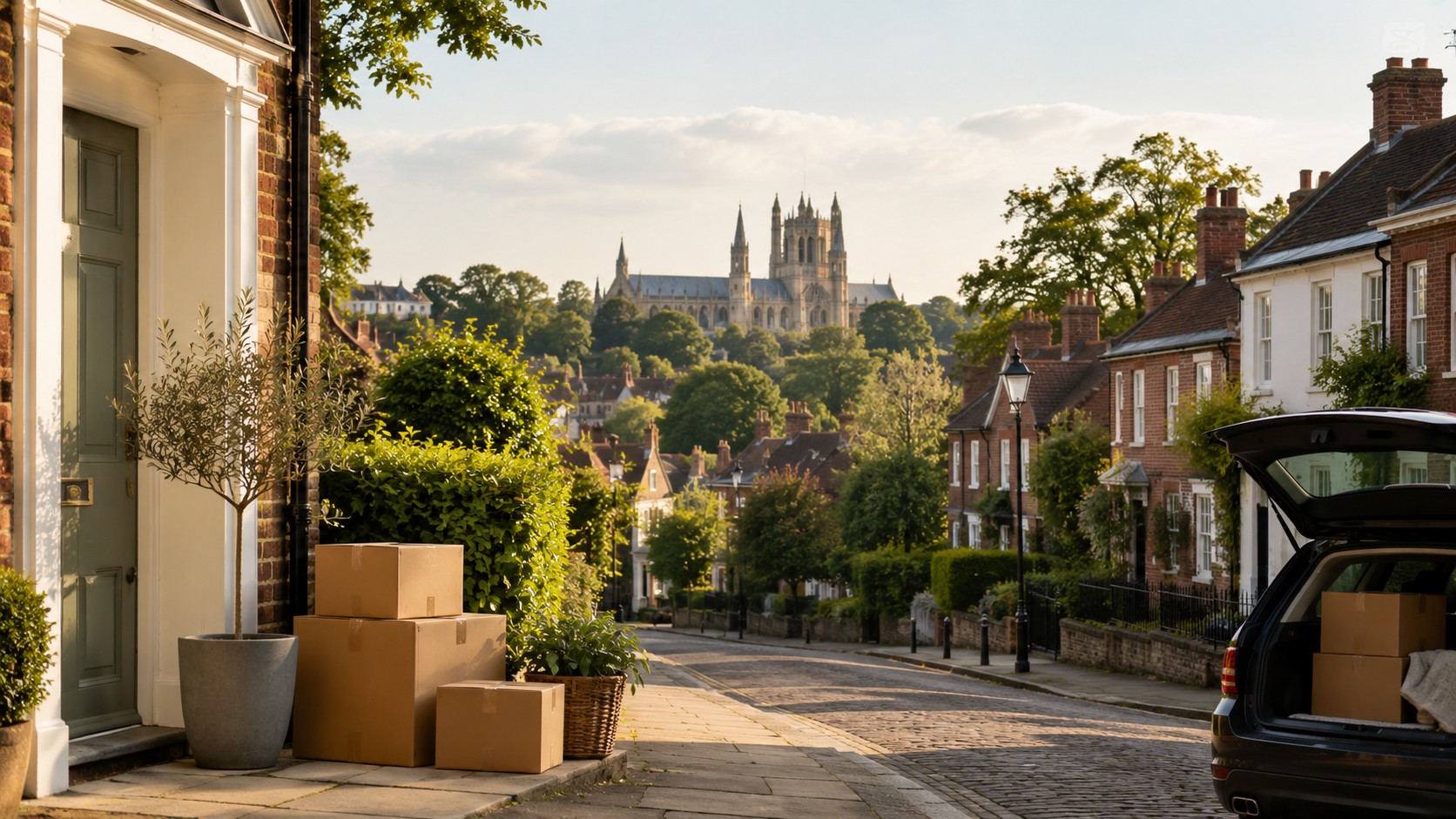
Thinking about moving to St Albans?
You are certainly not alone. This historic Hertfordshire city has long attracted people who want to stay within easy reach of London while gaining access to green spaces, established neighbourhoods, schools, restaurants and a busy city centre.
But deciding whether you actually want to live in St Albans involves more than checking the train time to London.
How expensive is it? Which parts of St Albans should you look at? What is the commute really like? Is it practical with children? What should you arrange before moving day?
This guide covers the things worth knowing before you make the move.
Is St Albans a Good Place to Live?
For many people, the attraction of St Albans is the balance it offers.
It is a historic city rather than a newly developed commuter town, so you get a proper centre with shops, restaurants, pubs, markets and centuries of history. At the same time, London remains very accessible by train.
St Albans is particularly popular with commuters and families, although the property prices reflect that demand.
Some of the biggest reasons people consider moving to St Albans include:
Fast trains into London
A choice of established residential neighbourhoods
Well-known local schools
Large parks and green spaces
A lively city centre
Independent shops, restaurants and cafés
Easy access to surrounding Hertfordshire countryside
A strong sense of history and character
The main drawback is cost. Buying or renting in St Albans is considerably more expensive than in many neighbouring areas, so your budget may ultimately determine which parts of the city you consider.
Where Is St Albans?
St Albans is in Hertfordshire, north of London.
The city sits close to major roads including the M1, M25 and A1(M), making it convenient for travelling around Hertfordshire and further afield.
St Albans itself is fairly compact, but the wider district includes a mixture of suburban areas, villages and countryside.
This means two homes described as being in the "St Albans area" can offer very different lifestyles.
Someone living close to St Albans City station may be able to walk into the centre and commute easily by train, while someone living further towards Marshalswick, Jersey Farm or one of the surrounding villages may rely much more heavily on a car.
That is why it is worth looking at the exact neighbourhood rather than simply searching for properties under "St Albans".
Commuting From St Albans to London
The commute is one of the biggest reasons people move here.
St Albans City station is on the Thameslink network, with direct services into central London.
According to Thameslink, the average journey from St Albans City to London St Pancras is around 28 minutes, while the fastest services can take approximately 21 minutes.
Services also continue to other central London stations, depending on the train, making St Albans particularly convenient for people working around St Pancras, Farringdon, City Thameslink, Blackfriars and London Bridge.
If commuting is going to be part of your everyday routine, however, don't just look at the train journey.
Consider the complete door-to-door trip:
How far is the property from St Albans City station?
Will you walk, cycle, drive or take a bus?
Is parking required?
How often will you travel into London?
What will your season tickets or regular fares cost?
What time would you realistically leave home each morning?
A property that looks perfect on Rightmove might feel very different after you have tested the school run and station journey at 8am.
St Albans Abbey station
St Albans also has St Albans Abbey station, which connects towards Watford Junction via the Abbey Line.
It serves a different part of the city from St Albans City station, so check which station is actually convenient for the property you are considering.
How Much Does It Cost to Buy a House in St Albans?
St Albans is an expensive property market.
According to the Office for National Statistics, the average house price in the St Albans local authority area was approximately £638,000 in May 2026.
That was up around 3% compared with May 2025.
Average prices also vary significantly depending on property type:
Detached: approximately £1,224,000
Semi-detached: approximately £758,000
Terraced: approximately £569,000
Flats and maisonettes: approximately £327,000
The average amount paid by a first-time buyer was around £471,000 in May 2026.
These figures cover the local authority rather than every individual street within the city, and property prices can change considerably depending on location, school admissions, proximity to the station, property condition and size.
It is therefore better to use the figures as a general benchmark rather than an estimate of what a particular St Albans home should cost.
How Much Does It Cost to Rent in St Albans?
Renting is not particularly cheap either.
ONS data shows the average private monthly rent across St Albans was approximately £1,931 in June 2026.
By number of bedrooms, average rents were approximately:
1 bedroom: £1,270 per month
2 bedrooms: £1,631 per month
3 bedrooms: £2,018 per month
4+ bedrooms: £2,905 per month
Rental prices obviously vary depending on the specific property and location, but the numbers are useful when working out whether moving from London to St Albans will actually reduce your housing costs.
For some households it may provide more space for the money.
For others, particularly those moving from cheaper parts of Greater London or elsewhere in the UK, St Albans can come as a surprise.
Popular Areas to Live in St Albans
There isn't one "best area of St Albans". The right place depends on whether you prioritise the station, schools, larger houses, green space, city-centre living or budget.
Here are several areas people commonly consider:
Fleetville and Clarence Park
Fleetville sits east of the city centre and is particularly convenient for St Albans City station.
You will find plenty of Victorian and Edwardian housing alongside shops and businesses around Hatfield Road.
This area can appeal to commuters who want to be within walking distance of the station as well as families who like having local amenities nearby.
Clarence Park provides useful green space and the city centre remains relatively accessible on foot.
If you are viewing houses here, check the exact walking time to the station rather than relying on the property's description.
Bernards Heath
Bernards Heath lies north of the city centre and offers a mixture of established family homes and residential streets.
The heath itself provides open green space, while the city centre and station can still be accessible depending on exactly where you live.
It is often considered by families who want a residential feel without moving too far away from central St Albans.
Marshalswick
Further north-east, Marshalswick feels more suburban.
You'll generally find more inter-war and post-war houses here, including larger family properties.
There are local shops, schools and green spaces, but parts of Marshalswick are considerably further from St Albans City station.
If you expect to commute into London several days a week, test that journey before choosing a house.
A larger home can be appealing, but an extra 15 or 20 minutes getting to the station twice every working day adds up quickly.
St Michael's and the Verulamium area
For history and character, the area around St Michael's and Verulamium is difficult to ignore.
You'll be close to Verulamium Park, the Roman museum, historic streets and St Albans Cathedral.
This is one of the parts of the city where St Albans really feels different from a typical commuter suburb.
Period properties can command a premium, but people wanting character, greenery and access to the city centre may find the location appealing.
St Stephens and Sopwell
South and south-west of the centre, St Stephens and Sopwell offer another mixture of established homes, local facilities and access towards the city centre.
Different streets can feel quite different, so this is an area where visiting at different times of day is particularly useful.
Jersey Farm and New Greens
If you want a more suburban environment and aren't as concerned about walking to the main station, areas further north such as Jersey Farm and New Greens may be worth exploring.
These areas can suit families looking for residential streets and more modern housing.
St Albans city centre
Living centrally puts restaurants, shops, pubs, the market and historic streets practically on your doorstep.
The trade-off can be parking, property size and price.
If you are buying a flat or period property centrally, also think carefully about:
Parking arrangements
Permit eligibility
Storage
Noise
Access for a removals van
Whether the property is listed or within a conservation area
These details are very easy to overlook when you are focused on the property itself.
Explore St Albans Before You Move
Before choosing a property, it is worth looking beyond the house itself.
The postcode you choose can affect everything from property prices and Council Tax to nearby schools, green spaces, broadband and the services available around your new home.
With the Movly Area Guide, you can explore local information for the area you are considering before you move. Enter the postcode you are thinking about and check useful moving insights in one place, including:
House prices and recent property sales
Council Tax
Local schools
Green spaces
Broadband
Essential local services
Energy performance information
It can be particularly useful if you are comparing different parts of St Albans and want to understand what everyday life around each potential new address could look like.
Explore your new area with the Movly Area Guide.
Already found your new home? Once you have your new address, add it to Movly and the app will show you useful local insights around your new area, helping you get familiar with what’s nearby before moving day.
Moving to St Albans With Children
St Albans is particularly well known as a family destination, but if schools are important to your move, do your research before committing to a property.
Hertfordshire County Council publishes admission arrangements for schools throughout the county, including St Albans schools such as Fleetville, Bernards Heath, Camp, Maple and others. Secondary schools may also operate priority areas or their own admissions arrangements.
Don't assume that:
"The house is near the school, so we'll definitely get a place."
Admission rules can involve distance, sibling priority, faith criteria, priority areas and other conditions depending on the school.
Before exchanging contracts or signing a tenancy, check:
Which schools are actually near the property.
The current admissions criteria.
Previous allocation information where available.
Whether places are currently available if you are moving during the school year.
How your school run would work in practice.
Estate-agent descriptions such as "close to excellent schools" should be the beginning of your research, not the end of it.
Parks and Outdoor Space in St Albans
One of St Albans' biggest advantages is the amount of green space close to the city.
Verulamium Park
Verulamium Park covers around 175 acres close to the city centre and has Green Flag and Green Heritage Site status.
The park sits on the site of the Roman city of Verulamium, and parts of the Roman city walls remain visible.
It is a popular place for walking, running, picnics, sport and days out with children.
Verulamium Museum
Next to the park is Verulamium Museum, built on the site of one of the largest Roman cities in Britain.
Its collections include Roman objects and mosaics, with family activities also available.
For families moving from a more built-up part of London, having this amount of green and historic space so close to the centre can be one of St Albans' biggest attractions.
St Albans City Centre, Shopping and Markets
St Albans has a proper city centre rather than simply a railway station surrounded by housing.
You'll find a combination of high-street shops, independent businesses, cafés, restaurants and pubs.
One particularly recognisable part of local life is the St Albans Charter Market.
The council operates the market on Wednesdays and Saturdays, with additional specialist markets including a second-Sunday market.
The city also has a very long history.
Modern St Albans developed around the site of Roman Verulamium and the shrine of St Alban. St Albans Cathedral's history stretches across centuries, with the Norman rebuilding beginning after the Norman Conquest.
You don't have to be particularly interested in history to live here, but it gives the centre a character that many commuter locations simply don't have.
Driving and Parking in St Albans
This is one of those practical details worth investigating before you move.
Some parts of central St Albans operate Controlled Parking Zones.
If your new home is within an eligible CPZ, you may need a residents' parking permit. The council's permits are virtual, and eligibility depends on the property and vehicle.
Most importantly for moving day: if your removals company needs to reserve restricted parking outside your property, you may need to organise a parking suspension.
St Albans City and District Council currently says parking suspension applications should be made at least 10 days in advance.
That's exactly the kind of small moving task that is very easy to discover too late.
Before moving day, check:
Can the removals van stop directly outside?
Is the road within a Controlled Parking Zone?
Will you need a parking suspension?
Are there narrow streets or access restrictions?
Is there a driveway?
Will your new property require a residents' permit?
Your removals company will thank you for checking.
Moving From London to St Albans
A significant number of people considering St Albans are looking for an alternative to London without completely giving up access to it.
The appeal is understandable.
You can potentially gain more residential space and easier access to parks while keeping a relatively short train commute into central London.
But don't automatically assume that moving outside London means everything becomes cheaper or easier.
St Albans property prices are high, commuting costs need to be considered, and households living further from the station may find themselves using their car more often.
When comparing London with St Albans, look at the entire monthly picture:
Mortgage or rent
Rail travel
Car costs
Parking
Council Tax
Childcare
School travel
Utilities
Your actual commuting time
You may still decide St Albans offers a better lifestyle for your household, but it is worth comparing real numbers instead of property prices alone.
Broadband and Utilities When Moving to St Albans
Once you have found your home, there is another part of moving that isn't nearly as exciting: transferring everything connected to it.
Before moving, remember to organise:
Gas and electricity
Water
Broadband
Council Tax
Home insurance
TV Licence
Meter readings
Address changes
Broadband is particularly worth checking early.
Availability and speeds can differ from one property to another, even within the same city. Check your new postcode, compare providers and find out whether an engineer visit will be necessary.
If you are moving from another area, don't assume the broadband package you currently have will be available at your St Albans address.
Movly can help you compare broadband and utility options for your new home as part of your moving plan. You can also keep a record of meter readings and other important moving tasks in one place. Try Movly.
Your Moving to St Albans Checklist
Once your move is confirmed, start organising the practical side early.
Alongside the usual packing and moving admin, there are a few St Albans-specific things worth checking before moving day:
Check school admissions and childcare if relevant.
Confirm your removals company and moving-day access.
Check whether your new street has parking restrictions.
Apply for a St Albans parking suspension in advance if your removals van will need reserved space.
Arrange broadband and check what speeds are available at your new postcode.
Organise gas, electricity and water accounts.
Update your Council Tax details.
Take final meter readings when leaving your old home and opening readings at your new property.
Apply for a residents' parking permit if your new address requires one.
Update your address with important organisations and local healthcare providers.
Need the full moving timeline?
There is a lot more to remember than what happens on moving day.
Our Ultimate Moving Checklist takes you through the entire move step by step - from 8 weeks before moving day through to settling into your new home.
It covers decluttering, packing, removals, broadband and utilities, address changes, meter readings, moving-day essentials and many of those small jobs that are surprisingly easy to forget.
And once your move is underway, you can use Movly to keep your personalised checklist, reminders and moving tasks organised in one place - so you don't have to keep the whole move in your head.
Keep Your St Albans Move Organised With Movly
Moving house creates a surprising amount of mental admin.
You are trying to remember what needs packing, which company you've contacted, whether you've changed your address with your bank, when the broadband engineer is coming and which box contains the kettle.
That's exactly what Movly is designed to make easier.
With Movly, you can keep your move organised with features including:
A personalised moving checklist
Moving tasks and reminders
Smart box tracking
Shared tasks with your partner or family
Address-change organisation
Broadband comparison
Utilities comparison
Moving-day planning
Instead of keeping pieces of your move across notes, emails, screenshots and your memory, you can organise everything in one place.
You don't have to remember everything. Movly will.
Looking for a Cheaper Alternative to St Albans?
St Albans has a lot to offer, but its property prices can put it out of reach for some buyers.
If you like Hertfordshire but want to stretch your budget further, it may be worth comparing nearby areas such as Welwyn Garden City, Hatfield, Hemel Hempstead, Stevenage, Hitchin, Ware or Hertford, depending on your priorities around commuting, schools and lifestyle. According to provisional ONS local-authority figures for May 2026, average house prices were around £454,000 in Welwyn Hatfield, £455,000 in Dacorum, £460,000 in East Hertfordshire, £417,000 in North Hertfordshire and £318,000 in Stevenage. Property prices can vary significantly within each area, so compare individual postcodes rather than relying on district averages alone.
Movly Area Guide can help you compare local insights for different postcodes before you decide where to move.
Frequently Asked Questions About Moving to St Albans
Is St Albans a good place to live?
St Albans is popular with commuters and families because it combines fast London rail connections with parks, schools, a historic city centre and established residential neighbourhoods. However, housing costs are high, so whether it is right for you will depend heavily on your budget and priorities.
Is St Albans expensive?
Yes. St Albans is one of the more expensive areas in the East of England. The average house price across the St Albans local authority area was approximately £638,000 in May 2026, while average private rent was approximately £1,931 per month in June 2026.
How long is the commute from St Albans to London?
Thameslink reports an average journey of around 28 minutes between St Albans City and London St Pancras, with the fastest journeys taking around 21 minutes.
Remember to add the journey between your home and the station when calculating your actual commute.
Is St Albans good for families?
St Albans has numerous schools, parks, sports facilities, residential neighbourhoods and family attractions. School admission rules vary, however, so parents should check the current Hertfordshire admissions information for their chosen address rather than assuming proximity guarantees a place.
What are the best areas to live in St Albans?
Popular areas include Fleetville, Clarence Park, Bernards Heath, Marshalswick, St Michael's, Verulamium, St Stephens, Sopwell and Jersey Farm.
The best location depends on your priorities. Commuters may value proximity to St Albans City station, while families looking for larger homes may consider more suburban parts of the city.
Can I live in St Albans without a car?
It is possible, particularly if you live close to the city centre or St Albans City station. If you choose one of the neighbourhoods further from the centre, a car may become considerably more convenient.
Before choosing a property, test the routes you'll actually use for work, school, shopping and childcare.
What should I check before moving to St Albans?
Alongside the property itself, check:
School admissions if relevant
Distance to the station
Broadband availability
Parking restrictions
Residents' permit eligibility
Council Tax
Moving-van access
Local amenities
Your real commuting costs
A beautiful house isn't necessarily the right house if everyday logistics don't work for you.
Final Thoughts: Is Moving to St Albans Worth It?
St Albans has plenty going for it.
You have fast connections into London, an attractive historic centre, large green spaces, established neighbourhoods, markets, restaurants and a strong choice of amenities.
The compromise is largely financial.
Property prices and rents are high, and the most desirable combination of station access, space and location usually comes at a premium.
So before moving to St Albans, spend some proper time here.
Walk from potential homes to the station. Visit at rush hour. Explore the neighbourhood on a weekend. Check school admissions rather than relying on property descriptions. Look at parking. Calculate the full cost of commuting.
The more you understand how your everyday life would actually work, the easier it becomes to decide whether St Albans is the right place for your next home.
And once you've made the decision?
That's when the moving checklist begins.
Plan smarter. Move easier with Movly.
References
Office for National Statistics: Housing prices in St Albans
Thameslink: St Albans to St Pancras
Hertfordshire County Council: School admissions and transport
St Albans City and District Council: Verulamium Park
St Albans City and District Council: Markets | St Albans City and District Council
St Albans City and District Council: Parking permits and suspensions
St Albans Museums: Verulamium Museum
St Albans Cathedral: Our History
Office for National Statistics: Housing prices in your area - Office for National Statistics