Moving House Checklist UK: The Ultimate Step-by-Step Moving Guide
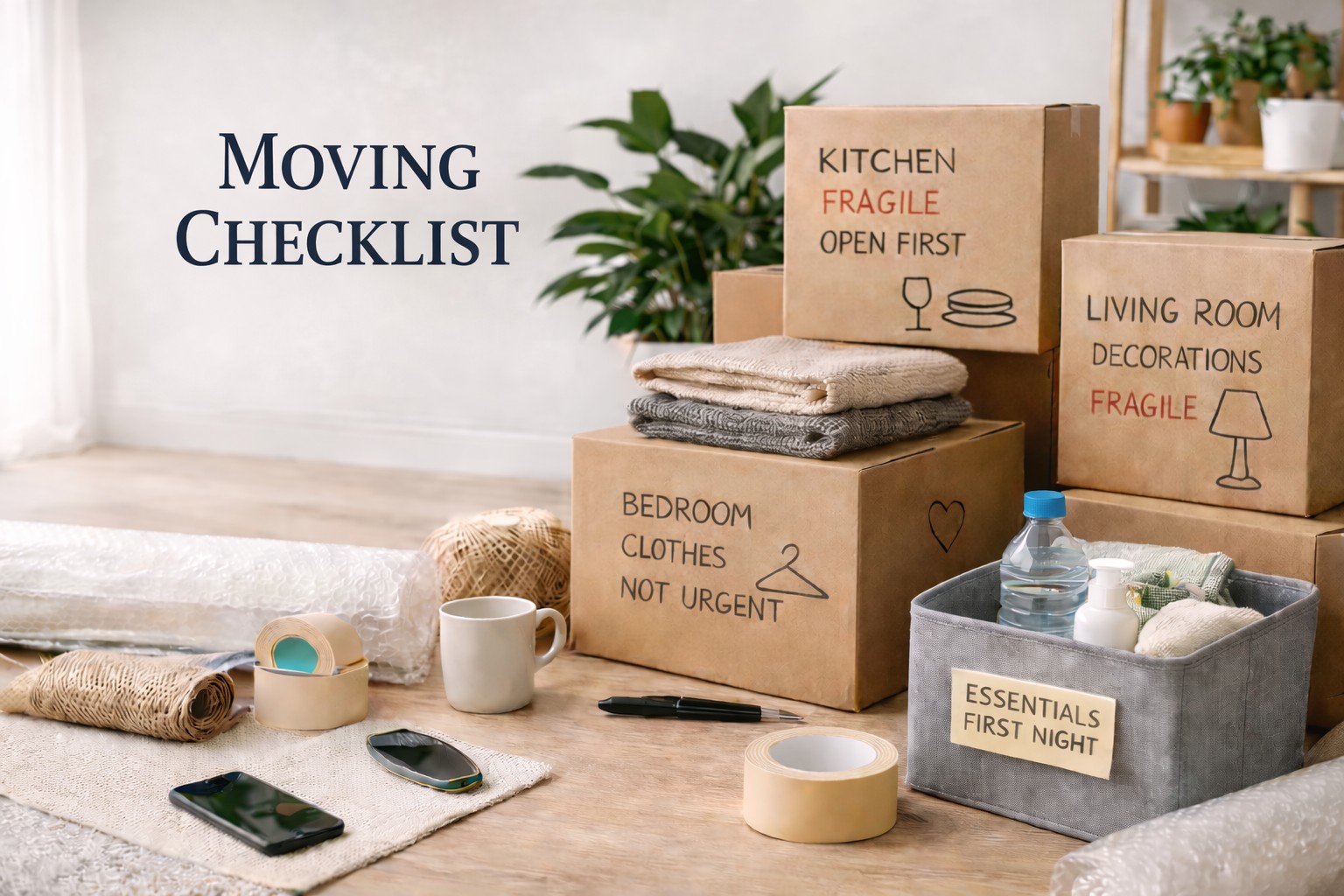
Moving house in the UK involves dozens of tasks, from packing and organising removals to updating your address and setting up utilities. Without a clear plan, it can quickly feel overwhelming.
A UK survey commissioned by Legal & General found that 57% of people consider moving house to be the most stressful life event, ranking it above having a child or starting a new job.
Studies show that planning ahead and breaking tasks into manageable steps can significantly reduce moving-related stress.
This moving house checklist UK guide explains exactly what to do before, during and after your move, helping you stay organised and avoid common mistakes.
8 Weeks Before Moving
Start planning and organising early:
Decide on a moving date
Book a removal company or hire a van
Start decluttering your home
Create a moving folder for important documents
Measure large furniture to ensure it fits
Start collecting boxes, tape and packing supplies
4–6 Weeks Before Moving
Focus on logistics and early packing:
Begin packing non-essential items
Notify your landlord or estate agent
Arrange time off work
Research parking permits
Transfer or arrange school places
Start using up food from your freezer
2–3 Weeks Before Moving
Time to handle admin tasks:
Redirect your mail with Royal Mail
Update your address with:
Banks and credit providers
Insurance companies
Pension providers
Mobile providers
Subscription services
Inform your GP and dentist
Arrange pet care or transport
Order additional packing materials
You can also read our guide:
Things People Forget to Pack When Moving House
https://www.movly.uk/articles/things-people-forget-to-pack-when-moving-house
1 Week Before Moving
Final preparations:
Confirm arrangements with your removal company
Pack most remaining items
Label boxes clearly
Prepare a first-night essentials box
Defrost and clean your fridge and freezer
Return borrowed items
Moving Day
Stay organised and keep essentials accessible:
Take gas, electricity and water meter readings
Photograph the readings
Check cupboards and drawers are empty
Leave keys for the new owners or landlord
Lock all windows and doors
Keep important documents and valuables with you
Carry out a final clean
Things People Commonly Forget When Moving House
Even the most organised movers overlook small but important tasks:
Redirecting mail
Updating driving licence
Updating council tax details
Taking meter readings
Packing a first-night essentials box
Returning keys
Informing GP and dentist
Completing these small tasks can save time and reduce stress later.
Money-Saving Moving Tips
Move midweek or mid-month when costs are often lower
Compare multiple removal company quotes
Collect free boxes from local shops
Sell, donate or recycle unwanted items
Ask friends or family for help where possible
New Home Safety Checklist
When you arrive:
Test smoke alarms
Test carbon monoxide alarms
Locate the stopcock
Locate the fuse box
Check all window and door locks
Familiarise yourself with emergency exits
Moving House Checklist UK: Key Things to Remember
Start planning 6–8 weeks in advance
Update your address with all relevant organisations
Take meter readings on moving day
Prepare a first-night essentials box
Keep important documents with you
Following a structured checklist is one of the most effective ways to stay organised and reduce stress.
Make Moving Easier With Movly
Moving house involves more than just packing boxes.
With Movly, you can:
Follow a step-by-step moving checklist
Set reminders for important tasks
Share responsibilities with your partner
Compare and switch utilities and broadband
Track address updates
Explore your new area
Organise boxes using Smart Box Tracking
Instead of relying on multiple lists or notes, Movly keeps everything organised in one place, helping you manage your move more efficiently.
Final Thoughts
Moving house does not have to be overwhelming.
With proper planning, a clear checklist and the right tools, you can reduce stress, avoid common mistakes and make your move much smoother.
The more organised you are before moving day, the easier settling into your new home will be.
FAQ
What legal steps are involved in moving house in the UK?
If buying:
Hire a solicitor or conveyancer
Exchange contracts before completion
Completion day is when ownership transfers
If renting:
Sign the tenancy agreement
Pay a deposit (protected in a government-approved scheme)
Complete an inventory check
Should I clean before leaving?
Yes, especially if you are renting:
Deep clean the property
Clean appliances, kitchens and bathrooms
Take photographs as proof of condition
How can I make moving day smoother?
Pack everything possible the night before
Keep valuables and documents with you
Take meter readings and photographs
Complete a final walkthrough
How far in advance should I start preparing?
Most experts recommend starting preparations 6–8 weeks before moving day.
What should be in a moving house essentials box?
Phone chargers
Medication
Toiletries
Toilet paper
Tea, coffee and snacks
Kettle
Cleaning supplies
Change of clothes
Pet food
How long does Royal Mail redirection take?
Apply at least:
5 working days before (online)
10 working days before (by post)
You can redirect mail for 3, 6 or 12 months.
What should I pack first when moving house?
Start with non-essential items such as seasonal clothing, books, decorations and spare bedding.
How can I stay organised when moving house?
Using a structured checklist is key. Digital tools like Movly can help track tasks, manage updates and keep everything organised in one place.
Sources
Legal & General. (2018). Home Moving Report.
Available at: https://www.legalandgeneral.com/insurance/home-insurance/moving-house/
(Accessed: 20 July 2026)Royal Mail Redirection Service
GOV.UK – Driving Licence Address Update
NHS GP Registration Guidance
Today’s Conveyancer (2023)