Moving to Hull? The Complete 2026 Guide to Living in Hull
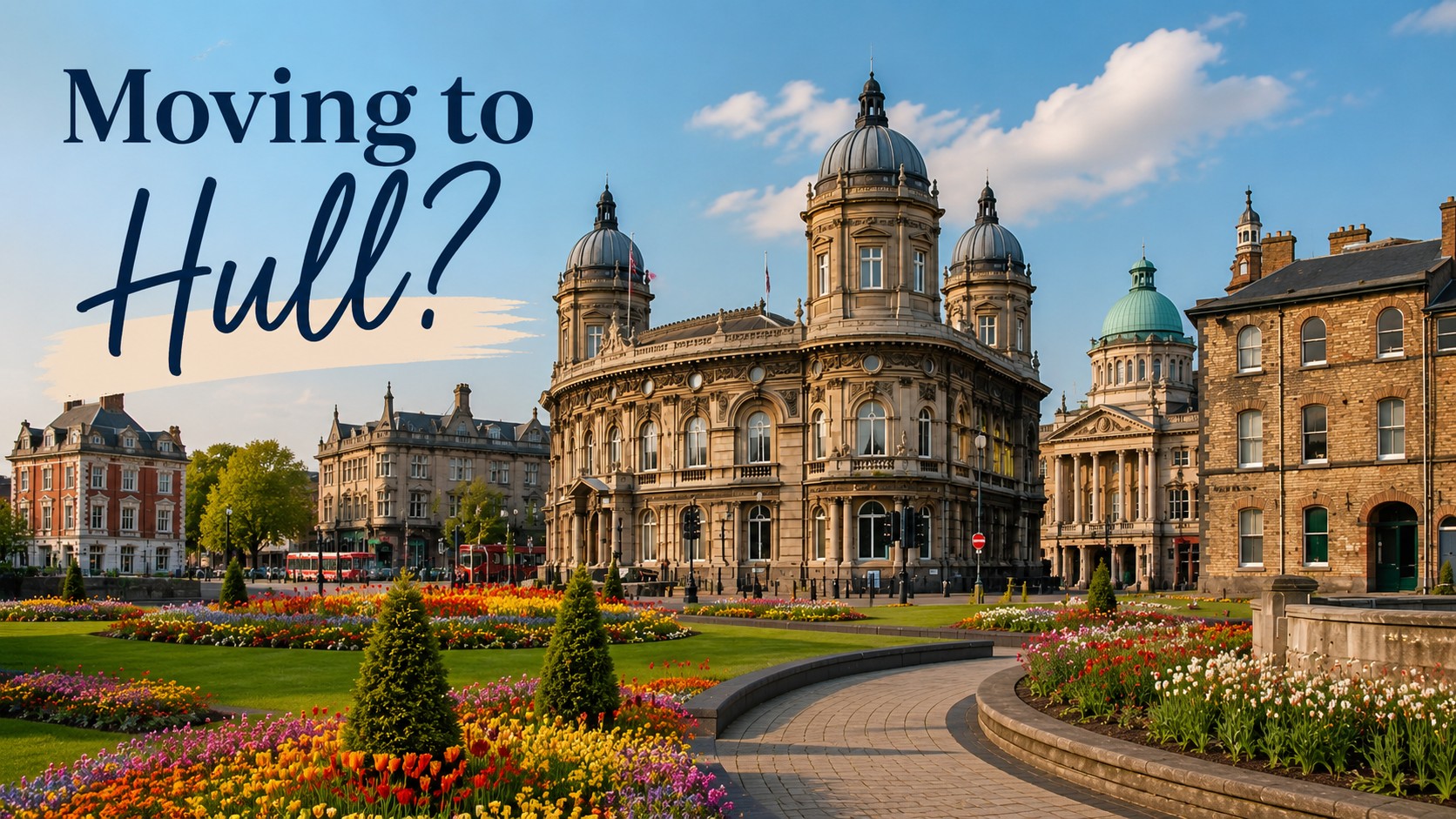
Thinking About Moving to Hull?
Hull, officially known as Kingston upon Hull, is a port city in East Yorkshire with more than 800 years of history closely connected to the sea and maritime trade. Its location on the River Hull and the Humber has played an important role in shaping the city we see today (Hull City Council, 2026).
Hull is also known for its historic architecture and Old Town, where you can still find medieval streets, old warehouses and buildings connected to the city's maritime past. The area has become a popular filming location and has been used in productions including Enola Holmes 2 and Victoria (Hull City Council).
Culture is another big part of the city. Hull was UK City of Culture in 2017 and is home to museums, galleries and cultural attractions, including Ferens Art Gallery and the city's Museums Quarter. The city has also received national recognition as a place to visit, including being ranked second in Time Out's list of the best UK places to visit in 2024.
Hull is also a university city. The University of Hull was founded in 1927 and remains an important part of the city today (University of Hull).
Sport has a strong presence here too. Hull is home to professional football club Hull City, as well as two well-known rugby league clubs, Hull FC and Hull KR, giving the city a particularly strong football and rugby culture.
Is Hull a Good Place to Live?
Like every city, Hull has its advantages and disadvantages. Whether it's a good place to live will depend on what you're looking for, your budget and the area you choose.
One of Hull's biggest advantages is that it can offer a lot of what you would expect from a larger city without some of the costs associated with places such as London, York or Leeds. You have shops, restaurants, museums, a university, sport and plenty of history, while the city continues to develop and regenerate.
Some of the advantages of living in Hull include:
More affordable housing – property prices can be significantly lower than in many other UK cities. We'll look at the actual 2026 prices later in this guide.
Culture and history – Hull has a historic Old Town, museums, galleries and a strong maritime heritage.
A university city – the University of Hull brings students, facilities and a younger population into the city.
Sport – football and rugby league are a big part of local life, with Hull City, Hull FC and Hull KR based in the city.
Ongoing regeneration – Hull continues to invest in its city centre and waterfront, including plans for new homes and public spaces. (Hull City Council, 2026).
Access to the coast and East Yorkshire – living in Hull also puts you within reach of the surrounding countryside and Yorkshire coast.
There are also some potential drawbacks to consider:
Some parts of Hull experience high levels of deprivation, so the area and postcode you choose can make a big difference to your experience of living there. (Hull City Council, 2026).
The city is quite far from some of the UK's biggest employment centres, particularly if regular travel to London is important to you.
The city centre isn't equally busy throughout the day – feedback collected for Hull's City Centre Vision highlighted a quieter early-evening period and concerns around antisocial behaviour in parts of the centre. (Hull City Council, 2025).
Public transport won't work equally well for everyone – where you live and work will make a big difference, so it's worth checking your actual everyday journey rather than assuming you won't need a car.
The important thing to remember is that Hull isn't one single living experience. The city centre, areas close to the university and quieter residential neighbourhoods can feel very different.
That's why, just like with any move, it's better to research the actual area and postcode you're considering rather than deciding whether Hull as a whole is simply "good" or "bad".
Where Is Hull?
Hull, officially Kingston upon Hull, is located in East Yorkshire on the northern bank of the Humber Estuary, where the River Hull meets the Humber.
Located in East Yorkshire
Situated on the River Hull and Humber Estuary
16 miles from the North Sea
Connected westwards by the A63 towards the M62
Close to towns including Beverley and Cottingham
Connected to the wider region by road and rail
The Humber Bridge provides an important connection towards North Lincolnshire
Hull's location has played a huge part in its development as a port city and still influences the character of the city today (Hull City Council, 2026).
Getting Around Hull and Connections to Other Cities
When you're thinking about moving to Hull, it's worth looking not only at transport within the city but also at how easily you can reach other parts of the UK.
Hull Paragon Interchange is the city's main transport hub, bringing rail, bus and coach services together in one place.
Some useful connections include:
Leeds – direct trains are available, with journeys taking around 1 hour 10 minutes on average.
York – direct rail services are also available.
Manchester and Liverpool – TransPennine Express provides direct services from Hull.
London – Hull Trains operates direct services to London King's Cross, so travelling to the capital doesn't necessarily require a change.
Beverley, Bridlington and Scarborough – direct services make it relatively easy to reach other parts of East Yorkshire and the Yorkshire coast. (Travel Hull, 2026).
For getting around Hull itself, buses are mainly operated by East Yorkshire Buses and Stagecoach East Midlands, connecting different parts of the city as well as surrounding areas. (Hull City Council, 2026).
If you're planning to commute regularly, don't look only at the journey between two stations. Check how long it will actually take you to get from the property you're considering to work, including the journey to Hull Paragon Interchange or your local bus connection.
A direct train sounds convenient, but your real everyday commute is what matters when you're deciding where to live.
How Much Does It Cost to Buy a House in Hull?
One of the biggest reasons people may consider moving to Hull is the cost of housing.
According to the latest ONS and HM Land Registry data, the average house price in Kingston upon Hull was £133,000 in May 2026. This is provisional data and prices will of course vary depending on the area, property type and condition of the home (ONS & HM Land Registry, 2026).
Average prices by property type were:
Detached house: £242,000
Semi-detached house: £157,000
Terraced house: £123,000
Flat or maisonette: £78,000
For first-time buyers, the average price paid was around £126,000, while home-movers paid an average of £150,000 in May 2026 (ONS & HM Land Registry, 2026).
What's particularly interesting about Hull is that it's not only cheap when we look at the average house price. In the latest ONS housing affordability data, Kingston upon Hull was one of the two most affordable local authority areas in England and Wales in 2025, based on the relationship between local house prices and earnings (ONS, 2026).
Of course, an average of £133,000 doesn't mean that's what every home in Hull will cost. Prices can look very different depending on the neighbourhood and the type of property you're looking for, so always check recent prices around the actual postcode you're considering.
How Much Does It Cost to Rent in Hull?
If you're planning to rent rather than buy, Hull can also offer relatively affordable options compared with many other parts of the UK.
According to the latest ONS data, the average private rent in Kingston upon Hull was £690 per month in June 2026. This was up from £644 in June 2025, representing a 7.2% increase over the year (ONS, 2026).
Average monthly rents by number of bedrooms were:
1 bedroom: £497
2 bedrooms: £618
3 bedrooms: £739
4 or more bedrooms: £980
For comparison, the average monthly rent across Yorkshire and The Humber was £862 in June 2026, meaning Hull remained below the regional average (ONS, 2026).
Of course, these are averages. The actual rent you'll pay will depend on the area, size and condition of the property, so it's always worth checking prices around the specific postcode you're considering.
Popular Areas to Live in Hull
There isn't one "best" area to live in Hull. The right choice will depend on your budget, lifestyle and whether being close to the city centre, university, schools or green spaces matters most to you.
Here are some areas worth considering:
The Avenues – known for its Victorian and Edwardian properties, tree-lined streets and proximity to Pearson Park. It's also close to Princes Avenue and Newland Avenue, with plenty of cafés, restaurants and local businesses nearby.
Kingswood – a modern residential area on the northern edge of Hull with newer housing, shops, leisure facilities and schools. The area has grown significantly since development began in the 1990s and continues to expand (Hull City Council, 2026).
Victoria Dock – a residential waterfront area close to the city centre and the Humber. It may appeal to people who want relatively easy access to central Hull while living away from the busiest shopping streets.
Newland – close to the University of Hull, with shops, cafés and restaurants around Newland Avenue. Its location makes it particularly popular with students and younger residents.
Sutton – an established area in east Hull with a more residential feel and a historic village centre. It may be worth exploring if you'd prefer to live further away from the city centre.
Hull City Centre / Old Town – worth considering if you prioritise being close to shops, restaurants, cultural attractions and Hull Paragon Interchange. The trade-off is a busier, more urban environment than Hull's outer residential areas.
You may also come across Hessle, Anlaby and Cottingham when researching the best places to live around Hull. These are popular nearby options with strong connections to the city, but they are actually located in the East Riding of Yorkshire rather than Hull itself.
So, Which Area Should You Choose?
Don't choose an area simply because an online guide tells you it's "the best". Hull's neighbourhoods can offer very different living experiences, and even within the same area the exact postcode can make a difference.
Use the data to narrow down your options, but visit the area too. Walk around, check your real journey to work or school and see whether it actually feels like somewhere you'd want to live.
Is Hull Safe? Crime and Safety
Safety is understandably an important factor when deciding where to live, and Hull, like any city, has areas where crime and antisocial behaviour are more common than in others.
Looking at one crime figure for the whole of Hull won't necessarily tell you what living in a particular neighbourhood will be like. The experience can vary depending on the area and even the postcode, so it's worth looking at local data rather than judging the entire city by one statistic.
Before choosing an area:
Check recent crime data around the postcode you're considering.
Look at the types of crimes being reported, not only the total number.
Compare the data with other areas you're considering.
If possible, visit the neighbourhood during both the day and evening.
Hull Data Observatory provides local community safety information, while official police crime data can help you research the specific area you're considering. Hull also has an ongoing Safer Hull strategy and Crime Prevention Fund supporting local projects designed to reduce crime and antisocial behaviour and improve feelings of safety (Hull City Council, 2026).
Statistics are useful, but they're only one part of the picture. Check the data, visit the area yourself and think about whether it feels right for your everyday life.
Moving to Hull With Children
If you're moving to Hull with children, the area you choose will probably depend on much more than house prices. Schools, nurseries, parks, transport and the everyday school run can quickly become just as important.
Before choosing a property, it's worth checking:
Nearby schools and nurseries
Latest Ofsted reports
School admission criteria
The actual journey to school
Nearby parks and playgrounds
Hull City Council coordinates school admissions for Hull residents, but individual schools can have their own admission arrangements and oversubscription criteria. Living close to a school doesn't automatically guarantee your child a place, so always check the current admission rules before making a decision (Hull City Council, 2026).
It's also worth thinking beyond school ratings. A school might look perfect on paper, but if getting there every morning means a difficult journey across the city, that becomes part of your everyday life too.
Hull also has plenty of parks and outdoor spaces for families, including East Park, Pickering Park and smaller green spaces across the city.
How Movly Can Help With Your Move to Hull
Moving house isn't just about finding the right property. Once you've decided where you want to live, there are still plenty of things to organise before moving day.
Movly is designed to keep different parts of your move together in one place, so you don't have to remember everything yourself or keep jumping between notes, screenshots and different websites.
When planning your move to Hull, you can use Movly to:
Explore the area before you move – use the Movly Area Guide to check useful information around a postcode you're considering, including house prices, Council Tax, schools, green spaces, broadband and local services.
Keep your move organised – follow an 8-week moving timeline with tasks and reminders, while adding your own jobs when you need to.
Compare broadband and utilities – check options available for your new address and start organising them before moving day.
Keep track of your boxes – with Smart Box, you can create a digital record of what's packed and search for an item later to see which box it's in.
Remember the small things – from address changes and meter readings to the jobs that are surprisingly easy to forget when everything gets busy.
Moving to a new city already gives you plenty to think about. Movly won't make those decisions for you, but it can help keep the practical side of your move a little more organised. Try Movly here.
Final Thoughts
Moving to Hull won't be the right choice for everyone, but it can be an interesting option if you're looking for more affordable housing, city amenities and a place with plenty of history and character.
One of Hull's biggest advantages is undoubtedly its property market, but price shouldn't be the only thing you consider. The area you choose, your everyday commute, nearby schools, transport and local crime data can all make a big difference to what living there actually feels like.
Before making your decision, research the specific postcode, visit the neighbourhood and think about what matters most to your everyday life.
Hull has its advantages and disadvantages, but doing your research before you move can help you decide whether it's the right place for you.
Frequently Asked Questions
Is Hull a good place to live?
It depends on what you're looking for. Hull offers relatively affordable housing, a historic city centre, museums and cultural attractions, a university and access to East Yorkshire and the coast. However, deprivation and crime remain important considerations in parts of the city, which is why researching the specific area you're considering matters.
Is Hull an affordable place to live?
Housing is one of Hull's biggest advantages. The average house price in Kingston upon Hull was £133,000 in May 2026, while the average private rent was £690 per month in June 2026. Actual costs vary considerably depending on the property and area (ONS, 2026).
How much does it cost to buy a house in Hull?
The average house price was £133,000 in May 2026. Average prices ranged from around £78,000 for a flat or maisonette to £242,000 for a detached property. First-time buyers paid an average of £126,000 (ONS & HM Land Registry, 2026).
How much does it cost to rent in Hull?
The average private rent in Kingston upon Hull was £690 per month in June 2026. A one-bedroom property averaged £497 per month, while properties with four or more bedrooms averaged £980 (ONS, 2026).
What are popular areas to live in Hull?
Areas worth researching include The Avenues, Kingswood, Victoria Dock, Newland, Sutton and Hull City Centre/Old Town. There isn't one area that will suit everyone, so it's better to compare the specific postcode, transport, property prices, schools and local crime data before making a decision.
Is Hull a good place to live with children?
Hull has a range of schools, parks and residential neighbourhoods, but families should research school admissions as well as simply looking at which school is closest. Hull City Council coordinates admissions for Hull residents, while individual admission authorities set criteria that are used when schools are oversubscribed (Hull City Council, 2026).
References
Office for National Statistics -Housing Prices in Kingston upon Hull - house prices and private rents.
Office for National Statistics - Housing Affordability in England and Wales: 2025 - affordability comparison.
Hull City Council - Old Town Character Appraisal - Hull's history and Old Town.
Hull City Council - Hullywood: Why the Film Industry Has Taken a Shine to Hull - filming in Hull's Old Town.
Time Out – The 15 Best Places to Visit in the UK in 2024 – Hull ranked second in the UK
Travel Hull - Rail Operators and Routes - rail connections.
Travel Hull - Hull Paragon Interchange - transport hub.
Travel Hull - Buses - local bus operators and connections.
University of Hull - Our History - university history.
Hull Data Observatory - English Indices of Deprivation 2025 - deprivation and crime context.
Hull City Council - Secondary School Admissions Guide 2026–27 - admissions and oversubscription criteria.