The True Cost of Moving House in the UK (2026 Guide + Hidden Costs)

Moving house can be a pricey process, we all know that. It often starts with excitement, but then the costs quickly add up. Luckily, most of us don’t move very often.
I have prepared this informative guide to help you understand all the costs you may encounter when moving house in the UK.
Estate Agent Fees (if selling)
Estate agent fees are what you pay a professional (an estate agent) to market and sell your property.
They typically handle:
Listing your home (photos, descriptions, property portals)
Organising viewings with potential buyers
Negotiating offers
Managing the sale process from start to completion
Typical Price Range
£2,000 – £10,000+ total
Usually 0.9% – 3.6% of the property’s sale price
✔ Usually Included:
Property valuation
Listings on major portals
Basic marketing
Buyer negotiations
2. Conveyancing / Solicitor Fees
Conveyancing fees are what you pay a solicitor or licensed conveyancer to handle the legal side of buying or selling a property. They ensure everything is legally correct, from contracts to transferring ownership.
Typical Price Range
Buying:
£800 – £1,800
Selling:
£600 – £1,500
Buying + Selling:
£1,500 – £3,000+
What Affects the Cost
Property price (higher value = higher fees)
Leasehold vs freehold (leasehold costs more)
Location (fees can be higher in London)
Complexity (chains, shared ownership, new builds)
3. Stamp Duty Land Tax
Stamp Duty Land Tax (SDLT) depends on the property price and buyer status (e.g. first-time buyer or existing homeowner). Rates are set by HM Revenue & Customs and published on GOV.UK.
Current Rates (England & Northern Ireland)
£0 – £125,000 → 0%
£125,001 – £250,000 → 2%
£250,001 – £925,000 → 5%
£925,001 – £1.5m → 10%
£1.5m+ → 12%
Example
If you buy a property for £300,000:
0% on the first £125,000 = £0
2% on the next £125,000 = £2,500
5% on the remaining £50,000 = £2,500
Total Stamp Duty = £5,000
Stamp Duty in the UK varies depending on property value, buyer status, and location. Rates may change, so always check the latest guidance.
4. Survey Costs
You don’t always need a survey, but it’s strongly recommended, especially for older properties.
Typical Price Range
£250 – £1,500+ depending on the type of survey
Most buyers choose a Level 2: £400 – £800
More detailed surveys (Level 3): £800 – £1,500+
Prices may be higher for larger or older homes, especially in London.
5. Removal Company Costs
Costs by Property Size (Typical)
1-bedroom flat: £400 – £700
2–3 bedroom home: £800 – £1,500+
Large homes: £1,500 – £3,000+
Removal companies usually provide a fixed quote, based on how long the move will take (often calculated using a daily rate).
Key Factors That Affect Cost
Distance (local vs long-distance)
Volume of items (biggest factor)
Packing services (adds ~£300–£400)
Access (stairs, parking, city locations like London)
6. Packing Materials
Typical Price Range
£50 – £300 total
Breakdown:
Small move: £50 – £100
Average home: £100 – £200
Large home: £200 – £300+
If you are on a budget, consider buying bundles or reusing boxes. If you are unsure what you need, you can explore ready-made packing kits from Movly to simplify the process and avoid overbuying.
Essential Packing Supplies List Example:
· packing tape https://amzn.to/49hJFAo
· moving boxes https://amzn.to/43gt1hb
· markers for labelling https://amzn.to/43tYz2S
· zip-lock bags in different sizes https://amzn.to/49PMicM
· bubble wrap https://amzn.to/4abWFrs
· bin bags https://amzn.to/4uD3PNK
· blankets for protecting furniture https://amzn.to/3Rxyai3
· stretch film https://amzn.to/3PCxVBR
· Fragile labels https://amzn.to/4vgaAoJ
As an Amazon affiliate we may earn a small commission at no extra cost to you.
7. Mortgage Fees
Typical Range
£0 – £2,500+ total
Most buyers pay around £500 – £2,000
Some deals are “fee-free” but may come with higher interest rates.
✔ Included Fees
Arrangement fee (product fee)
Valuation fee
Booking / application fee
Mortgage broker fee (if used)
Funds transfer fee
Account / administration fee
8. Mail Redirection
Mail redirection ensures you don’t miss important post after moving. This is typically done via Royal Mail.
Typical Cost
3 months: £40 – £60
6 months: £60 – £90
12 months: £90 – £120+
What Affects Cost
Length of redirection
Number of people included
Why It’s Important
Prevents missed bills or legal documents
Gives you time to update your address
Reduces risk of identity fraud
Summary Table:
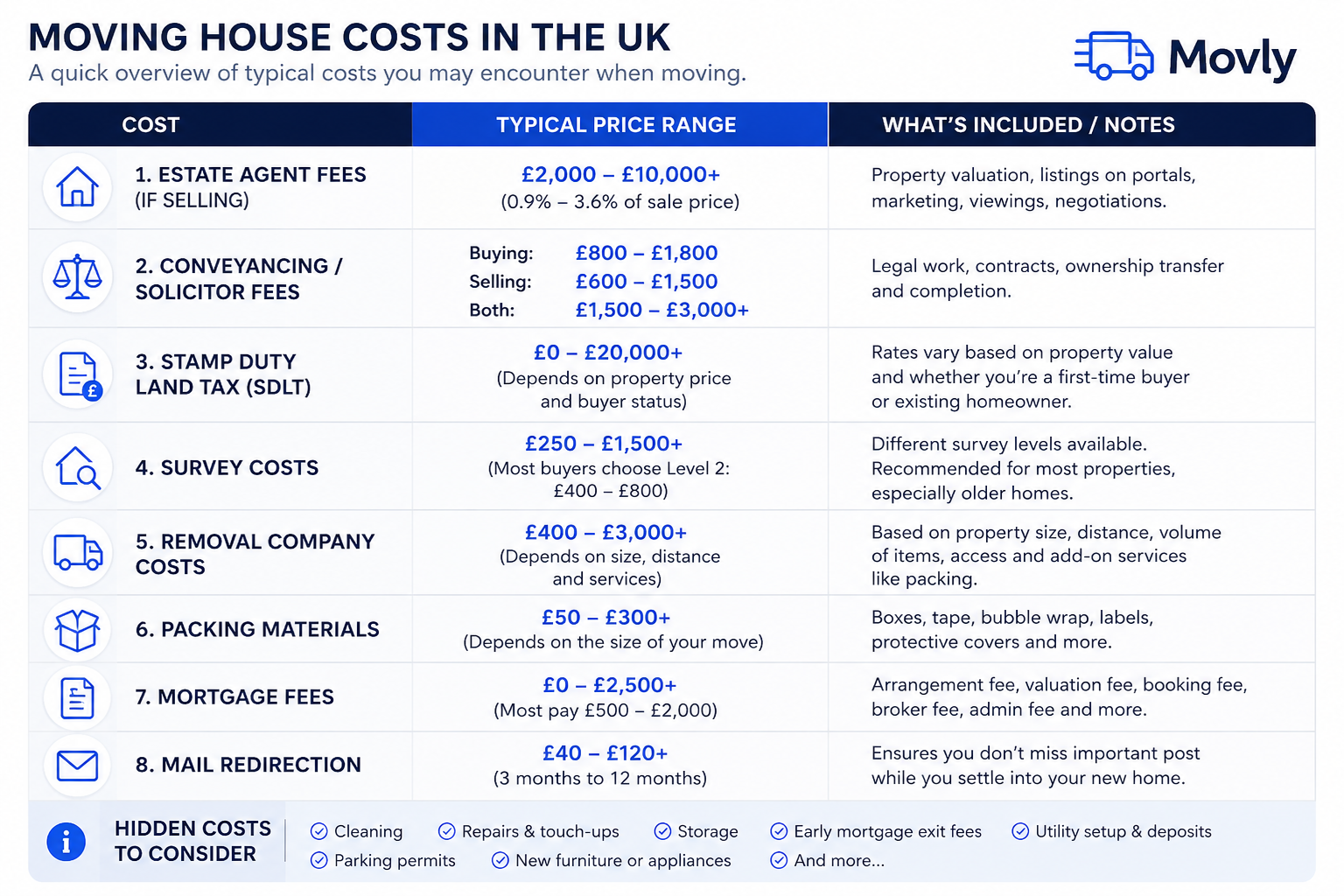
All prices are approximate and based on typical UK costs. Actual prices vary depending on location, property size, service provider and individual circumstances.
Hidden Costs You May Encounter
Cleaning (end-of-tenancy or pre-sale)
Repairs and touch-ups
Storage costs
Early mortgage exit fees
Utility setup & deposits
Parking permits for moving vans
Buying new furniture or appliances
It’s always wise to keep some extra funds aside.
Tips: How to Save Money When Moving
Move mid-week or off-season
Declutter (sell unwanted items)
Compare removal quotes
Pack yourself instead of using full-service
Avoid peak times (summer, weekends)
Step-by-Step Moving Budget Checklist
8–12 weeks before: Budget planning
4 weeks before: Book removals
1 week before: Final cost checks
Moving day: Prepare for last expenses
Planning your move? Read our complete Packing Checklist for Moving House and pack with confidence.
Movly is your all-in-one moving companion, helping you plan, organise and manage every stage of your move. From personalised checklists and Smart Box Tracking to comparing utilities, finding removal companies and exploring your new area, Movly makes moving home simpler, smarter and less stressful. Sign up today on the App or Website.
FAQ:
How much does it cost to move house in the UK?
Moving house in the UK typically costs £10,000 to £20,000+ when buying and selling, depending on the property price and location. Stamp Duty is often the largest cost and can range from £0 to £20,000+, significantly affecting the total.
Can I reduce the cost of moving house?
Yes, you can reduce costs by:
Comparing removal company quotes
Packing your own belongings
Moving during off-peak times
Decluttering before moving
Choosing cost-effective service options
When is the cheapest time to move house in the UK?
The cheapest time to move house is usually mid-week (Tuesday–Thursday) and outside peak seasons.
Moving costs tend to be higher:
During weekends
In summer months
At the end of the month (when most tenancies end)
By choosing an off-peak time, you can often save money on removal companies and services.
References
HM Revenue & Customs (HMRC). Stamp Duty Land Tax (SDLT). https://www.gov.uk/stamp-duty-land-tax
Royal Institution of Chartered Surveyors (RICS). Residential Property Surveys. https://www.rics.org/
Royal Mail. Redirection Service. https://www.royalmail.com/personal/receiving-mail/redirection
MoneyHelper. Mortgages and Buying a Home. https://www.moneyhelper.org.uk/
GOV.UK. Buying and Selling Your Home. https://www.gov.uk/buy-sell-your-home
The Law Society. Using a Solicitor for Conveyancing. https://www.lawsociety.org.uk/
Consumer Rights Act 2015. https://www.legislation.gov.uk/ukpga/2015/15/contents