The Psychology of Moving House: Why a New Home Can Feel Like a Fresh Start
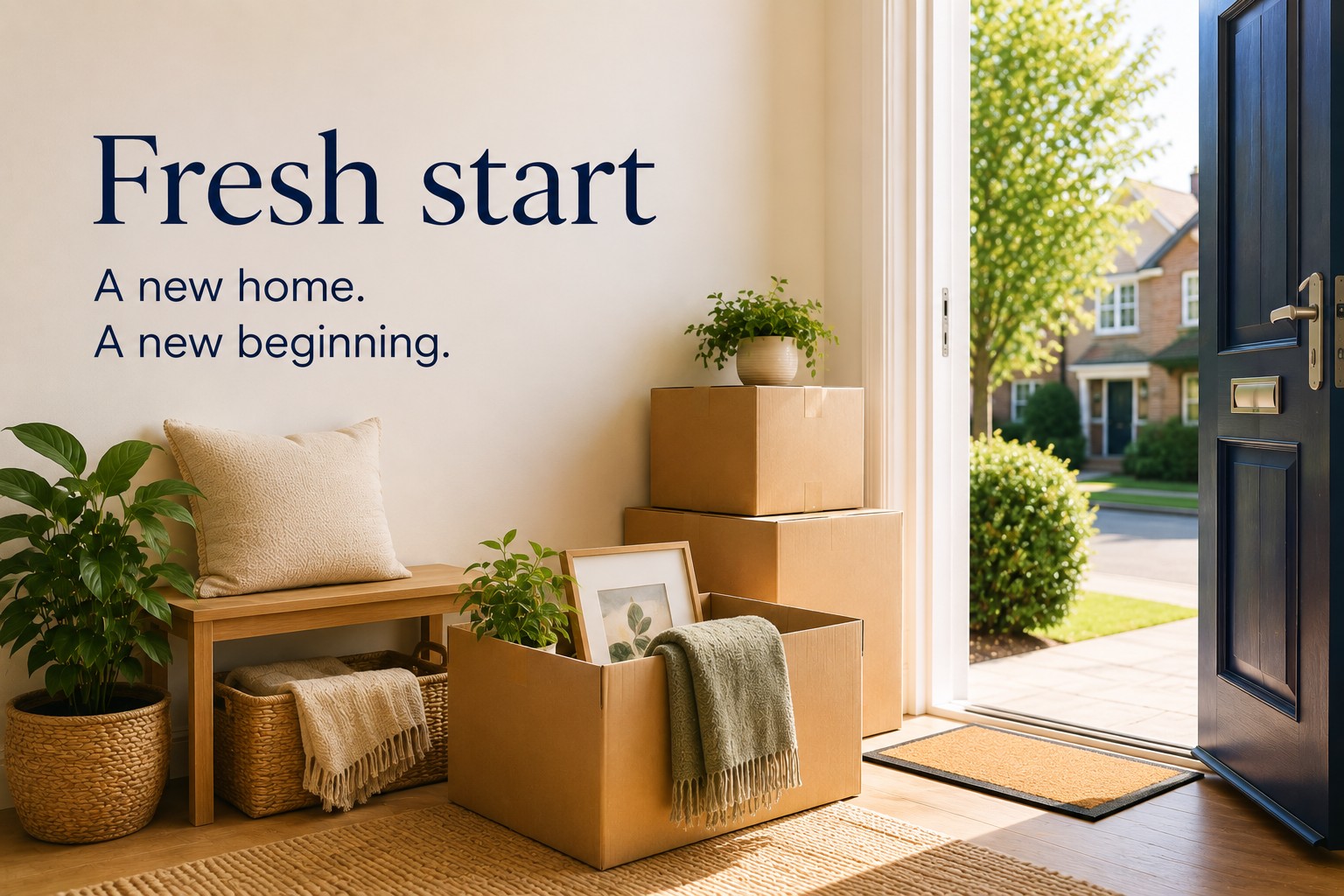
Moving house is usually talked about in terms of boxes, removal vans, paperwork and changing addresses. But moving home can also have a surprisingly powerful psychological effect.
A new home means new surroundings, new routines and often a completely different neighbourhood. The coffee shop you pass in the morning changes. Your journey to work changes. The cupboard where you automatically reach for something is no longer there.
That disruption can feel uncomfortable, but it can also create an opportunity.
Research into motivation and habits suggests that significant transitions can temporarily loosen the connection between our existing routines and the environments that trigger them. A house move may therefore be one of those rare moments when starting a new habit or leaving an old one behind, feels a little easier.
Why Does Moving House Feel Like a Fresh Start?
Have you ever moved into a new home and suddenly wanted to organise everything, start exercising, cook more often or finally establish a better routine?
There may be a psychological reason.
Researchers Hengchen Dai, Katherine Milkman and Jason Riis call this phenomenon the “fresh start effect.”
Their 2014 research found that people's aspirational behaviours increased following significant temporal landmarks such as the beginning of a new week, month, year or semester, birthdays and holidays. The researchers proposed that these landmarks can psychologically separate our present selves from our past imperfections and encourage us to look at the bigger picture.
Think about New Year's Day...Nothing physically changes between 11:59 pm on 31 December and 12:00 am on 1 January, yet January can feel like an opportunity to begin again.
Moving home can create an even more tangible dividing line:
Old home → New home
Old routines → New routines
Previous chapter → Next chapter
Importantly, the original fresh-start study examined temporal landmarks rather than house moves specifically. However, separate research into relocation and habits provides evidence that moving home can create an opportunity for behaviour change.
Moving House Can Disrupt Your Existing Habits
Many everyday habits are connected to our surroundings. We repeat behaviours in the same places and circumstances until environmental cues can start triggering those behaviours automatically.
Moving house changes many of those cues at once. Your kitchen is different. Your commute might change. Your supermarket may be somewhere else. Your evening routine happens in a different room. Even where you leave your keys has to be learned again.
Researchers describe the opportunity created by this type of life change through the Habit Discontinuity Hypothesis.
In a field experiment involving 800 participants, researchers Bas Verplanken and Deborah Roy compared people who had recently relocated with people who had not. They found that a behaviour-change intervention promoting environmentally friendly behaviours was more effective among recent movers. Their findings suggested a potential window of opportunity of approximately three months following relocation. That doesn't mean moving automatically transforms your habits. It means that when the context supporting an old habit changes, there may be an opportunity to consciously decide what you want the replacement behaviour to be.
7 Ways to Use a House Move as a Fresh Start
Instead of trying to reinvent your entire life after moving, choose a few changes that fit naturally into your new environment.
1. Create a New Morning Routine
A different home gives you an opportunity to rethink how your mornings work.
Perhaps you would like to:
prepare breakfast rather than skip it
take a morning walk
stop checking your phone immediately after waking
prepare clothes the evening before
leave home earlier
Rather than recreating your previous routine automatically, decide how you want mornings in your new home to feel.
2. Declutter Before You Move
A fresh start doesn't have to begin after moving day.
Packing forces you to physically handle many of your possessions, making it an ideal opportunity to decide what deserves space in your next home. Ask yourself:
“Would I choose to bring this into my new home if I were starting from scratch?” If the answer is no, consider selling, donating, recycling or responsibly disposing of it.
3. Design Your New Home Around the Habits You Want
Your environment can make desired behaviours easier or harder. If you want to read more, create somewhere inviting to read. If you want less clutter, decide where everyday items will live before they begin accumulating on surfaces. If you want to cook more often, organise the kitchen so the things you use regularly are easy to reach. Instead of only asking “How should this room look?”, ask: “What do I want to do in this room?”
4. Explore Your New Neighbourhood
Moving home doesn't end when the last box is unpacked.
Learning where things are can help an unfamiliar area begin to feel like home.
Find your nearest:
supermarket
GP surgery
pharmacy
park
train or bus stop
gym or leisure centre
café
walking routes
You may even discover opportunities for routines that weren't practical in your previous neighbourhood.
💙 Movly Tip: Moving somewhere new? Movly Local Insights can help you explore nearby supermarkets, GP surgeries, pharmacies, parks, schools, transport links and other useful places around your new home.
5. Establish a Simple Home Organisation System
The first few weeks are when you begin deciding where everything belongs.
Take advantage of that...
Create designated places for post, keys, cleaning products, important documents and everyday household items rather than waiting for clutter to determine the system for you.
The same applies to unpacking.
💙 Movly Tip: With Movly Smart Box Tracking, you can create a digital record of what's packed inside your boxes and use QR labels to help locate items while unpacking.
6. Create New Household Routines
A move is also an opportunity to reconsider how your household works.
You might introduce:
a weekly cleaning routine
meal planning
a household budget
designated laundry days
a Sunday planning session
regular decluttering
shared responsibilities between partners
Small systems are often more sustainable than dramatic lifestyle changes.
7. Don't Try to Change Everything at Once
A fresh start can make us ambitious.
New home. New diet. New exercise routine. Perfect organisation. No clutter. Better finances.
Trying to change everything simultaneously can quickly become overwhelming especially when you are already dealing with the demands of moving.
Choose one or two meaningful changes first. Once those routines feel normal, add another.
Why Your New Home Can Influence Your Identity
A home isn't simply somewhere we keep our belongings. It becomes the setting for everyday life, where we eat, sleep, work, relax, socialise and spend time with family all happens within that environment.
That's why moving can sometimes feel bigger than changing an address. It marks the end of one period and the beginning of another.
You might find yourself thinking:
“In this house, we are going to be more organised.”
“I'm going to cook more.”
“We are going to spend more time outside.”
Those statements aren't really about the property. They are about the life you imagine living there. And that may be one of the most valuable parts of moving: it creates a natural moment to consider which parts of your previous life you want to bring with you, and which you would rather leave behind.
Does Moving House Really Change You?
Not automatically...
A different postcode won't magically eliminate old behaviours, and the motivation associated with a new beginning isn't necessarily permanent.
But relocation changes many of the circumstances surrounding everyday behaviour. Research into habit discontinuity suggests that these periods of contextual change can create opportunities to reconsider existing routines. The goal therefore isn't to become a completely different person because you have moved. It's to use the disruption intentionally.
Ask yourself:
What would I like everyday life in this home to look like six months from now?
Then make the first few small decisions that support that version of your life.
Moving House Is More Than Moving Your Belongings
Moving can be exhausting, expensive and emotional. But among the boxes, address changes and endless moving-day jobs is something easy to overlook: you are building a new everyday environment from scratch. Your old habits don't disappear when the removal van arrives, but many of the cues and routines surrounding them have changed. That gives you an opportunity to be more deliberate about what comes next. So when you move, don't only decide where the sofa belongs. Decide what you want life in your new home to feel like.
💙 Start Your Next Chapter with Movly
A fresh start feels much better when the practical side of moving is under control.
Movly App helps you organise your move in one place, from personalised moving checklists and Smart Box Tracking to utilities, broadband, local insights and services for your new home.
New home. New routines. A more organised move. Now available on Android: App.
Frequently Asked Questions
Why does moving house feel like a fresh start?
Major transitions create a clear psychological separation between one period of life and another. Research on the fresh-start effect shows that salient landmarks can increase aspirational behaviour, while research on habit discontinuity suggests that changes in context including relocation, can provide opportunities to reconsider established routines.
Is moving house a good time to start new habits?
Potentially, yes. Because many habits are linked to recurring contexts, changing your environment can disrupt familiar behavioural patterns. Research involving recent movers has found evidence that relocation can provide a temporary opportunity for behaviour-change interventions.
How can I make a new house feel like home?
Start by establishing familiar comforts alongside new routines. Unpack the rooms you use most, create permanent places for everyday belongings and explore useful places in your neighbourhood. Personalising the space gradually can also help it feel less temporary.
What habits should I start after moving house?
Choose habits that fit naturally into your new environment and priorities. Examples include keeping surfaces clutter-free, establishing a cleaning schedule, meal planning, walking around your new neighbourhood or creating a regular household planning routine.
References
Dai, H., Milkman, K. L. and Riis, J. (2014). The Fresh Start Effect: Temporal Landmarks Motivate Aspirational Behavior. Management Science, 60(10), 2563–2582.
Verplanken, B. and Roy, D. (2016). Empowering interventions to promote sustainable lifestyles: Testing the habit discontinuity hypothesis in a field experiment. Journal of Environmental Psychology, 45, 127–134.
Thomas, G. O., Poortinga, W. and Sautkina, E. (2016). Habit Discontinuity, Self-Activation, and the Diminishing Influence of Context Change: Evidence from the UK Understanding Society Survey. PLOS ONE, 11(4), e0153490.