Moving to Reading: A Complete Relocation Guide
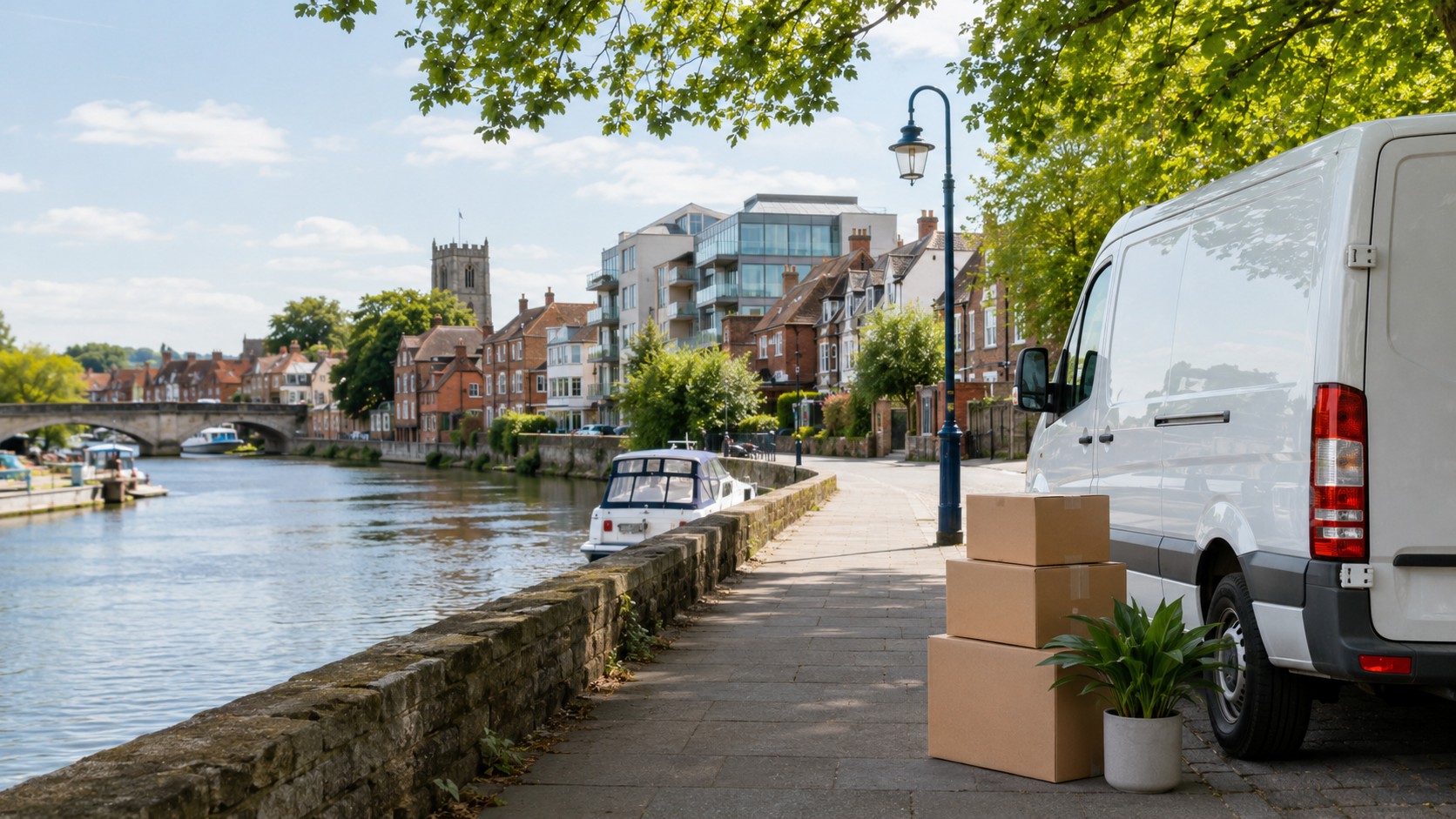
Thinking about moving to Reading?
Reading combines fast connections to London with excellent shopping, employment opportunities, green spaces and a wide choice of neighbourhoods. Its location in the Thames Valley makes it particularly popular with commuters, families, students and professionals working in the technology and business sectors.
Fast trains can reach London Paddington in around 22 minutes, while the Elizabeth line provides another direct route into the capital. Reading is also well connected to Oxford, Bristol and other parts of the South East.
However, like any large town, Reading has its compromises. Property and rental costs remain relatively high, traffic can become congested and the experience of living there varies considerably between neighbourhoods.
This guide covers everything you should consider before moving to Reading, including the best areas to live, commuting, house prices, schools, green spaces, parking and the practical steps involved in organising your move.
Where Is Reading?
Reading is a large town in Berkshire, located in the Thames Valley approximately 40 miles west of central London.
The town sits where the River Kennet meets the River Thames and is surrounded by popular towns and villages such as Caversham, Woodley, Wokingham, Pangbourne and Sonning.
Reading’s location makes it convenient for travelling across southern England. The M4 provides road access towards London, Heathrow Airport, Bristol and South Wales, while the A33 connects Reading with Basingstoke and the M3.
Reading railway station is an important transport hub, with direct services to destinations including:
London Paddington
Oxford
Bristol
Cardiff
Birmingham
Southampton
Gatwick Airport
The Elizabeth line also connects Reading directly with central London and destinations including Bond Street, Liverpool Street and Canary Wharf.
This central location is one of the main reasons Reading attracts commuters, families, students and businesses. However, convenient connections also mean that roads and trains can become particularly busy during peak periods.
Is Reading a Good Place to Live?
Reading is generally considered a good place to live, particularly for commuters, families and professionals who want convenient access to London without living in the capital.
One of Reading’s biggest advantages is its transport network. Fast trains to London Paddington take around 22 minutes, while the Elizabeth line provides direct services through central London. Reading also has convenient rail connections to Oxford, Bristol and other parts of the country.
The town offers:
Excellent transport connections
A wide range of shops, restaurants and entertainment
Strong employment opportunities
Good schools and a major university
Parks, riverside walks and surrounding countryside
Different neighbourhoods to suit families, professionals and students
Reading is also an important centre for technology and business, with many large employers based in and around the Thames Valley.
However, there are some disadvantages to consider. Property and rental prices can be high, roads are often congested during busy periods, and parking can be difficult in central and permit-controlled areas. Some neighbourhoods are also considerably quieter or more desirable than others, so researching the exact area is important before committing to a property.
Overall, Reading offers a useful balance of employment, transport, amenities and green space, especially for people who need regular access to London but want more space than they might be able to afford in the capital.
💙 Movly Tip: Enter your new Reading postcode in the Movly Area Guide to explore local house prices, Council Tax information, schools, green spaces, broadband availability and nearby services before you move.
Best Areas to Live in Reading
Reading has a wide range of neighbourhoods, from busy town-centre apartments to quieter residential areas with larger family homes. The right location will depend on your budget, commute and preferred lifestyle.
Caversham (RG4)
Located north of the River Thames, Caversham is popular with families and professionals. It has independent cafés, restaurants, parks and riverside walks, while remaining close to Reading town centre and railway station.
Property can be more expensive than in some other parts of Reading, and crossing the river by car can be slow during busy periods.
Reading Town Centre (RG1)
The town centre is convenient for commuters who want to live within walking distance of Reading station, shops, restaurants and entertainment.
Most properties are flats or modern developments, making the area particularly suitable for professionals and people who prefer not to rely on a car. However, it can be busier and noisier than Reading’s residential neighbourhoods.
East Reading (RG1 and RG6)
East Reading includes residential areas around Cemetery Junction, Newtown and the University of Reading.
It offers Victorian terraced homes, student accommodation and convenient access to the university, Royal Berkshire Hospital and town centre. The area is lively and diverse, although parking can be limited on some streets.
Tilehurst (RG30 and RG31)
Tilehurst is a well-established residential area west of Reading. It offers a mixture of property types, local shops, schools and access to green spaces.
It is popular with families looking for more space, although travelling into central Reading by road can take longer during peak times.
Earley (RG6)
Earley lies southeast of central Reading and is especially popular with families and university staff. It has suburban streets, schools, parks and convenient access to the University of Reading.
Parts of Earley fall under Wokingham Borough Council rather than Reading Borough Council, so Council Tax, schools and local services may differ.
Woodley (RG5)
Woodley is a separate town east of Reading with its own shopping centre, parks and community facilities. It attracts families looking for a quieter suburban environment while remaining within reach of Reading.
It does not have its own mainline railway station, so commuters may need to travel to Reading, Earley or Winnersh.
South Reading and Green Park (RG2)
South Reading offers convenient access to the M4, Green Park Business Park and Reading Green Park railway station. The area includes modern housing developments as well as more established residential neighbourhoods.
It can be practical for people working locally or commuting by road, but it is farther from Reading’s main town centre than areas such as Caversham or East Reading.
Before choosing a neighbourhood, visit at different times of day and check the exact postcode. Parking rules, school catchments, transport connections and even the responsible local council can change between nearby streets.
💙 Movly Tip: Use the Movly Area Guide to compare schools, transport, green spaces, property information and nearby services around your prospective Reading postcode.
Commuting From Reading to London
Reading is one of the best-connected commuter locations west of London.
Great Western Railway operates fast services between Reading and London Paddington. Journeys typically take around 30 minutes, with the fastest services completing the trip in approximately 22 minutes.
The Elizabeth line also runs directly from Reading through central London, stopping at destinations including:
Ealing Broadway
Paddington
Bond Street
Tottenham Court Road
Liverpool Street
Canary Wharf
Elizabeth line journeys are slower than the fastest services to Paddington, but they can be more convenient for commuters who want to reach central or east London without changing trains.
Reading station also provides direct connections to Oxford, Bristol, Birmingham, Southampton and Gatwick Airport, making the town suitable for people who travel beyond London regularly.
Other local stations include:
Reading West – useful for parts of west and central Reading
Tilehurst – serving western Reading and Tilehurst
Earley – convenient for Earley and parts of east Reading
Reading Green Park – serving Green Park Business Park and nearby developments
The main disadvantages are the cost of rail travel and crowded services during peak periods. Homes within walking distance of Reading station can also command higher prices, so it is worth comparing the cost of living farther away with the time and expense of reaching the station.
House Prices and Renting in Reading
Reading is generally more affordable than London and some premium commuter locations, but housing costs remain relatively high compared with many other parts of the UK.
According to the Office for National Statistics, the average house price in Reading was approximately £361,000 in June 2026.
Average prices by property type were:
Detached properties: £737,000
Semi-detached properties: £457,000
Terraced properties: £363,000
Flats and maisonettes: £231,000
The average private rent in Reading was approximately £1,573 per month in July 2026. However, the amount you pay will depend on the property size, condition and exact neighbourhood.
Properties close to Reading station, the town centre and popular parts of Caversham can command higher prices. Areas farther from the centre may offer more space, but you should consider additional commuting time and transport costs.
Before agreeing to buy or rent, check:
The property’s Council Tax band
Parking or permit requirements
Distance to your preferred station
School catchment areas
Broadband availability
Flood-risk information
Whether the address falls under Reading, Wokingham or West Berkshire council
💙 Movly Tip: Use the Movly Area Guide to research property prices, Council Tax, schools, broadband and nearby services using the property’s exact postcode. This is particularly important around Reading, where neighbouring addresses can fall under different councils.
Parks and Outdoor Spaces in Reading
Although Reading is a busy commercial town, it also offers plenty of parks, riverside paths and outdoor spaces.
Prospect Park
Prospect Park is Reading’s largest public park. It has open grassland, sports facilities, a children’s playground and woodland areas, making it popular with families, walkers and runners.
Forbury Gardens
Located close to Reading town centre and the historic Abbey Ruins, Forbury Gardens provides a quieter green space within walking distance of the station and shopping areas.
Christchurch Meadows
Christchurch Meadows sits beside the River Thames in Caversham. It includes riverside paths, open spaces, sports facilities and a children’s play area, with pedestrian access towards central Reading.
Palmer Park
Palmer Park in East Reading offers playing fields, a children’s playground and sports facilities. It is particularly convenient for residents of East Reading, Earley and nearby neighbourhoods.
The Thames and Kennet
Reading’s position beside the rivers Thames and Kennet provides opportunities for walking, running, cycling and boating. The Thames Path passes through the area and connects Reading with neighbouring riverside locations.
Dinton Pastures Country Park
Located near Woodley and Winnersh, Dinton Pastures offers lakes, walking routes, play areas and water-based activities. It is outside central Reading but is a popular destination for families and anyone wanting more extensive outdoor space.
If access to nature is important to you, consider how easily you can reach parks and riverside paths from your prospective home. You should also check official flood-risk information before buying or renting near either river.
💙 Movly Tip: Explore parks, playgrounds and other local amenities around your new postcode with the Movly Area Guide before deciding which part of Reading suits you best.
Reading Town Centre, Shopping and Entertainment
Reading has one of the largest shopping and entertainment centres in the Thames Valley, with most major amenities located within walking distance of the railway station.
The Oracle
The Oracle is Reading’s main shopping and leisure centre. It includes a wide range of high-street shops, restaurants and a cinema. Many of its restaurants overlook the River Kennet, creating a popular riverside dining area.
Broad Street and Broad Street Mall
Broad Street is the town’s main pedestrianised shopping street, with major retailers, cafés and access to Broad Street Mall. Independent businesses can also be found along nearby streets and in Reading’s different neighbourhoods.
Reading Market
Market locations and trading days can change, so it is worth checking the council’s current information before visiting.
Restaurants and Nightlife
The town offers restaurants representing a wide range of cuisines, along with cafés, pubs, bars and live-music venues. Caversham and East Reading also have their own collections of independent restaurants and local businesses.
Culture and Attractions
Reading’s cultural and historical attractions include:
Reading Museum
Reading Abbey Ruins
The Hexagon theatre
South Street Arts Centre
Reading Biscuit Factory cinema
The Museum of English Rural Life
Reading also hosts major events, including Reading Festival, which brings large crowds to the town each summer. This creates a lively atmosphere but can also result in additional traffic, noise and pressure on public transport.
Overall, Reading offers more shopping, dining and entertainment than many similarly sized commuter locations, reducing the need to travel into London for everyday leisure activities.
Schools and Family Life in Reading
Reading is popular with families because it offers a wide choice of primary and secondary schools, parks, activities and convenient transport connections.
The area includes state-maintained schools, academies, independent schools and selective grammar schools. Well-known secondary schools include Reading School and Kendrick School, both of which are selective and have competitive admissions processes.
School admissions depend on the exact address and responsible local authority. Properties described as being in Reading may fall under:
Reading Borough Council
Wokingham Borough Council
West Berkshire Council
Catchment areas and admission rules can change, so always check the relevant council and school websites rather than relying only on an estate agent’s description. You should also review the latest Ofsted report and consider visiting schools personally.
Reading is home to the University of Reading, while Reading College provides further education and vocational courses. Families can also access libraries, leisure centres, sports clubs, playgrounds and activities throughout the town and surrounding areas.
When comparing neighbourhoods, consider the complete daily routine, including school travel, childcare, commuting and access to parks rather than choosing an area based on school reputation alone.
Driving and Parking in Reading
Reading is well connected by road, with the M4 providing routes towards London, Heathrow Airport, Bristol and South Wales. The A33 connects the town with Basingstoke and the M3.
However, traffic can be heavy during peak times, particularly around the town centre, river crossings, major junctions and approaches to the M4. Reading’s Inner Distribution Road surrounds the central area and can take time to become familiar with if you are new to the town.
Many residential streets use controlled or permit parking. Before choosing a property, check:
Whether it has private parking
Whether the street is within a permit zone
Whether your property qualifies for a resident permit
Visitor-parking arrangements
Nearby yellow-line, loading-bay or red-route restrictions
Where a removal van can stop safely
Reading also has town-centre car parks and three park-and-ride sites, which may be useful for commuters and visitors.
If you are using a removal van, do not assume it can park directly outside your new home. Check the restrictions in advance and contact Reading Borough Council if you may need a parking bay suspension or other permission. Remember that nearby properties may fall under Wokingham or West Berkshire council instead.
💙 Movly Tip: Add parking checks and any necessary council applications to your Movly checklist early. Give your removal company clear information about access, parking restrictions, stairs and the distance between the van and your entrance.
Moving From London to Reading
Reading is a popular choice for people leaving London who want more space while maintaining a manageable commute into the capital.
Compared with many London boroughs, Reading may offer larger properties and better access to private gardens, parks and surrounding countryside. At the same time, residents still have major shops, restaurants, entertainment and employment opportunities nearby.
The fastest trains to London Paddington take approximately 22 minutes, while the Elizabeth line provides direct connections through central and east London. However, your complete commute will depend on how far you live from Reading station and where you work after arriving in London.
Before making the move, compare:
Property prices and rental costs
Rail fares and commuting frequency
Travel time to Reading station
Parking or bus costs
School and childcare arrangements
Proximity to family and friends
Differences in Council Tax and local services
It is also worth testing the full commute during rush hour. A property that appears close to London on a train map may involve a longer walk, bus journey or drive to the station.
Moving from London may provide more space and a different pace of life, but Reading is still a busy and relatively expensive town. Visiting several neighbourhoods at different times of day will help you decide whether the change suits your lifestyle.
💙 Movly Tip: Create a shared moving checklist in Movly so everyone involved can manage viewings, commuting research, packing, address changes and moving-day tasks together.
Broadband and Utilities When Moving to Reading
Broadband availability and speeds can vary between Reading postcodes and sometimes between properties on the same street. Check the exact address before committing to a home, particularly if you work remotely or rely on a fast connection.
Before moving, remember to:
Check which broadband providers serve the new address
Compare available speeds, contract terms and installation dates
Arrange the service early to reduce the risk of being without internet
Notify your electricity, gas and water suppliers
Submit final meter readings at your old home
Take opening meter readings at the new property
Photograph each meter as evidence
Check whether the property uses a smart meter
Confirm which company supplies each utility
Reading’s water and wastewater services are generally provided by Thames Water, but you should confirm the details for your exact address.
Do not assume your existing broadband package can simply be transferred. Your current provider may offer different speeds at the new property, charge a moving fee or require a new contract.
💙 Movly Tip: Compare broadband and utility options through Movly, then store your meter-reading photographs and moving information together so they are easy to find if a billing query arises.
Your Moving to Reading Checklist
Once you have chosen your new Reading home, use this checklist to organise the practical details.
Before Moving
Confirm which council covers your new address.
Check the Council Tax band.
Research school admissions and catchment areas.
Compare broadband availability and arrange installation.
Notify utility providers of your moving date.
Check parking restrictions and removal-van access.
Apply for permits or parking suspensions if required.
Book your removal company or moving van.
Redirect your post.
Begin updating your address with important organisations.
Label your boxes clearly and create an inventory.
Pack a separate first-night essentials box.
On Moving Day
Photograph the gas, electricity and water meters.
Record final readings at your old property.
Record opening readings at your Reading property.
Keep keys, documents, medication and chargers with you.
Check the old property before leaving.
Give the removal team clear parking and access instructions.
Check each room as boxes and furniture are unloaded.
After Moving
Register for Council Tax.
Apply for a resident parking permit if needed.
Register with a local GP and dentist.
Update your driving licence and vehicle details.
Confirm your electoral registration.
Test smoke and carbon-monoxide alarms.
Check bin-collection days.
Introduce yourself to your neighbours.
Explore nearby shops, parks and transport routes.
💙 Movly Tip: Movly turns your move into a personalised, step-by-step checklist with reminders, shared tasks and Smart Box Tracking, helping you see what needs doing and what has already been completed.
Keep Your Reading Move Organised With Movly
Moving to a new area involves much more than packing boxes. You may need to arrange utilities, research schools, organise parking, book services, update your address and coordinate tasks with everyone involved.
Movly helps you manage each stage of your move in one place.
With Movly, you can:
Follow a personalised moving checklist
Set reminders for important deadlines
Share tasks with your partner or family
Track what has been completed
Create a digital inventory with Smart Box Tracking
Save meter readings and moving information
Manage address changes
Compare broadband and utility options
Explore useful information around your new postcode
Find local van hire, removal and cleaning services through Bark
Whether you need help transporting your belongings or cleaning your old or new property, you can use Bark through Movly to find local professionals and request quotes.
Instead of relying on separate notes, messages and spreadsheets, you can keep your moving plans together and find important information when you need it.
Whether you are moving across Reading or relocating from another part of the UK, Movly can help make the process feel clearer and more manageable.
You don’t have to remember everything. Movly will.
Alternatives to Living in Reading
If Reading does not suit your budget or lifestyle, several surrounding towns are worth considering. However, nearby does not always mean cheaper—average prices in West Berkshire and Bracknell Forest were higher than in Reading in June 2026.
Wokingham
Wokingham offers a smaller town-centre environment, popular schools and convenient access to Reading. It may appeal to families looking for a quieter setting, although property prices can be higher.
Bracknell
Bracknell has modern shopping facilities, large employers and rail connections to Reading and London Waterloo. It offers a different housing mix, but average prices across Bracknell Forest are not necessarily lower than in Reading.
Newbury
Newbury is a smaller market town west of Reading with direct rail services to Reading and London Paddington. It provides good access to countryside, although commuting into London generally takes longer.
Basingstoke
Basingstoke offers extensive shopping, employment opportunities and direct trains to London Waterloo. It may provide more housing choice, but its local-authority average house price was slightly higher than Reading’s in June 2026.
Swindon
Swindon is farther west but is a genuinely more affordable alternative. The average house price was approximately £266,000 in June 2026, compared with £361,000 in Reading. It has direct trains to Reading and London Paddington, although the journey into London is longer and typically more expensive.
Compare individual properties rather than relying only on town-wide averages. Prices, transport links, schools and the overall feel of an area can vary significantly between neighbourhoods: ONS Reading & ONS Swindon.
Frequently Asked Questions
Is Reading a good place to live?
Yes. Reading offers fast transport connections, strong employment opportunities, extensive shopping and a wide choice of neighbourhoods. However, housing costs, traffic and parking should be considered before moving.
Is Reading a good place for London commuters?
Reading is one of the best-connected commuter towns west of London. The fastest Great Western Railway services reach London Paddington in approximately 22 minutes, while the Elizabeth line provides direct access to central and east London.
Is Reading a town or a city?
Reading is officially a town, despite its large population, major commercial centre and several previous applications for city status.
What are the best areas to live in Reading?
Popular choices include Caversham, Reading town centre, East Reading, Tilehurst, Earley and nearby Woodley. The best area depends on your budget, commute, school requirements and preferred lifestyle.
How much does it cost to buy a home in Reading?
According to the Office for National Statistics, the average house price in Reading was approximately £361,000 in June 2026. Actual prices vary significantly by neighbourhood and property type.
How much does it cost to rent in Reading?
The average private rent was approximately £1,573 per month in July 2026, although the cost depends on the property’s size, condition and location.
Is Reading suitable for families?
Reading has numerous schools, parks, activities and family-friendly residential areas. Check the exact school catchment and responsible council before choosing a property, as nearby addresses may fall under different local authorities.
What are the disadvantages of living in Reading?
Common disadvantages include expensive housing, busy roads, crowded peak-time trains and limited parking in some neighbourhoods. Parts of the town centre can also feel busy and noisy.
Do you need a car to live in Reading?
Not necessarily. People living near the town centre or railway station can access trains, buses, shops and services without a car. A car may be more useful in outer neighbourhoods or when travelling to surrounding villages.
Final Thoughts
Reading offers an attractive combination of fast London connections, employment opportunities, shopping, green spaces and varied neighbourhoods. It can be an excellent choice for commuters, families, students and professionals, although housing costs, traffic and parking should be considered carefully.
Researching the exact postcode is particularly important, as school admissions, Council Tax, parking rules and local services can differ between nearby areas.
With the right preparation, moving to Reading can provide more space and flexibility without losing convenient access to London and the wider South East.
💙 Movly Tip: Use Movly to manage your checklist, track boxes, save meter readings, compare broadband and utilities, and find local removal and cleaning services through Bark, all in one place.
References:
Office for National Statistics – Housing prices in Reading
Great Western Railway – London to Reading trains
Transport for London – Elizabeth line route
Reading Borough Council – Parking
Reading Borough Council – Parking permits
Reading Borough Council – On-street parking
Reading Borough Council – Red routes
Reading Borough Council – School admissions
Reading Borough Council – Parks and open spaces
GOV.UK – Check long-term flood risk
Office for National Statistics – Housing prices in Swindon
Office for National Statistics – Housing prices in Basingstoke and Deane
Office for National Statistics – Housing prices in Bracknell Forest
Office for National Statistics – Housing prices in West Berkshire
Information and figures checked in August 2026. House prices, rents, transport services, parking rules and school-admission arrangements can change, so confirm current details before making decisions.