Moving to Milton Keynes in 2026? A Practical Guide to Living in Milton Keynes
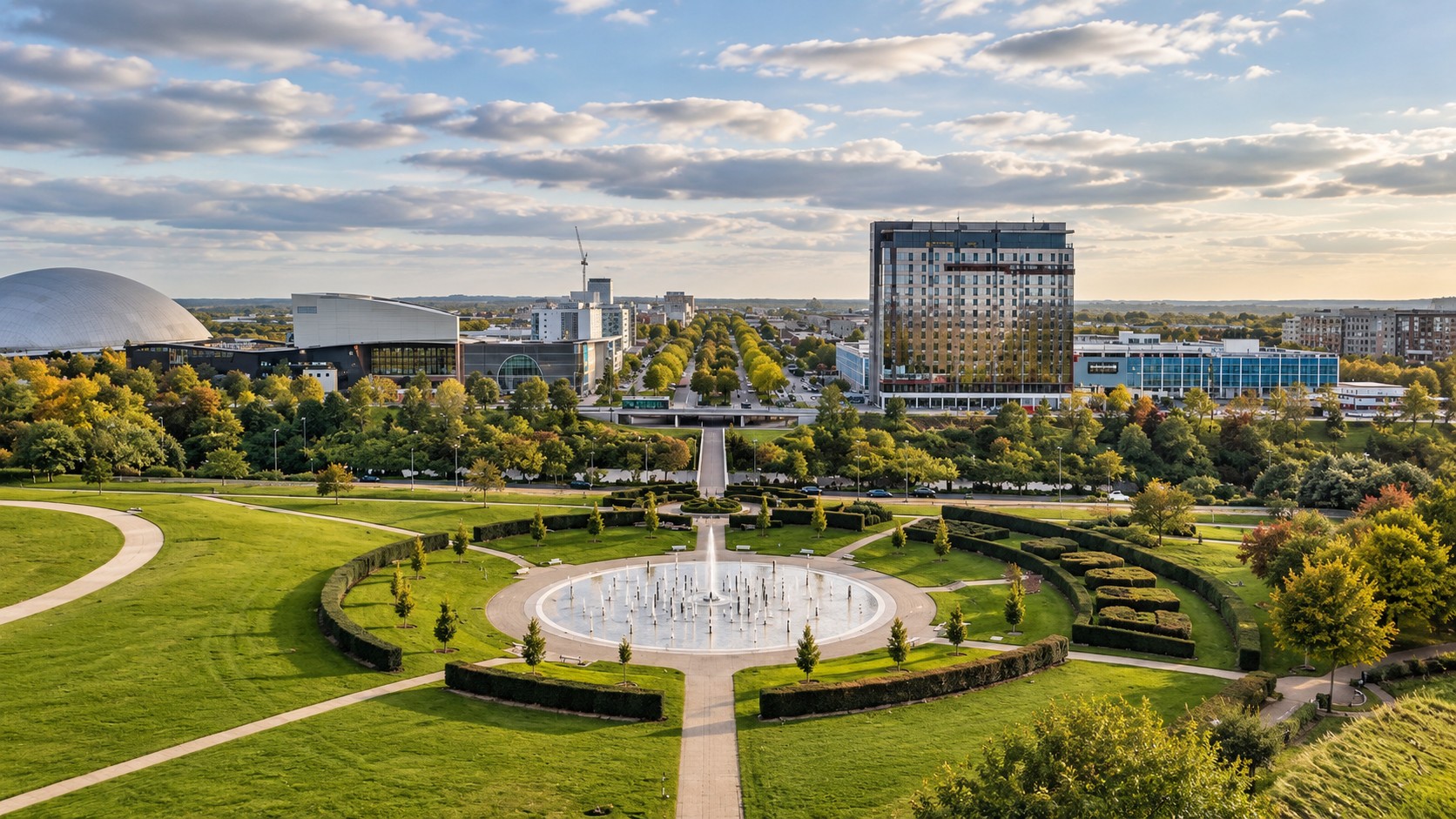
Thinking About Moving to Milton Keynes?
If you’re thinking about moving to Milton Keynes, you’ll find a city that feels quite different from many other places in the UK. Originally designated as a new town in 1967, Milton Keynes is known for its distinctive grid road system, extensive green spaces and Redways, which provide routes for walking and cycling across the city (Milton Keynes City Council, 2026).
Milton Keynes combines modern neighbourhoods with older towns and villages such as Bletchley, Wolverton and Stony Stratford. Its location also makes it practical for people who need connections to London and other parts of the country, while parks, lakes and open spaces form a significant part of the city's layout. The Parks Trust now cares for more than 6,000 acres of green space across Milton Keynes (The Parks Trust, 2026).
But deciding whether Milton Keynes is right for you involves more than looking at its location. House prices, rent, commuting, schools, local amenities and the character of individual neighbourhoods can all affect where you choose to live.
This guide covers the practical things to know before moving to Milton Keynes in 2026, including housing costs, popular areas, transport, schools, safety, local life and the cost of living.
Is Milton Keynes a Good Place to Live?
Whether Milton Keynes is a good place to live will depend on what you are looking for. Its layout is quite different from that of a traditional British city, with residential neighbourhoods separated by grid roads and large areas of green space. The city also has an extensive network of Redways for walking and cycling (Milton Keynes City Council, 2026).
One of Milton Keynes’ practical advantages is its location. It sits close to the M1 and on the West Coast Main Line, giving residents connections towards London, Birmingham and other parts of the country. We’ll look at actual journey times and commuting options in more detail below (Milton Keynes City Council, 2026).
Milton Keynes is also unusual because the modern city was planned around existing towns and villages rather than replacing them. Places such as Bletchley, Wolverton and the older communities surrounding the new city contribute to noticeable differences between areas, so where you choose to live can significantly affect your experience of Milton Keynes. The city itself was designated as a New Town in 1967 and officially gained city status in 2022 (Milton Keynes City Council, 2026).
For anyone considering a move, it is worth comparing individual neighbourhoods rather than treating Milton Keynes as one uniform place. Housing costs, transport, schools, nearby amenities and access to green space can all vary depending on where you live.
Where Is Milton Keynes?
Milton Keynes is in Buckinghamshire, in the South East of England. It is positioned between London and Birmingham and also sits between Oxford and Cambridge, giving the city access to several major economic and employment centres (Milton Keynes City Council, 2026).
The city is well connected to the wider road network. The M1 runs along the eastern side of the main urban area, while the A5 passes through western Milton Keynes and the A421 provides an important east-west route. The West Coast Main Line also runs through the city, connecting Milton Keynes with London, Birmingham and other destinations (Milton Keynes City Council, 2026).
The wider Milton Keynes area includes established towns and communities such as Bletchley, Wolverton, Newport Pagnell, Stony Stratford and Woburn Sands, alongside the newer neighbourhoods created as Milton Keynes developed. This mix of historic settlements and planned development is one of the reasons different parts of Milton Keynes can feel noticeably different from one another (Milton Keynes City Council, 2026).
Transport & Commuting
Milton Keynes is well connected by both rail and road, which is an important consideration for people commuting outside the city. Milton Keynes Central sits on the West Coast Main Line, with direct services towards London, Birmingham and destinations further north.
Direct trains between Milton Keynes Central and London Euston can take around 30 minutes on the fastest services, while other services take longer depending on the number of stops (Avanti West Coast, 2026). Milton Keynes also has stations at Bletchley and Wolverton, as well as smaller stations including Fenny Stratford, Woburn Sands and Bow Brickhill (Milton Keynes City Council, 2026).
For local journeys, a network of bus routes connects Central Milton Keynes with areas including Bletchley, Wolverton, Newport Pagnell, Kingston and Westcroft. There are also services towards places such as Bedford, Oxford, Northampton, Aylesbury and Luton Airport (Milton Keynes City Council, 2026).
Walking and cycling are a distinctive part of Milton Keynes’ transport network. The city has more than 300 km of Redways - dedicated off-road routes for pedestrians and cyclists - connecting many residential areas, employment areas and local facilities (Milton Keynes City Council, 2026).
For drivers, the M1 provides north-south connections, while the A5 runs through Milton Keynes. However, how convenient your commute is can vary considerably depending on where you live, so it is worth checking the journey from the specific neighbourhood you are considering rather than relying on city-wide averages.
House Prices in Milton Keynes
The average house price in Milton Keynes was £330,000 in July 2026, up from £322,000 a year earlier - an annual increase of 2.6% (ONS, 2026).
Prices vary considerably depending on the type of property. In July 2026, the average price was £559,000 for a detached home, £335,000 for a semi-detached property, £277,000 for a terraced home and £168,000 for a flat or maisonette (ONS, 2026).
First-time buyers paid an average of £277,000, while people moving from an existing home paid an average of £404,000. Homes bought with a mortgage averaged £331,000, compared with £327,000 for cash purchases (ONS, 2026).
These figures cover Milton Keynes as a whole, so the price of an individual property can vary depending on its location, size, condition and property type. Comparing the specific areas you are considering can give you a more useful picture than relying on the city-wide average alone.
💙 Movly tip: If you’re deciding between two areas, Movly’s Area Guide lets you compare two postcodes side by side, including information such as Council Tax, crime, schools and broadband speed.
Renting in Milton Keynes
The average private rent in Milton Keynes was £1,344 per month in August 2026, up from £1,294 a year earlier - an annual increase of 3.9% (ONS, 2026).
Rental costs vary considerably with property size. In August 2026, the average monthly rent was £978 for a one-bedroom property, £1,217 for two bedrooms, £1,451 for three bedrooms and £2,088 for homes with four or more bedrooms (ONS, 2026).
Property type also makes a difference. Average rents were £1,138 for flats and maisonettes, £1,345 for terraced properties, £1,423 for semi-detached homes and £1,954 for detached properties (ONS, 2026).
These figures cover Milton Keynes as a whole, so actual rents can vary depending on the neighbourhood, property condition and individual home. If you are planning to rent, comparing current listings in the specific areas you are considering will give you a clearer picture of your likely monthly costs.
Popular Areas in Milton Keynes
Milton Keynes is made up of modern residential estates, older towns and established villages, so the character of different areas can vary considerably. Where you choose will depend on factors such as transport, housing, nearby amenities and how close you want to be to Central Milton Keynes.
Central Milton Keynes puts you close to the main shopping, leisure and business areas, as well as Milton Keynes Central station. Housing here includes apartments and newer developments, making it quite different from the more suburban parts of the city.
Bletchley is a large, established part of southern Milton Keynes with its own town centre and railway station. It is also home to Bletchley Park and has a mixture of older housing and newer development.
Stony Stratford sits on the north-western side of Milton Keynes and has a more traditional high-street setting. Parts of Stony Stratford are designated as a conservation area, reflecting its historic character (Milton Keynes City Council, 2026).
Wolverton is another established town within Milton Keynes, with its own railway station and traditional town centre. Its history is closely connected with the railway, and parts of Wolverton are also covered by a conservation area (Milton Keynes City Council, 2026).
Newport Pagnell lies to the north-east of the main urban area and has its own traditional high street and local services. Woburn Sands, on the south-eastern edge, also has a distinct high street and sits closer to countryside beyond the city (Milton Keynes City Council, 2026).
Shenley Brook End and Tattenhoe are residential areas in western and south-western Milton Keynes, while Broughton and Monkston are among the residential areas on the eastern side of the city (ONS, 2026).
Before choosing an area, it is worth looking at the specific property and its immediate surroundings rather than relying on the neighbourhood name alone. Milton Keynes' grid layout means two homes that appear relatively close on a map can have different access to shops, schools, public transport and other everyday facilities.
💙 Movly tip: Once you have a property in mind, Local Insights can show you what is nearby, including schools, parks, shops and GPs, helping you understand the area immediately around your potential new home.
Milton Keynes Postcodes
Milton Keynes uses the MK postcode area, with different postcode districts covering Central Milton Keynes, residential neighbourhoods, older towns and communities across the wider area. However, the MK postcode area extends beyond the Milton Keynes local authority boundary, so an MK postcode does not necessarily mean that a property is within Milton Keynes itself.
For example, MK9 covers Central Milton Keynes, while Bletchley is associated with MK1, MK2 and MK3 and areas around Wolverton and Stony Stratford use other MK districts. Postcode boundaries do not follow neighbourhood, parish or council boundaries exactly, so it is worth checking the full address rather than relying on the postcode district alone.
This can be particularly important around the edges of the local authority area. For example, parts of Woburn Sands and Newton Leys fall under different local authorities, which can affect which council provides local services and where Council Tax is paid (Milton Keynes City Council, 2026).
💙 Movly tip: If you’re choosing between two potential locations, Movly’s Area Guide lets you compare two postcodes directly, including crime, Council Tax, schools and Ofsted information, and broadband speed.
Moving to Milton Keynes with Children
If you’re moving to Milton Keynes with children, the location of your new home can affect everyday routines such as the school run, childcare, activities and access to parks and other local facilities.
Milton Keynes has a network of parks, play areas and Redways connecting many residential neighbourhoods. The city also has Family Centres offering services and activities for families with children and young people, although what is available varies by location (Milton Keynes City Council, 2026).
During the school holidays, Milton Keynes City Council also runs its Holiday Activities and Food (HAF) programme. In 2026, free sessions are available for eligible children and young people aged 4-16 who receive Targeted benefit-related Free School Meals, with activities running during the main school holidays (Milton Keynes City Council, 2026).
When choosing where to live, it is worth checking childcare, school admissions and the facilities around the exact property you are considering rather than looking only at the wider neighbourhood.
💙 Movly tip: If you’re moving as a family, you can share your Movly checklist with your partner so you can both keep track of moving tasks and what still needs to be done.
Education in Milton Keynes
Milton Keynes has a wide range of primary and secondary schools, but where you live can affect which schools fall within your catchment area. The council publishes catchment information for individual neighbourhoods, and some schools receive more applications than they have places available, so living within a catchment does not automatically guarantee a place (Milton Keynes City Council, 2026).
There are secondary schools across different parts of the city. Examples include Denbigh School in Shenley Church End, The Hazeley Academy in the west of Milton Keynes, Shenley Brook End School, Walton High in the south-east and The Radcliffe School serving areas including Wolverton and Stony Stratford. Which secondary school is closest will therefore depend considerably on the neighbourhood you choose (Milton Keynes City Council, 2026).
Many secondary schools also offer post-16 education. The Hazeley Academy, Shenley Brook End School, Walton High and Denbigh School, for example, have sixth-form provision. Milton Keynes College provides another route after GCSEs, with vocational courses, apprenticeships and T Levels.
For higher education, The Open University is based at Walton Hall in Milton Keynes, around four miles from Milton Keynes Central station (The Open University, 2026). Cranfield University is also nearby, approximately 11 km from Milton Keynes, with bus connections between the city and the university (Cranfield University, 2026).
If you are moving with children, check the catchment for the exact address, the school’s admissions criteria and current availability rather than assuming that the nearest school will be offered. Families moving during the school year can apply through the in-year admissions process (Milton Keynes City Council, 2026).
Is Milton Keynes a Safe Place to Live?
Crime levels vary across Milton Keynes, so city-wide figures do not necessarily reflect what you may experience around a particular home or postcode. Thames Valley Police divides Milton Keynes into several neighbourhood policing areas and publishes local crime information for each of them (Thames Valley Police, 2026).
For some useful context, in the year ending March 2026, Milton Keynes recorded a crime rate of 99.93 crimes per 1,000 people. This was higher than the Thames Valley average of 70.27, but when Milton Keynes was compared with areas considered statistically similar, its overall crime rate was classed as about average for that group (Police.uk, 2026).
There can also be noticeable differences by location and crime type. In the Milton Keynes City Centre and Campbell Park policing area, the most commonly reported offences in July 2026 were violence and sexual offences (102), shoplifting (98), public order offences (40) and vehicle crime (30) (Thames Valley Police, 2026).
These figures should not be used to label an entire neighbourhood as “safe” or “unsafe”. If crime is important to your decision, looking at recent data around the specific postcode or property you are considering will give you more relevant information than a Milton Keynes-wide average.
💙 Movly tip: Movly’s Area Guide lets you compare crime data for two postcodes, including how each area compares nationally and a breakdown by crime type, alongside other information that may influence your move.
Local Life & Things to Do in Milton Keynes
Milton Keynes has a mix of modern entertainment, culture and some surprisingly significant historical attractions. One of the most notable is Bletchley Park, the former top-secret home of Britain’s Second World War codebreakers. Today, visitors can explore the original Codebreaking Huts, wartime buildings and exhibitions about intelligence and the Enigma story (Destination Milton Keynes, 2026).
In Central Milton Keynes, MK Gallery hosts contemporary and historic exhibitions, events and cinema screenings, while the nearby Milton Keynes Theatre stages touring West End productions, musicals, comedy and other live performances. The city is also known for its public art, with around 270 works located across Milton Keynes (Milton Keynes City Council, 2026).
A particularly distinctive part of the city’s leisure offer is Xscape Milton Keynes, where you can find an indoor real-snow ski slope, indoor skydiving, climbing, bowling and a cinema under one roof (Milton Keynes City Council, 2026).
For live music, The Stables is an established venue with programmes covering genres including jazz, blues, folk, rock, classical and pop. Milton Keynes also has cultural and heritage trails that can be explored on foot or by bike, including routes through its public art, historic towns and New Town areas (Milton Keynes City Council, 2026).
This combination is quite specific to Milton Keynes: you can go from Second World War history at Bletchley Park to skiing indoors at Xscape or seeing contemporary art in Central Milton Keynes, rather than the city relying on a single traditional town centre for entertainment.
Healthcare in Milton Keynes
The main acute hospital serving the city is Milton Keynes University Hospital, located at Standing Way in Eaglestone. It provides a wide range of hospital services and has a 24-hour Accident & Emergency department (NHS, 2026).
The hospital is relatively central within Milton Keynes, but access will vary depending on where you live. If you are moving to the city, it is worth checking which GP practices serve your new address and whether they are currently accepting new patients. The NHS Find a GP service can be used to search by postcode (NHS, 2026).
Milton Keynes also has community healthcare services in different parts of the city. Bletchley Community Hospital, for example, is used for a number of community services, and in March 2026 the Milton Keynes Community Mental Health Hub relocated there from Westcroft (Central and North West London NHS Foundation Trust, 2026).
For mental health care, Milton Keynes has dedicated community and hospital-based NHS services, including the Campbell Centre, an acute inpatient mental health unit on the Milton Keynes University Hospital campus, as well as NHS Talking Therapies and community mental health services (Central and North West London NHS Foundation Trust, 2026).
Green Spaces & Outdoors
Green space is a major part of Milton Keynes’ original design. Today, The Parks Trust manages more than 6,000 acres of parks, lakes, woodlands and other green spaces across the city (The Parks Trust, 2026).
One of the most distinctive places is Willen Lake, a purpose-built balancing lake created in the 1970s as part of Milton Keynes’ flood-management system. The site covers around 100 acres and includes two lakes, walking and cycling routes, watersports such as kayaking and paddleboarding, and landmarks including the Peace Pagoda (Willen Lake, 2026).
Closer to Central Milton Keynes, Campbell Park is the city’s main central park and is a Grade II listed landscape. It links the city centre with the wider linear park network and includes public art, an amphitheatre, cricket facilities, wildflower meadows and views across north-east Milton Keynes (The Parks Trust, 2026).
Another notable feature is Ouzel Valley Park, the largest park in Milton Keynes by area. It follows the River Ouzel from Caldecotte Lake to Willen Lake and includes open countryside, grazing land, historic villages and traces of medieval field systems (The Parks Trust, 2026).
The combination of lakes, linear parks and the Redway network means that green space is integrated into many parts of Milton Keynes rather than concentrated in one or two large parks. This is one of the features that makes the city’s planned layout noticeably different from many older UK cities.
Jobs & Working in Milton Keynes
Milton Keynes is a significant employment centre in its own right rather than simply a commuter base for London. In 2024, there were around 214,000 jobs in the local authority area, giving Milton Keynes a jobs density of 1.09 jobs for every resident aged 16-64, compared with 0.85 across Great Britain (Nomis, 2026).
The local economy covers a broad range of industries, but Milton Keynes has particular concentrations in retail, logistics, information and communications, financial and insurance services, and education. Professional, scientific and technical activities are also an important part of the local economy (Milton Keynes City Council, 2026).
Among Milton Keynes residents, around 142,800 people aged 16 and over were in employment between April 2025 and March 2026. Professional occupations were the largest individual occupational group, accounting for around 39,400 workers, or 27.6% of those in employment (Nomis, 2026).
Milton Keynes’ position between London and Birmingham and close to the Oxford–Cambridge corridor also contributes to its role as a business and logistics location. For people considering a move for work, it is worth checking not only the distance to Central Milton Keynes but also access to the specific employment area, station or motorway junction you will use regularly (Milton Keynes City Council, 2026).
Cost of Living in Milton Keynes
The cost of living in Milton Keynes will depend largely on your housing costs, the area you choose and how you travel day to day.
Housing is likely to be one of the biggest monthly expenses. The average private rent in Milton Keynes was £1,344 per month in August 2026, up from £1,294 a year earlier. Average rents were £978 for a one-bedroom property, £1,217 for two bedrooms, £1,451 for three bedrooms and £2,088 for homes with four or more bedrooms (ONS, 2026).
Council Tax is another cost to include in your budget. In Milton Keynes, the amount you pay depends not only on your property’s Council Tax band but also on the parish or town in which you live. For example, in 2026/27 a Band D property is charged £2,452.00 in Bletchley and Fenny Stratford, while charges differ in other parts of the Milton Keynes area (Milton Keynes City Council, 2026).
Energy costs will depend on the property, tariff and how much energy you use. From 1 October to 31 December 2026, Ofgem’s energy price cap for a typical household on a default tariff paying by Direct Debit is £1,723 per year. This is not a maximum household bill, as the amount you actually pay still depends on your energy use (Ofgem, 2026).
When comparing properties in Milton Keynes, look beyond the rent or mortgage payment. Council Tax, energy, water, broadband, parking and commuting costs can all make a noticeable difference to your monthly budget.
💙 Movly tip: Moving home is a good time to review your household bills. With Movly, you can compare utilities and broadband options for your new home in one place, and switch when you find an option that suits your needs and budget.
Population & Local Community
Milton Keynes had a population of around 287,000 at the 2021 Census, up from approximately 248,800 in 2011. That represents growth of just over 15% in a decade, compared with 6.6% across England, making Milton Keynes one of the faster-growing local authority areas in the South East (ONS, 2021).
The city also has a relatively young population. The median age was 37 in 2021, compared with 40 across England and 41 across the South East. People aged 35-49 made up the largest broad age group, accounting for 22.9% of residents (ONS, 2021).
Milton Keynes is also more ethnically diverse than the South East overall. At the 2021 Census, 71.8% of residents identified within the White ethnic group, 12.4% as Asian, Asian British or Asian Welsh, 9.7% as Black, Black British, Black Welsh, Caribbean or African, and 4.1% as Mixed or Multiple ethnic groups (ONS, 2021).
The population reflects considerable international migration as well. Around 71.8% of residents were born in England, while among the most commonly reported countries of birth outside England were India, Romania, Poland and Ghana (ONS, 2021).
The scale of population growth is useful context if you are considering a move. Milton Keynes is still developing and expanding, so new housing, infrastructure and services continue to form part of how the city changes over time (Milton Keynes City Council, 2026).
Your Moving to Milton Keynes Checklist
Moving to Milton Keynes involves plenty of small jobs, so starting early can make it easier to keep everything organised. Here are some of the key tasks from the Movly moving house checklist.
8 weeks before: create your moving budget, start decluttering, organise important documents, get packing supplies and book your removal company or van. If needed, check parking arrangements at both properties and organise storage.
2–3 weeks before: notify Council Tax, arrange your Royal Mail redirection, update your driving licence and start setting up broadband for your new address. This is also a good time to arrange childcare or pet care for moving day and schedule any final cleaning.
1 week before: update your bank, insurance and TV Licence, confirm arrangements with your movers, finish packing and prepare a separate box or bag with essentials such as toiletries, chargers and a change of clothes.
Moving day: photograph your gas and electricity meter readings at both properties, complete a final walkthrough, hand over and collect your keys and make sure nothing has been left behind. Renters should also photograph the condition of the property they are leaving.
After the move: unpack your essentials first, register with a local GP and dentist, check smoke and carbon monoxide alarms, locate the fuse box, water shut-off and boiler controls, set up your bin collection schedule and make sure your broadband is working.
💙 Movly tip: This is only a snapshot of the full checklist. Movly gives you a personalised 8-week moving timeline with tasks for each stage of your move, including additional steps for buyers and renters. You can add your own tasks, set reminders and share your checklist with your partner.
Final Thoughts
Milton Keynes is quite different from many traditional UK cities. Its grid-road layout, extensive green spaces, Redway network and mix of modern neighbourhoods, older towns and villages give different parts of the city noticeably different characteristics.
Its rail connections to London and Birmingham, large local employment base and continued population growth are all useful factors to consider when planning a move. At the same time, housing costs, Council Tax, schools, transport and nearby amenities can vary depending on the specific area or postcode you choose.
If you’re considering moving to Milton Keynes in 2026, compare the locations that fit your priorities and look closely at the practical details around the individual property before making your decision.
Frequently Asked Questions About Moving to Milton Keynes
Is Milton Keynes a good place to live?
Whether Milton Keynes is a good place to live depends on what you are looking for. The city offers fast rail connections to London, a large local employment market, extensive green space and a distinctive network of Redways. Different parts of Milton Keynes can feel quite different, so it is worth comparing individual areas before choosing where to live.
How much does a house cost in Milton Keynes?
The average house price in Milton Keynes was £330,000 in July 2026. Average prices ranged from £168,000 for flats and maisonettes to £559,000 for detached homes (ONS, 2026).
How much is rent in Milton Keynes?
The average private rent was £1,344 per month in August 2026. A one-bedroom property averaged £978 per month, while a two-bedroom property averaged £1,217 (ONS, 2026).
What are popular areas to live in Milton Keynes?
Popular areas include Central Milton Keynes, Bletchley, Stony Stratford, Wolverton, Newport Pagnell, Woburn Sands, Shenley Brook End, Tattenhoe, Broughton and Monkston. They differ in housing, transport, amenities and overall character, so there is no single area that will suit everyone.
What postcodes cover Milton Keynes?
Milton Keynes primarily uses the MK postcode area. Central Milton Keynes is covered by MK9, while different MK districts cover Bletchley, Wolverton, Stony Stratford and other parts of the city. The wider MK postcode area extends beyond the Milton Keynes local authority boundary.
How long is the train from Milton Keynes to London?
The fastest direct trains from Milton Keynes Central to London Euston take around 30 minutes, although journey times vary depending on the service and number of stops (Avanti West Coast, 2026).
Can you live in Milton Keynes without a car?
It is possible, particularly if you live close to a railway station, bus route or the facilities you use regularly. Milton Keynes also has more than 300 km of Redways for walking and cycling. However, the city is spread across a large area, so how practical car-free living is will depend heavily on where you live and work (Milton Keynes City Council, 2026).
Is Milton Keynes safe?
Crime varies significantly by location. In the year ending March 2026, Milton Keynes recorded 99.93 crimes per 1,000 people. When compared with statistically similar areas, its overall crime rate was around average for that comparison group (Police.uk, 2026). Checking recent data for the specific postcode you are considering will provide more relevant information than a city-wide figure.
Does Milton Keynes have good schools?
Milton Keynes has primary and secondary schools across the city, including schools with sixth-form provision. Admissions depend on factors including catchment areas, individual school criteria and available places, so families should check the arrangements for their exact address and the latest Ofsted information before moving (Milton Keynes City Council, 2026).
What universities are near Milton Keynes?
The Open University has its main campus at Walton Hall in Milton Keynes. Cranfield University is also nearby, around 11 km from Milton Keynes, giving the area access to two distinctive higher-education institutions.
What is Milton Keynes known for?
Milton Keynes is known for its grid-road system, roundabouts, Redways and extensive green spaces, as well as attractions including Bletchley Park, Willen Lake and Xscape. It was designated as a New Town in 1967 and officially became a city in 2022.
References:
Avanti West Coast
Train times and journeys between Milton Keynes Central and London Euston
Avanti West Coast
Central and North West London NHS Foundation Trust
Milton Keynes Community Mental Health Hub
CNWL – Milton Keynes Community Mental Health Hub
Central and North West London NHS Foundation Trust
Mental health services and psychological therapies in Milton Keynes
CNWL – Milton Keynes services
Cranfield University
Travelling to Cranfield and transport information
Cranfield University
Destination Milton Keynes
Bletchley Park
Destination Milton Keynes – Bletchley Park
Milton Keynes City Council
Milton Keynes city status and history
Milton Keynes City Council – City status
Milton Keynes City Council
Public transport in Milton Keynes
Milton Keynes City Council – Public transport
Milton Keynes City Council
School admissions and secondary school guidance
Milton Keynes City Council – School admissions
Milton Keynes City Council
Holiday Activities and Food Programme 2026
Milton Keynes City Council – HAF 2026
Milton Keynes City Council
Council Tax charges 2026/27
Milton Keynes City Council – Council Tax 2026/27
Milton Keynes City Council
Culture, maps, tours and trails
Milton Keynes City Council – Culture and trails
Milton Keynes City Council
Economic development and local economy
Milton Keynes City Council – Economic development
Milton Keynes College
Courses, apprenticeships and further education
Milton Keynes College
NHS
Find a GP
NHS – Find a GP
NHS
Milton Keynes University Hospital NHS Foundation Trust
NHS – Milton Keynes University Hospital
Nomis – Official Census and Labour Market Statistics
Labour Market Profile – Milton Keynes
Nomis – Milton Keynes Labour Market Profile
Office for National Statistics (ONS)
Housing prices and private rents in Milton Keynes
ONS – Housing prices in Milton Keynes
Office for National Statistics (ONS)
Census 2021 – population and demographic change in Milton Keynes
ONS – Milton Keynes Census area changes
Ofgem
Energy price cap – October to December 2026
Ofgem – Energy price cap
Police.uk
Compare crime and policing performance – Milton Keynes
Police.uk – Compare your area
Thames Valley Police
Milton Keynes City Centre and Campbell Park – local crime data
Thames Valley Police – Milton Keynes City Centre and Campbell Park
The Open University
Milton Keynes campus – Walton Hall
The Open University – Milton Keynes campus
The Parks Trust
Parks and green spaces across Milton Keynes
The Parks Trust
The Parks Trust
Campbell Park
The Parks Trust – Campbell Park
The Parks Trust
Ouzel Valley Park
The Parks Trust – Ouzel Valley Park
Willen Lake
About Willen Lake
Willen Lake