Moving to Luton? The Complete 2026 Guide to Living in Luton
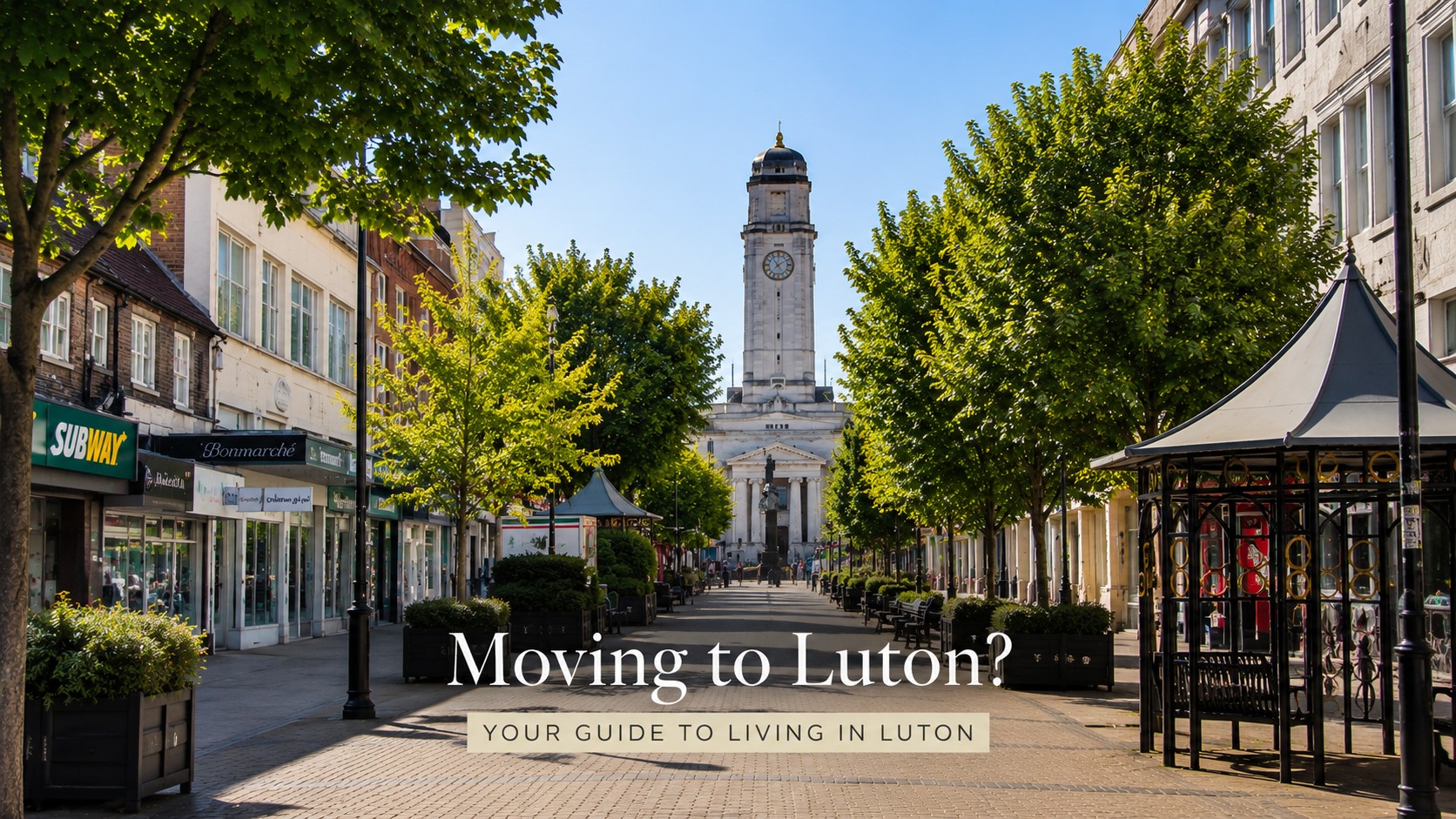
Thinking about moving to Luton?
Luton is a large town in Bedfordshire with a long history stretching back to Anglo-Saxon times. The town's origins date back to the sixth century, when a Saxon settlement was established on the River Lea (Luton Borough Council, 2026). Located approximately 30 miles north-west of London, Luton offers good transport connections, access to the M1 and its own international airport. Property prices can also be more affordable than in some other commuter towns surrounding London, which can make Luton an interesting option for people who want to stay connected to the capital without paying London prices.
However, as with any town, choosing the right area matters. Different parts of Luton can offer very different experiences, so it's worth looking beyond the town as a whole and researching the specific neighbourhood or postcode you're considering before deciding whether it's the right place for you.
Is Luton a Good Place to Live?
Like every place, Luton has its advantages and disadvantages. Whether it's a good place to live will depend largely on what you're looking for, your budget and the area you choose.
Some of the advantages of living in Luton include:
Good connections to London – direct rail services make commuting into the capital possible without living in London itself.
More accessible property prices – Luton can offer more affordable housing compared with London and some nearby commuter towns.
London Luton Airport – having an international airport nearby can be a major advantage if you travel regularly.
Access to the M1 – useful for people commuting or travelling regularly by car.
A multicultural community – Luton is home to people from many different backgrounds, cultures and nationalities.
A choice of different neighbourhoods – from busier central areas to more residential parts of the town.
There are also some potential drawbacks to consider:
Traffic and congestion can be an issue, particularly around busy routes and the airport.
Airport noise may affect some areas more than others, so this is worth checking when viewing a property.
The experience can vary significantly between neighbourhoods, making researching the exact area particularly important.
Luton experiences higher-than-average levels of deprivation, although this can vary between neighbourhoods, so looking at local statistics rather than relying only on town-wide averages can give you a clearer picture (Luton Borough Council, 2026).
If you're looking for the feel of a small, quiet commuter town, Luton may not offer the same experience as some neighbouring towns and villages.
It's important to remember that different parts of Luton can feel very different to live in, which makes it difficult to judge the entire town with a simple yes or no.
Luton currently has a population of around 240,000 people and is one of the UK's most diverse towns. According to Luton Council, more than 150 languages and dialects are spoken across the town (Luton Borough Council, 2026).
For some people, this multicultural environment is one of Luton's biggest advantages, offering the opportunity to experience different cultures, communities, food and traditions. Others may prefer the atmosphere of a smaller and quieter commuter town. Ultimately, whether Luton feels right for you depends on what you want from the place you call home.
Where Is Luton?
Located in Bedfordshire
Approximately 30 miles north-west of London
Connected to the M1 motorway
Close to the neighbouring county of Hertfordshire
Home to London Luton Airport
Connected to London and surrounding towns by rail and road
Its location makes it particularly interesting for people who need regular access to London but don't necessarily want to live in the capital.
Commuting From Luton to London
One of the biggest reasons people consider moving to Luton is its connection to London.
If commuting is important to you, here are the main things worth knowing:
Luton railway station provides direct services towards central London.
Luton Airport Parkway is another useful station, particularly for people living towards the south-east of the town.
Leagrave station serves the northern and western parts of Luton.
Thameslink services connect Luton with central London destinations including London St Pancras, Farringdon, Blackfriars and London Bridge (Thameslink, 2026).
Journey times depend on the station, service and time of day. Some services between Luton Airport Parkway and London St Pancras take around 23–33 minutes (Thameslink, 2026).
Direct services from Luton also continue through central London, which can be useful if you work further south in the capital.
If you're planning to commute regularly, check season ticket and Railcard options as well as peak-time fares before deciding whether the commute works for your budget.
Don't look only at the train journey. Consider the door-to-door commute from the property you're viewing to the station and then from your London station to work.
A 25-minute train journey sounds fantastic on paper, but if you need another 20 minutes to reach the station at each end, your real commute looks very different. That's why it's always worth checking the journey from the actual postcode you're considering, rather than simply searching "Luton to London".
How Much Does It Cost to Buy a House in Luton?
One of the reasons people consider moving to Luton is the property market. While prices will always depend on the exact area, property condition and size, Luton can offer more affordable options than many locations closer to London.
According to the latest ONS and HM Land Registry data, the average house price in Luton was £283,000 in May 2026 (provisional data).
Average prices by property type were:
Detached house: £470,000
Semi-detached house: £328,000
Terraced house: £263,000
Flat or maisonette: £158,000
For first-time buyers, the average price paid was around £266,000, while people already owning a home and moving to another property paid an average of £322,000 (ONS & HM Land Registry, 2026).
This makes the difference between property types quite significant. A flat can offer a much lower entry point into the Luton property market, while buyers looking for a detached family home will obviously need a considerably bigger budget.
It's also important not to rely only on the Luton-wide average. Prices can vary depending on the postcode and neighbourhood, so once you've found an area you like, check recent property data for that specific location rather than assuming £283,000 is what every home in Luton will cost.
How Much Does It Cost to Rent in Luton?
If you're planning to rent rather than buy, the average private rent in Luton was £1,219 per month in June 2026, according to the latest ONS data.
The average monthly rent by number of bedrooms was:
1 bedroom: £905
2 bedrooms: £1,111
3 bedrooms: £1,333
4 or more bedrooms: £1,812
The average rent has increased from £1,190 per month in June 2025, representing a 2.4% increase over the year (ONS, 2026).
Of course, these are averages. The actual amount you'll pay will depend on the area, size, condition and type of property you're looking for.
For comparison, the average rent across the East of England was £1,281 per month in June 2026, compared with £1,219 in Luton (ONS, 2026).
So if you're moving to Luton because you're looking for more manageable housing costs while keeping access to London, it's definitely worth comparing both rental and purchase prices in the individual areas you're considering.
Popular Areas to Live in Luton
There isn't one "best" area to live in Luton. The right choice will depend on what matters most to you- whether that's commuting, green space, local amenities or a more residential environment.
Here are some popular areas worth considering:
Stopsley- An established residential area in east Luton with local shops, schools and access to Stopsley Common. It may suit families and people looking for a more suburban feel, although daily commuters should check the journey to their preferred railway station.
Wigmore- A mainly residential area close to London Luton Airport, with local amenities and access to Wigmore Park. The airport can be incredibly convenient if you travel regularly, but it's worth checking aircraft noise around the exact property you're considering.
Leagrave- A particularly interesting option for commuters because Leagrave has its own railway station, with direct Thameslink services towards London. Just remember that the area is fairly large, so check the actual distance between a potential home and the station.
Bramingham- Located in north Luton, Bramingham has a more residential feel with schools, everyday amenities and nearby green space. Luton Council's Social Progress Index also shows Bramingham performing strongly compared with many other Luton wards (Luton Borough Council, 2025).
Round Green- A residential area between the town centre and Stopsley. It can offer a useful balance if you want relatively easy access to central Luton without necessarily living right in the centre.
Bushmead- Another residential option towards the northern side of Luton, with schools and access to nearby green spaces. If commuting by train is important to you, check the journey to the station before choosing a property.
Luton Town Centre- The town centre offers a completely different lifestyle. Luton railway station, shops, restaurants and services are close by, which can make it convenient for commuters and people who don't want to rely heavily on a car. The trade-off is a much busier environment than Luton's outer residential areas.
So, Which Area Should You Choose?
Even within the same part of Luton, two postcodes can offer a very different living experience. That's why it's worth looking beyond the area name before making a decision.
With Movly Area Guide you can explore the area around a postcode you're considering, including local crime data, nearby schools, green spaces, property prices, transport and other useful information-all in one place.
It won't decide where you should live, but it can give you a clearer picture of the area before you make one of the biggest decisions of your move.
Is Luton Safe? Crime and Safety
Safety is understandably an important factor when deciding where to live, and it's also one of the most common questions people ask about Luton.
The difficult part is that looking at one crime figure for the entire town doesn't necessarily tell you what living on a particular street will be like. Crime levels and types of incidents can vary between different parts of Luton, which is another reason why researching the specific postcode you're considering is more useful than judging the whole town.
Before choosing an area:
Check recent crime data around the postcode you're considering.
Look at the types of crimes being reported, not only the total number.
Compare nearby areas if you're choosing between several properties.
Visit the area during both the day and evening if possible.
Walk around the streets surrounding the actual property, not just the main high street.
Official crime information for individual areas can be checked using Police.uk, while Movly Area Guide can also help you see local crime data alongside other factors such as schools, transport and property prices.
Statistics are useful, but they're only one part of the picture. An area that works perfectly for one person may not feel right for another, so combine the data with your own experience of the neighbourhood.
Moving to Luton With Children
If you're moving to Luton with children, choosing the right area will probably involve much more than house prices and commuting times.
Schools, nurseries, parks, the school run and everyday amenities can quickly become just as important.
Before choosing a property, check:
Which schools and nurseries are nearby
The latest Ofsted reports
School admission criteria
How far the school run would actually be
Nearby parks and playgrounds
Public transport if you have older children
Local GP and healthcare services
Luton Borough Council is responsible for coordinating school admissions in the area, but living close to a particular school doesn't automatically guarantee your child a place. Admission arrangements and oversubscription criteria vary, so always check the current rules for the school you're interested in (Luton Borough Council, 2026).
It's also worth thinking beyond school ratings. A school might look perfect on paper, but if getting there every morning turns into a stressful journey across town, that will become part of your everyday life.
Parks and Green Spaces in Luton
Luton might be known for its airport and transport connections, but there are also plenty of green spaces around the town.
Some of the better-known options include:
Wardown Park – a large park close to the town centre with gardens, play areas and Wardown House Museum and Gallery.
Stockwood Park – one of Luton's largest green spaces, with sports facilities, gardens and Stockwood Discovery Centre.
Stopsley Common – an open green space in the eastern part of Luton.
Wigmore Park – a large green area close to Wigmore and London Luton Airport.
If having a park nearby is important to you, especially if you're moving with children or pets, check what's actually within walking distance of the property rather than simply whether Luton has green spaces somewhere on the map.
A ten-minute walk to the park and a twenty-minute drive to one are two very different things when it becomes part of your everyday routine.
Final Thoughts
Moving to Luton won't be the right choice for everyone, but for some people it can offer a good balance between access to London, more manageable property prices and everyday amenities.
The most important thing is not to judge Luton as one place. As we've seen throughout this guide, your experience can look very different depending on the area and even the postcode you choose.
Before making a decision, visit the neighbourhood, check your real commute, look at local schools and crime data, compare property prices and think about what actually matters to your everyday life.
Luton has its advantages and its drawbacks, but doing your research before you move can help you decide whether it's the right place for you.
Frequently Asked Questions
Is Luton a good place to live?
It depends on what you're looking for. Luton offers good connections to London, more accessible property prices than many locations closer to the capital, an international airport and a wide choice of neighbourhoods. However, traffic, airport noise and differences between individual areas are also worth considering.
What are the best areas to live in Luton?
There isn't one area that will be best for everyone. Stopsley, Wigmore, Leagrave, Bramingham and Round Green are among the areas worth exploring, while Luton Town Centre may suit people who prioritise access to the railway station and amenities. Always research the specific postcode rather than choosing an area based only on its reputation.
How long does it take to commute from Luton to London?
Journey times depend on the station and service you use. Some services between Luton Airport Parkway and London St Pancras take around 23–33 minutes. Remember to consider your complete door-to-door journey rather than looking only at the train time (Thameslink, 2026).
How much does it cost to buy a house in Luton?
The average house price in Luton was approximately £283,000 in May 2026, according to provisional ONS and HM Land Registry data. Prices varied considerably by property type, from an average of £158,000 for flats and maisonettes to £470,000 for detached homes (ONS & HM Land Registry, 2026).
How much does it cost to rent in Luton?
The average private rent in Luton was £1,219 per month in June 2026. Average rents ranged from £905 for a one-bedroom property to £1,812 for a property with four or more bedrooms (ONS, 2026).
Is Luton good for commuting to London?
Luton has three useful railway stations: Luton, Luton Airport Parkway and Leagrave. Thameslink services connect the area with central London destinations including St Pancras, Farringdon, Blackfriars and London Bridge. Whether the commute works for you will depend on where you live in Luton and where you need to reach in London (Thameslink, 2026).
References:
Luton Borough Council. Population and Census Information - population, diversity, languages and local context.
Luton Borough Council. Luton Social Progress Index - local differences and ward-level social progress data.
Luton Borough Council. School Admissions- school admissions and application information.
Office for National Statistics. Housing Prices in Luton - house prices, first-time buyer prices and private rental data.
Thameslink. Luton Airport Parkway to London St Pancras - rail connections and journey times.
Police.uk. Find Crime Information in Your Area - local crime information by area.