Moving to Liverpool? The Complete 2026 Guide to Living in Liverpool
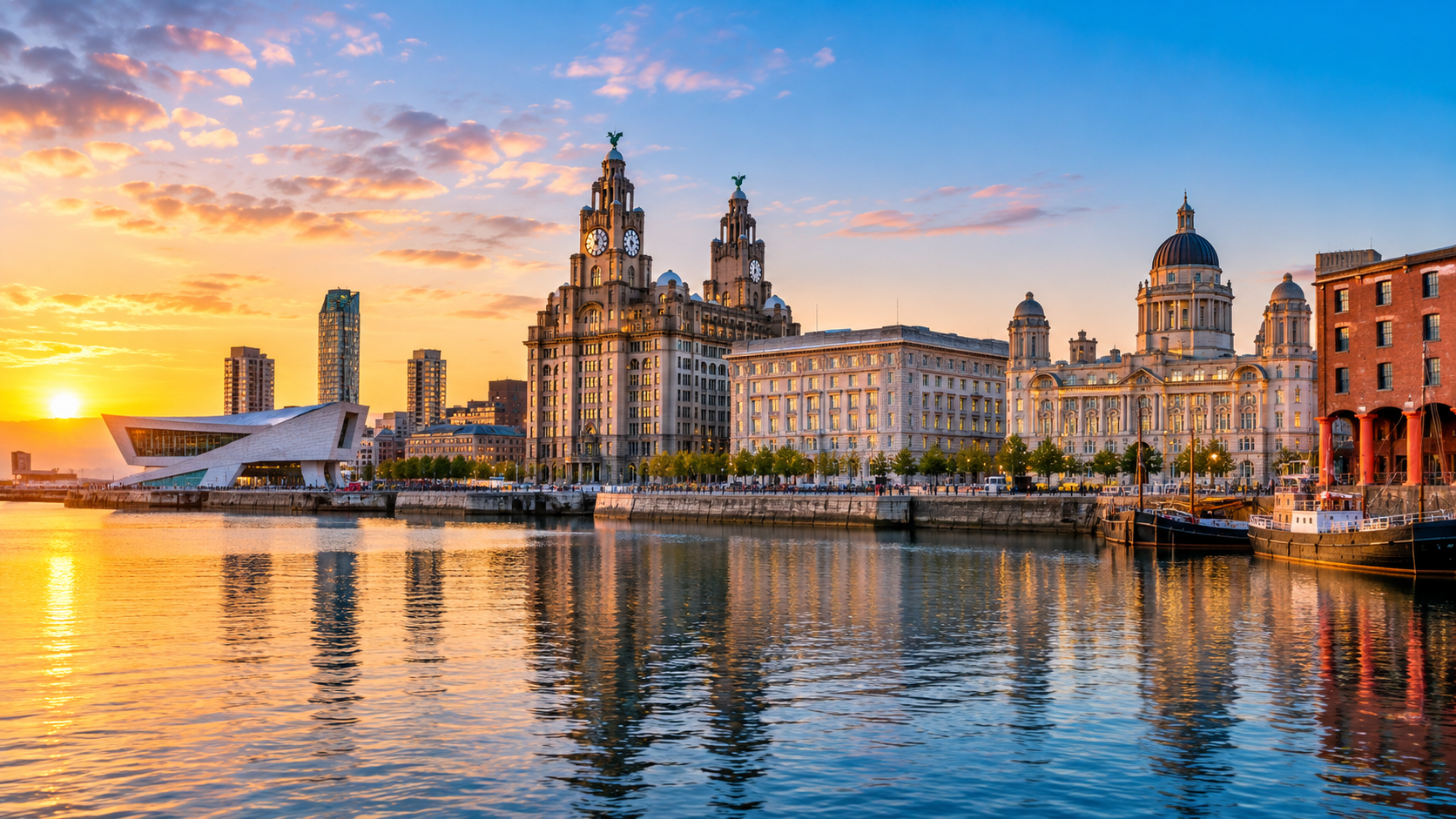
Thinking about moving to Liverpool? Whether you're relocating for work, looking for a more affordable place to buy, moving with your family or simply considering a change of lifestyle, Liverpool has plenty to offer.
Known around the world for its music, football and waterfront, Liverpool is also a major UK city with universities, employment opportunities, extensive public transport and a wide variety of neighbourhoods, from lively city-centre apartments to leafy suburban streets.
In this guide, we'll look at house prices, rent, the best areas to live, schools, transport, commuting, safety, things to do and everyday life in Liverpool in 2026.
Is Liverpool a Good Place to Live?
Liverpool can be a great place to live for people looking for the convenience and opportunities of a major UK city without the property prices associated with places such as London and much of the South East. The city offers a mix of busy urban neighbourhoods, quieter residential areas and leafy suburbs, making it suitable for a wide range of lifestyles.
One of Liverpool’s biggest attractions is the variety it offers. You can live close to the city centre and its restaurants, shops, nightlife and cultural attractions, or choose areas such as Aigburth, Allerton, Mossley Hill, Woolton or Childwall for a more residential feel. There are also plenty of parks and green spaces, while the River Mersey and Liverpool’s waterfront give the city a distinctive character.
Liverpool is particularly well known for its music, football, universities and cultural scene, but everyday practicalities are important when considering a move too. Housing remains relatively affordable compared with many other major English cities, public transport connects the city with surrounding areas, and Liverpool has a large selection of schools, healthcare services, shops and leisure facilities.
As with any large city, however, the experience of living in Liverpool can vary considerably between neighbourhoods. House prices, transport links, schools, amenities and crime levels can differ from one postcode to another, so it is worth researching the specific area rather than judging Liverpool as a whole.
Overall, Liverpool offers a combination of city life, residential neighbourhoods, culture, green space and comparatively accessible housing, which is why it attracts everyone from students and young professionals to families and people relocating from more expensive parts of the UK.
Where Is Liverpool?
Liverpool is a major city in North West England, situated on the eastern side of the River Mersey and close to the Irish Sea. It forms part of the wider Liverpool City Region, alongside areas including Wirral, Sefton, Knowsley, St Helens and Halton.
The city is approximately 35 miles west of Manchester and has good connections with other parts of North West England, North Wales and the wider UK. Liverpool’s position on the Mersey played a major role in its development as an international port, and the waterfront remains one of the most recognisable parts of the city today.
Liverpool itself is made up of many distinct neighbourhoods. The city centre includes areas such as the Georgian Quarter, Ropewalks and the Baltic Triangle, while popular residential areas extend further south and east into places such as Aigburth, Mossley Hill, Allerton, Woolton and Childwall.
Across the River Mersey is the Wirral Peninsula, which can be reached by road tunnels, train and the famous Mersey Ferry. To the north, the wider city region includes places such as Crosby and Formby, while destinations including Chester, Warrington and Manchester are also within relatively easy travelling distance.
For people moving to Liverpool but commuting elsewhere, its location can therefore be particularly useful. The city has motorway connections via the M62, while Liverpool Lime Street provides direct rail services to destinations including Manchester, Birmingham and London. Liverpool John Lennon Airport, located to the south of the city, provides domestic and international flights.
This combination of city-centre amenities, surrounding residential neighbourhoods and connections across the North West means people considering Liverpool have a much wider choice than simply living in the centre itself.
Liverpool at a Glance
🏡 Average house price: £189,000
🔑 Average monthly rent: £913
📍 Region: North West England
🚆 Main station: Liverpool Lime Street
✈️ Airport: Liverpool John Lennon Airport
Getting Around Liverpool & Transport
Liverpool has an extensive public transport network, which makes it possible to live in many parts of the city without relying entirely on a car. The wider Liverpool City Region is served by Merseyrail, buses and national rail services, while road connections make travelling to Manchester, Cheshire and other parts of the North West relatively straightforward.
Trains
Liverpool Lime Street is the city's main railway station and provides long-distance and regional services. Direct trains connect Liverpool with destinations including Manchester, Birmingham and London, making the city reasonably well connected for both business and leisure travel.
For more local journeys, the Merseyrail network connects Liverpool city centre with residential areas and destinations across the wider city region, including the Wirral and parts of Sefton.
Several suburban areas also have their own railway stations. For example, Mossley Hill and Aigburth have stations providing convenient access towards Liverpool city centre, which can be an important consideration when deciding where to live.
Buses
Liverpool also has an extensive bus network covering the city centre, residential neighbourhoods and surrounding areas. Bus services can be particularly useful in parts of Liverpool that aren't directly served by Merseyrail.
If public transport will form part of your daily commute, it is worth checking the exact journey from a potential property rather than simply looking at how far the neighbourhood is from the city centre.
Driving
Liverpool is connected to the wider motorway network, with the M62 providing a direct road connection towards Manchester and links to other major routes.
Drivers travelling to the Wirral can use the road tunnels beneath the River Mersey. As with most major cities, however, traffic can become heavier during peak commuting periods, and city-centre parking is another cost worth considering.
For people moving to Liverpool, the best transport option will depend heavily on where you choose to live and work. Some neighbourhoods offer excellent train connections, while in others having a car may be more convenient.
House Prices in Liverpool in 2026
One of Liverpool's major attractions for people considering relocating is its relatively accessible property market compared with many other large English cities.
Average House Prices in Liverpool by Property Type
According to the latest ONS figures for July 2026, average property prices in Liverpool were:
Detached homes: £398,000
Semi-detached homes: £240,000
Terraced homes: £179,000
Flats and maisonettes: £130,000
These are averages across Liverpool, so actual prices can vary significantly depending on the neighbourhood, property size, condition and exact location.
Liverpool can therefore offer options across a fairly broad price range, from city apartments and traditional terraced houses to larger family homes in more suburban neighbourhoods.
First-Time Buyers in Liverpool
Liverpool may also appeal to first-time buyers looking at major UK cities.
The average price paid by a first-time buyer in Liverpool was £174,000 in July 2026, compared with £161,000 a year earlier. Home movers, meanwhile, paid an average of £222,000.
Of course, these figures represent averages across the entire local authority. Prices can differ considerably between individual neighbourhoods and even between nearby streets, so buyers should research the particular postcode they are considering.
Renting in Liverpool
Liverpool also has a large rental market, helped by its substantial student population, city-centre apartment market and demand from professionals and families.
According to the ONS, the average private rent in Liverpool reached £913 per month in August 2026, compared with £864 in August 2025. That's an annual increase of 5.6%.
Average monthly rents by number of bedrooms were:
1 bedroom: £686
2 bedrooms: £837
3 bedrooms: £963
4 or more bedrooms: £1,293
Looking at property type instead, the average was £786 for a flat or maisonette, £917 for a terraced property, £1,008 for a semi-detached home and £1,225 for a detached property.
Liverpool's average rent remained below the North West average of £969 per month in August 2026.
However, just like purchase prices, rents vary considerably depending on location, property condition and size. Someone looking for a modern city-centre apartment may therefore face a very different rental market from a family searching for a three-bedroom home in one of Liverpool's suburban neighbourhoods.
Best Areas to Live in Liverpool
One of the advantages of moving to Liverpool is the variety of neighbourhoods available. There isn't one single "best" area — the right choice depends on your budget, commute, preferred lifestyle and whether factors such as schools, nightlife or green space are particularly important to you.
Aigburth
Aigburth is a popular residential area south of Liverpool city centre. It offers a combination of traditional housing, independent businesses and access to green spaces, including nearby Sefton Park.
Its railway connections and proximity to the city centre can make it attractive to professionals and commuters, while the area's residential streets and access to parks can also appeal to families.
Allerton
Neighbouring Allerton offers a more suburban environment while remaining within relatively easy reach of central Liverpool.
The area includes a mixture of housing styles and has plenty of everyday amenities, restaurants and shops. Allerton Road is one of the better-known local hubs, with cafés, restaurants and independent businesses.
Mossley Hill
Mossley Hill is another established residential area in south Liverpool. Its location near Sefton Park, local schools and rail connections makes it worth considering for families and professionals.
There is a mixture of larger period properties, terraces, flats and more substantial family homes, meaning prices can vary significantly within the area.
Woolton
For people looking for a more village-like atmosphere, Woolton is one of Liverpool's distinctive suburban options.
Woolton Village has restaurants, pubs, cafés and local shops, while the surrounding neighbourhood contains a range of established residential streets. It is further from Liverpool city centre than areas such as Aigburth, so commuting arrangements are worth checking carefully before choosing a property.
Childwall
Childwall is predominantly residential and is another area frequently considered by people looking for family homes away from the busiest parts of central Liverpool.
Its suburban character and access to schools and everyday amenities can make it appealing to households that don't necessarily need to live within walking distance of city-centre entertainment.
Liverpool City Centre & Baltic Triangle
For people who want restaurants, nightlife, workplaces and cultural attractions close by, Liverpool city centre offers a very different lifestyle.
Much of the housing here consists of apartments rather than traditional family houses. The Baltic Triangle, just south of the main city centre, has become particularly associated with creative businesses, independent venues and nightlife.
City-centre living can suit students, young professionals and people who prioritise convenience, although buyers and renters should consider factors such as parking, service charges, noise and the immediate surroundings of individual developments.
Living in Liverpool with Children
Liverpool can offer families a combination of residential neighbourhoods, parks, schools, leisure facilities and cultural attractions.
Areas such as Woolton, Childwall, Allerton, Mossley Hill and Aigburth are among the places families may want to research, but choosing where to live should involve more than simply picking a neighbourhood with a good reputation.
School admission arrangements can make the exact address particularly important. Liverpool City Council advises parents to check the individual admission policy of each school because criteria vary and many schools are oversubscribed. Depending on the school, factors such as siblings, distance from home, faith requirements or other admission criteria may affect priority.
Families moving into Liverpool during the school year can also apply through the council's in-year transfer process.
This means families planning a move should ideally research properties and schools together, rather than finding a house first and assuming a preferred school will automatically be available.
Schools & Education in Liverpool
For families moving to Liverpool, schools are likely to be an important part of deciding exactly where to live. The city has a large selection of primary and secondary schools, including community schools, academies, foundation schools and faith schools.
Liverpool City Council coordinates applications for Reception and Year 7 places for residents of the city. Individual schools have their own admissions policies, however, and the council notes that most Liverpool schools are oversubscribed. Criteria can include factors such as siblings already attending the school, distance from home, special educational needs and, for some faith schools, religious requirements.
For children starting school in September 2027, applications opened on 1 September 2026. The deadline for secondary school applications is 31 October 2026, while Reception applications close on 15 January 2027.
If you're moving to Liverpool during the academic year, the council also provides an in-year transfer process for children who need to change schools.
When choosing an area, it's sensible to research schools alongside potential properties. Check the school's latest Ofsted information, admissions policy and location before assuming that living nearby will guarantee a place.
Universities & Higher Education
Liverpool is a major university city and has a large student population, which contributes significantly to the atmosphere and economy of the city.
The University of Liverpool is a member of the Russell Group and traces its history back to 1881. Its main campus is close to Liverpool city centre, making the surrounding areas particularly popular with students.
The city is also home to Liverpool John Moores University, alongside other specialist higher-education institutions.
The large student population has an impact on Liverpool's housing market, particularly in areas close to the universities. Anyone buying or renting should therefore consider whether they would prefer a lively student area or a quieter residential neighbourhood.
Jobs & Employment in Liverpool
Liverpool has developed far beyond its historic role as a major port, and today the wider city region supports employment across a broad range of industries.
Important sectors include healthcare, education, tourism and hospitality, professional services, digital and creative industries, manufacturing and logistics. Liverpool's universities, hospitals and public-sector organisations are also significant sources of employment.
The wider Liverpool City Region continues to attract investment. In May 2026, the Liverpool City Region Combined Authority announced a new investment strategy alongside a £2 billion Investment Fund, designed to support its ten-year Local Growth Plan and encourage further job creation and private investment.
For people who work outside Liverpool, commuting is also possible. Rail and road connections provide access towards places such as Manchester, Warrington and Chester, although journey times and convenience will depend heavily on where you live.
Shopping & Everyday Amenities
As a major city, Liverpool offers plenty of choice for everyday shopping as well as larger retail trips.
At the heart of the city centre is Liverpool ONE, a large shopping, dining and entertainment destination close to the waterfront. It contains a wide range of high-street brands, restaurants and leisure facilities.
Elsewhere in the city, neighbourhoods such as Allerton, Woolton and Aigburth have their own local shopping areas, cafés, restaurants and everyday services. This means residents don't necessarily need to travel into the city centre for everything.
Liverpool also has supermarkets, retail parks and smaller independent businesses spread throughout its residential areas. When viewing a property, it can be useful to check how close you would be to the supermarket, pharmacy, GP, petrol station and other services you use regularly — not just the city centre.
Parks & Green Spaces
Despite being a major urban city, Liverpool has a substantial selection of parks and green spaces.
One of the best known is Sefton Park, a large Grade I listed park in south Liverpool. Its location close to areas such as Aigburth and Mossley Hill is one reason this part of the city can appeal to people who want access to green space while remaining relatively close to the centre.
Other notable green spaces include Calderstones Park, Stanley Park and Otterspool Promenade. Calderstones Park is particularly convenient for residents around Allerton and Childwall, while Otterspool provides open space and walking routes alongside the River Mersey.
For families, dog owners, runners or anyone who simply prefers having outdoor space nearby, Liverpool's parks can be an important factor when choosing between neighbourhoods.
Things to Do in Liverpool
Liverpool has one of the UK's most recognisable cultural identities, and there is no shortage of things to do once you've moved to the city.
The city's musical heritage is closely associated with The Beatles, while its live music scene extends far beyond the band's history. Liverpool also has museums, galleries, theatres, restaurants, bars and regular events throughout the year.
The waterfront is one of the city's most distinctive areas, with attractions around the Royal Albert Dock and River Mersey. Football is another major part of local culture, with both Liverpool FC and Everton FC based in the city.
Families also have plenty of options, from museums and parks to waterfront attractions and events. For days out further afield, living in Liverpool also puts destinations on the Wirral, Cheshire and the North Wales coast within reach.
Liverpool therefore offers considerably more than nightlife and football. Its combination of culture, history, music, sport, shopping, parks and family attractions means there is plenty to explore after moving to the city.
Safety & Crime in Liverpool
As with any large UK city, crime levels in Liverpool vary considerably depending on the neighbourhood, so city-wide figures alone don't tell you what living on a particular street will be like.
Busy central areas naturally record different types and volumes of crime from quieter residential neighbourhoods. For example, Merseyside Police data for City Centre North in July 2026 shows violence and sexual offences, shoplifting, anti-social behaviour and drug offences among the most commonly reported categories.
If you're considering a property in Liverpool, it's therefore better to research the specific postcode and surrounding streets. Merseyside Police provides neighbourhood-level crime information as well as local policing priorities, which can give you a more useful picture of an area before you move.
Visiting at different times of the day can also help. A street that feels quiet on a weekday morning may be very different during the evening or weekend. Check your area with Merseyside Police: https://www.merseyside.police.uk/area/your-area/
Pros and Cons of Living in Liverpool
Like anywhere, Liverpool has advantages and disadvantages, and whether it's right for you will depend on your lifestyle, budget and priorities.
Advantages of Living in Liverpool
More accessible property prices
With an average house price of around £189,000 in July 2026, Liverpool remains considerably more accessible than many expensive parts of England.
Plenty of neighbourhood choice
Liverpool isn't just about city-centre living. Areas such as Aigburth, Allerton, Mossley Hill, Childwall and Woolton provide alternatives for people looking for a more residential environment. Liverpool City Council's neighbourhood structure confirms these areas span several distinct parts of the city.
Excellent culture and entertainment
Music, football, museums, galleries, restaurants and nightlife mean there is plenty to do without regularly travelling to another city.
Green spaces
Liverpool has some substantial parks. Sefton Park covers around 235 acres, Calderstones Park around 94 acres, and Stanley Park around 111 acres.
Transport connections
Merseyrail provides useful local connections, while Liverpool Lime Street connects the city with destinations elsewhere in the UK.
Things to Consider Before Moving to Liverpool
Neighbourhoods can be very different
Housing, schools, transport and the general character of an area can change considerably between neighbourhoods, so researching Liverpool as a whole isn't enough.
Crime varies by location
Some central and busier areas experience higher levels of particular crimes and anti-social behaviour, making postcode-level research important.
Traffic and parking
Driving into or around the city centre can be less convenient during busy periods, and parking costs should be factored into your budget if you commute by car.
Property prices and rents are rising
Although Liverpool remains comparatively accessible, both average house prices and rents increased year-on-year in the latest ONS figures, so anyone relying on older estimates may find the market has changed.
Overall, Liverpool offers a compelling mix of city amenities, residential neighbourhoods, culture, green spaces and relatively accessible housing, but researching the exact area is essential before deciding where to move.
Moving to Liverpool with Movly
Once you've decided Liverpool could be right for you, the next challenge is organising the move itself.
Movly brings the different parts of moving home together in one place, helping you stay organised from the first stages of planning through to settling into your new Liverpool home.
With the Movly App, you can:
✔ Follow your moving checklist and keep track of important tasks
✔ Share moving tasks with your partner or family
✔ Use Smart Boxes to organise and keep track of what you've packed
✔ Compare utilities and broadband for your new home
✔ Find trusted removal companies
✔ Find move-in and move-out cleaning services
✔ Save your meter readings as proof
✔ Explore schools, supermarkets, healthcare, transport and green spaces around your new area
✔ Access moving advice and practical guides
Whether you're moving across Liverpool or relocating from another part of the UK, having everything organised in one place can make the process much easier.
👉 Get Movly:
Download the Movly App now.
Planning to hire a van for your move? Read our complete guide to van hire in the UK, including van sizes, costs and licence rules.
Final Thoughts: Is Liverpool a Good Place to Move To?
Liverpool offers something for many different types of movers. You can choose city-centre apartment living, traditional terraced streets or quieter suburban neighbourhoods with larger family homes.
Housing remains relatively accessible compared with many parts of England, while Liverpool also offers major-city amenities, universities, employment opportunities, extensive cultural attractions and some impressive green spaces.
The biggest consideration is where in Liverpool you choose to live. Someone living beside the city centre will have a very different experience from someone living around Woolton, Childwall or Allerton.
Before committing to a property, research the specific postcode, current property prices or rents, school admissions, transport links, crime data and nearby amenities. If possible, visit the neighbourhood during both the day and evening.
With the right area for your lifestyle and budget, Liverpool can offer an appealing combination of affordability, culture, connectivity and everyday convenience.
Frequently Asked Questions About Moving to Liverpool
Is Liverpool expensive to live in?
Liverpool's property market remains relatively accessible compared with many more expensive parts of England. The average Liverpool property cost approximately £189,000 in July 2026, although prices vary significantly by neighbourhood and property type.
How much does it cost to rent in Liverpool?
The average private rent in Liverpool was approximately £913 per month in August 2026. A one-bedroom property averaged £686 per month, while a three-bedroom property averaged £963. Larger properties generally cost more.
What are popular areas to live in Liverpool?
Areas commonly considered by movers include Aigburth, Allerton, Mossley Hill, Woolton and Childwall, while the city centre and Baltic Triangle can appeal to people who prefer a more urban lifestyle. There is no single best neighbourhood, so your budget, commute and priorities should guide your search.
Is Liverpool suitable for families?
Liverpool has residential neighbourhoods, schools, playgrounds and substantial green spaces. The council lists play areas across parks including Calderstones, Sefton, Otterspool, Stanley and Croxteth Country Park. Families should check school admissions and availability for their particular address before moving.
Does Liverpool have good transport links?
Liverpool has local rail services through Merseyrail, an extensive bus network and national rail connections from Liverpool Lime Street. The M62 also connects Liverpool towards Manchester and the wider motorway network.
Do you need a car to live in Liverpool?
Not necessarily. People living close to the city centre or good rail and bus connections may be able to manage without one. In more suburban locations, a car can provide additional convenience, particularly if your workplace or children's schools aren't close to public transport.
What should I check before moving to Liverpool?
Look beyond the general reputation of an area and research the exact street or postcode. Check recent property prices, rent, transport, school admissions, local amenities and neighbourhood-level crime information before making your decision.
References
Office for National Statistics – Housing Prices in Liverpool
https://www.ons.gov.uk/visualisations/housingpriceslocal/E08000012/
Liverpool City Council – School Admissions
https://liverpool.gov.uk/schools-and-learning/school-admissions/
Liverpool City Council – Parks and Green Spaces
https://liverpool.gov.uk/parks-and-greenspaces/
Liverpool City Council – Playgrounds and Play Areas
https://liverpool.gov.uk/parks-and-greenspaces/playgrounds-and-play-areas/
Merseytravel – Public Transport in the Liverpool City Region
https://www.merseytravel.gov.uk/
Merseyrail – Liverpool City Region Rail Network
Merseyside Police – Local Crime and Neighbourhood Information
https://www.merseyside.police.uk/area/your-area/
University of Liverpool
Liverpool John Moores University
Liverpool City Region Combined Authority
https://www.liverpoolcityregion-ca.gov.uk/
Liverpool ONE – Shopping, Dining and Leisure
https://www.liverpool-one.com/
VisitLiverpool – Official Liverpool Visitor Guide