Moving to Littlehampton? The Complete Guide to Living in Littlehampton
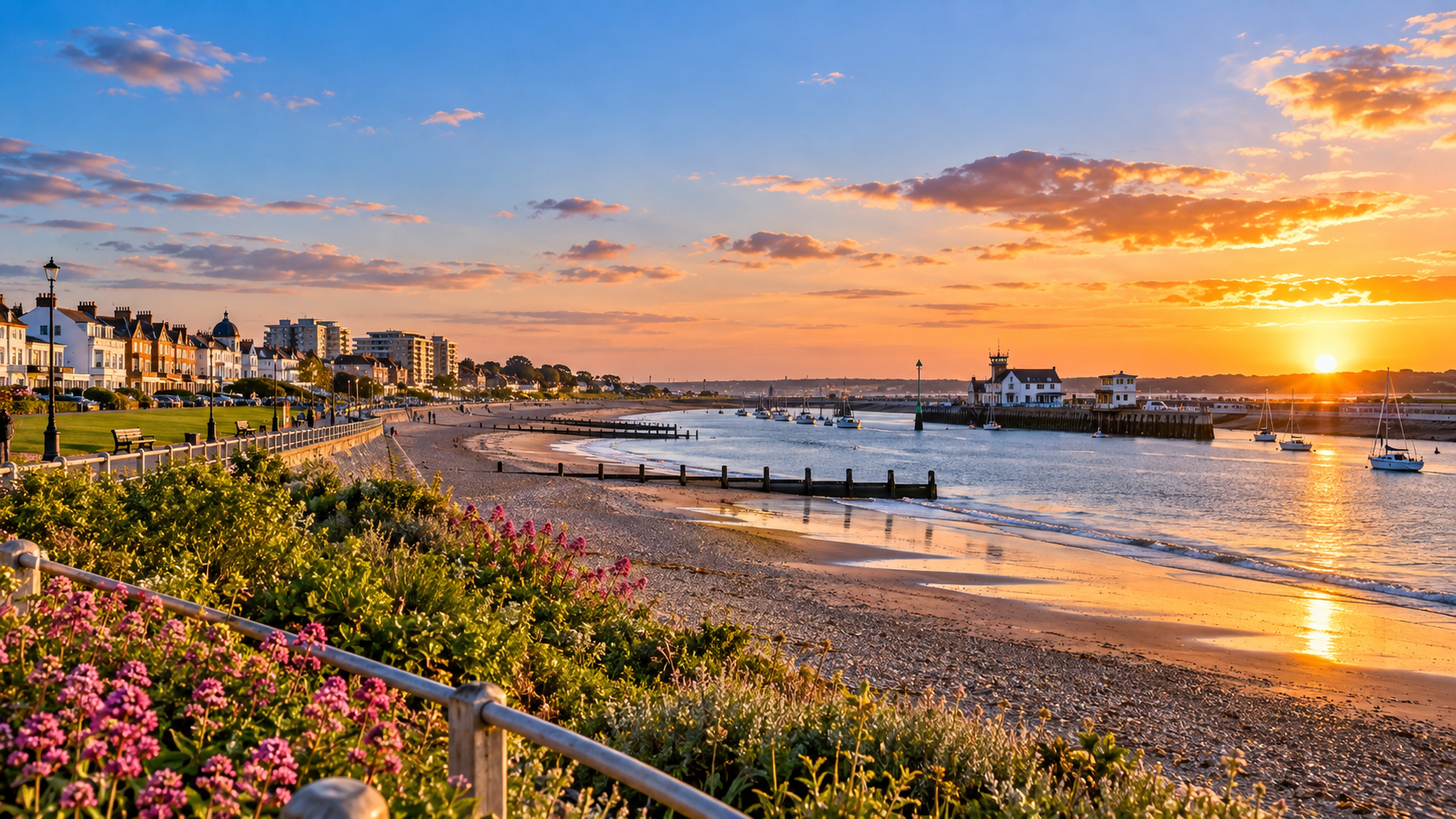
Thinking about moving to Littlehampton? This West Sussex seaside town offers a combination of coastal living, residential neighbourhoods, green spaces and connections to larger towns and cities along the South Coast.
Situated at the mouth of the River Arun, Littlehampton is known for its beaches, harbour and seafront, but it is also a working residential town with schools, shops, transport links and a variety of housing. Its location can appeal to families, retirees, commuters and people looking to live close to the coast without moving to a larger seaside city such as Brighton.
Littlehampton also provides access to the wider West Sussex area, with places such as Arundel, Worthing, Chichester and Bognor Regis within reach. Rail connections make commuting towards other parts of the South Coast and further afield possible, while the surrounding countryside gives residents plenty of options away from the seafront.
In this complete 2026 guide, we'll explore house prices, rent, the best areas to live, schools, transport, commuting, shopping, safety, beaches, things to do and everyday life in Littlehampton, helping you decide whether it could be the right place for your next move.
Is Littlehampton a Good Place to Live?
Littlehampton can be an appealing choice for people who want coastal living without being in a large city. The town combines beaches and a harbour with everyday amenities, schools, residential neighbourhoods and rail connections along the South Coast.
One of its biggest attractions is lifestyle. Residents have Littlehampton Beach, East Beach, the River Arun and seafront on their doorstep, while the South Downs and wider West Sussex countryside are also within easy reach.
The town can suit different stages of life, including families, commuters, first-time buyers and retirees. However, the feel of Littlehampton varies considerably between the seafront, town centre, established residential streets and newer developments towards the north of the town.
For anyone considering moving here, it's worth exploring several neighbourhoods rather than judging Littlehampton purely by its town centre or seafront.
Where Is Littlehampton?
Littlehampton is a seaside town in West Sussex on England's south coast, within the Arun district.
The town sits where the River Arun meets the English Channel, approximately between Worthing and Bognor Regis. Nearby places include Arundel, Rustington, East Preston, Angmering, Worthing and Bognor Regis.
Its location gives residents a combination of coast and countryside. Historic Arundel is only a short journey inland, while the South Downs National Park is also accessible from the area.
Littlehampton is administered locally by Arun District Council, whose main Civic Centre is located in the town.
Getting Around Littlehampton & Transport
Trains
Littlehampton railway station is close to the town centre and provides connections along the South Coast and towards London.
Southern operates services from Littlehampton, with destinations and connections including Brighton, Hove, Worthing, Arundel, Horsham and London Victoria. Southern currently lists journeys from Littlehampton to London Victoria at around 1 hour 46–48 minutes, while Arundel can be reached in around eight minutes.
This makes rail commuting possible, although anyone planning to travel to London regularly should consider the journey time and ticket costs alongside their housing budget.
By Car
The A259 is the main coastal road through the area, providing connections towards Worthing and Bognor Regis.
Drivers can reach the A27 for journeys towards Brighton, Chichester and other parts of Sussex, while routes north connect Littlehampton with Arundel and the wider West Sussex road network.
Traffic can become busier during peak commuting periods and in the summer, so it's worth testing your potential commute before choosing a property.
Buses
Local bus services connect Littlehampton with surrounding communities including Rustington, Angmering, Worthing, Arundel and Bognor Regis.
People living centrally may be able to manage many everyday journeys without a car, particularly if they live within walking distance of the railway station, shops and seafront.
House Prices in Littlehampton in 2026
Property prices vary considerably depending on the part of Littlehampton, property type and proximity to the coast.
Official ONS figures are published for the wider Arun local authority, which includes Littlehampton and surrounding areas, so these figures should be treated as a useful regional benchmark rather than a Littlehampton-only average.
According to the latest ONS figures, the average property price in Arun was approximately £321,000 in July 2026.
By property type, the averages were approximately:
Detached: £553,000
Semi-detached: £352,000
Terraced: £276,000
Flats and maisonettes: £167,000
The average price paid by a first-time buyer was approximately £254,000. These figures are Arun-wide and individual Littlehampton properties can be significantly above or below them depending on location and condition.
Renting in Littlehampton
Renting can be useful for people who want to get to know Littlehampton before committing to buying a property.
The latest ONS figures show that the average private rent across Arun was approximately £1,231 per month in August 2026.
As with property prices, this covers the wider Arun district rather than Littlehampton alone. Actual rents in the town vary depending on property size, condition, location and whether the home is close to the station, town centre or seafront.
Anyone relocating to Littlehampton should check current listings shortly before moving, particularly if they need a specific number of bedrooms or want to be within walking distance of the railway station.
Best Areas to Live in Littlehampton
Littlehampton Seafront & East Beach
Living near the seafront provides easy access to the beach, promenade and harbour.
This area can appeal to people who want the coastal lifestyle to be a major part of everyday life. Property ranges from flats to houses on residential streets further back from the water.
Being close to a popular seaside area can also mean more visitors and traffic during warm weekends and school holidays, so it's worth visiting during summer as well as quieter periods.
Town Centre
Living close to central Littlehampton provides convenient access to shops, the railway station, local services and the River Arun.
It can be particularly practical for households that want to rely less on a car. As with many town centres, however, individual streets can differ considerably in terms of property style, parking and noise.
North Littlehampton
North Littlehampton has seen significant residential development, making it particularly relevant for buyers interested in newer homes and modern housing estates.
Further community infrastructure is planned as part of the North Littlehampton development, including a community centre, school, youth facilities, recreation areas, sports pitches and transport improvements.
Rustington
Although technically a separate village rather than part of Littlehampton itself, Rustington is immediately nearby and is frequently considered by people searching for homes in the Littlehampton area.
It has its own village centre, shops and residential neighbourhoods while remaining close to Littlehampton's railway station and seafront.
East Preston & Angmering
People with a wider search radius may also consider East Preston and Angmering.
These areas provide alternatives for buyers who like the general location but don't necessarily need to live within Littlehampton itself.
Living in Littlehampton with Children
Littlehampton can offer families a combination of beaches, parks, schools, outdoor spaces and easy access to surrounding West Sussex towns and countryside.
Living close to the coast gives families plenty of opportunities for outdoor time, while local parks, playgrounds and attractions provide alternatives away from the beach.
For families moving into the area, it's worth researching schools alongside your property search. A Littlehampton postcode does not automatically guarantee a place at the nearest or preferred school.
West Sussex County Council provides information about school applications, admissions arrangements and changing schools after a house move. If you're moving during the school year, check current availability and admissions guidance directly with the council.
Schools & Education in Littlehampton
Littlehampton and the surrounding area have a range of primary and secondary schools, including academies and other state-funded schools.
When comparing schools, it's useful to check:
the latest Ofsted inspection information
admissions criteria
catchment or designated areas
distance from your potential home
current place availability
travel arrangements
School admissions information and application deadlines can change from one academic year to another, so families should check the latest West Sussex County Council guidance when planning their move.
For older students, there are also sixth-form and further education options in Littlehampton and the wider West Sussex area.
Jobs & Employment in Littlehampton
Littlehampton's employment market reflects its position as a coastal town within the wider West Sussex economy.
Local opportunities can be found across sectors including retail, healthcare, education, hospitality, manufacturing, construction and professional services. Tourism and leisure also contribute to the local economy, particularly around the seafront and during the warmer months.
Some residents commute to nearby employment centres such as Worthing, Chichester, Arundel and Brighton, while rail connections also make longer-distance commuting possible.
If you're relocating for work, it's worth considering the journey from your specific neighbourhood rather than Littlehampton as a whole, particularly if you'll be travelling regularly by train or using the A259 and A27.
Shopping & Everyday Amenities
Littlehampton has the everyday services you'd expect from an established town, including supermarkets, independent shops, pharmacies, cafés and other local businesses.
The town centre provides a concentration of shops and services within walking distance of Littlehampton railway station, while additional supermarkets and retail areas can be found around the wider town.
Nearby Rustington provides another useful shopping area, while larger retail choices are available in places such as Worthing and Chichester.
When comparing neighbourhoods, it's worth checking how close you'll be to the things you use regularly, including:
supermarkets
GP surgeries and dentists
pharmacies
schools and nurseries
railway and bus connections
parks and playgrounds
These everyday practicalities can make just as much difference to life after moving as the property itself.
Parks & Green Spaces
Although Littlehampton is best known for its beach, the town also has several parks and recreational spaces.
Mewsbrook Park is one of the best-known. Located close to the seafront, it has large green spaces, a children's play area, boating lake, flower beds and distinctive Art Deco shelters.
Brookfield Park combines open space with a children's play area, sports facilities, a lake, woodland and wildflower areas.
Closer to the beach, Norfolk Gardens offers recreational facilities including tennis, bowls and golf, while Marina Gardens provides a quieter green space close to both the town centre and seafront.
Together with the beach, promenade and surrounding countryside, these spaces give residents plenty of options for walking, exercise and family days outdoors.
Beaches & Coastal Living
The coast is naturally one of the biggest reasons people consider moving to Littlehampton.
East Beach sits alongside the town's large seafront greens, creating plenty of space for picnics, games and walks as well as time on the beach itself.
On the opposite side of the River Arun is West Beach, which has a more natural character. It forms part of an important coastal environment and contains one of only three sand-dune systems in West Sussex.
The River Arun and harbour add another dimension to coastal life, with riverside walks and boats providing a different atmosphere from the open seafront.
Living beside the sea does come with practical considerations. Properties close to the coast or river may require additional checks around flood risk, exposure to coastal weather and insurance, so these are worth investigating for the individual property before buying.
Things to Do in Littlehampton
Littlehampton has a strong focus on outdoor and family activities.
The seafront is home to Harbour Park, a traditional seaside attraction with rides, amusements and family activities.
Other places and activities around the town include:
Littlehampton Museum
Littlehampton Skate Park
Mewsbrook Park
Norfolk Gardens
Oyster Pond
the promenade and seafront
watersports
walking along the River Arun
East Beach and West Beach
The seafront also features Littlehampton's distinctive Long Bench, while the greens provide open recreational space close to the beach.
One of the advantages of living in Littlehampton is that days out aren't limited to the town itself. Arundel, the South Downs and other West Sussex coastal towns are all within relatively easy reach.
This gives Littlehampton a useful balance: you can have the beach as part of everyday life while still having countryside, historic towns and larger shopping destinations nearby.
Safety & Crime in Littlehampton
As with most towns, crime levels in Littlehampton vary depending on the neighbourhood and individual street.
Rather than relying on a single town-wide crime figure, anyone considering moving to Littlehampton should check recent crime information for the specific postcode or neighbourhood they're interested in. Sussex Police provides local crime information and details of neighbourhood policing teams.
It's also worth visiting a potential area at different times of the day. A street that feels quiet during a weekday morning may feel quite different during the evening, at weekends or during the busy summer season.
People considering properties close to the town centre, railway station or seafront may particularly want to visit during both quieter winter periods and busy summer weekends to get a realistic idea of the area throughout the year.
Pros and Cons of Living in Littlehampton
Littlehampton offers a distinctive combination of seaside living and everyday practicality, but whether it's right for you will depend on your lifestyle, budget and commuting needs.
Advantages of Living in Littlehampton
Living by the sea
Having beaches, a promenade and the River Arun nearby is one of Littlehampton's biggest lifestyle advantages. For many residents, coastal walks and outdoor activities can become part of everyday life rather than something reserved for holidays.
Access to West Sussex
Littlehampton is well positioned for exploring places such as Arundel, Worthing, Chichester and the South Downs, as well as other destinations along the coast.
Rail connections
The railway station provides connections along the South Coast and towards London, which can be useful for commuters and people who don't want to rely entirely on a car.
Choice of neighbourhoods
Buyers can consider everything from homes close to the seafront and town centre to established residential areas and newer developments in North Littlehampton.
Good access to outdoor space
Between the beaches, parks, river and nearby countryside, there are plenty of opportunities for walking, cycling and spending time outdoors.
Things to Consider Before Moving to Littlehampton
Summer can be busier
As a seaside town, Littlehampton naturally attracts more visitors during warm weather, weekends and school holidays. Areas around the beach and seafront can therefore feel considerably busier at certain times of year.
London commuting is relatively long
Direct rail connections are useful, but Littlehampton is not a short London commuter journey. Anyone expecting to travel into London several times a week should check current journey times and ticket costs carefully.
Neighbourhoods vary
Littlehampton has several different residential environments, so it's important to research the exact street rather than judging the entire town from one area.
Coastal and flood considerations
If you're considering a home close to the coast or River Arun, check the property's individual flood risk, insurance implications and exposure to coastal weather before buying.
Moving to Littlehampton with Movly
Once you've found the right home in Littlehampton, there's still plenty to organise before moving day.
Movly brings the different parts of your move together in one place, helping you stay organised before, during and after your move.
With the Movly App, you can:
✔ Follow your personalised moving checklist
✔ Share moving tasks with your partner or family
✔ Use Smart Boxes to organise and track your belongings
✔ Compare utilities and broadband
✔ Find trusted removal companies
✔ Find move-in and move-out cleaning services
✔ Photograph and save meter readings
✔ Explore nearby schools, supermarkets, healthcare, transport and green spaces
✔ Access moving advice and practical guides
Whether you're moving from elsewhere in West Sussex or relocating to the coast from another part of the UK, having everything together can make the process much easier to manage.
👉 Get Movly:
https://www.movly.uk/try
Final Thoughts: Is Littlehampton Right for Your Move?
Littlehampton offers something that many towns can't: the opportunity to make the coast part of everyday life while still having schools, shops, transport links and other essential amenities nearby.
The combination of East Beach, West Beach, the River Arun, parks and access to the wider West Sussex countryside can be particularly attractive to people who enjoy spending time outdoors.
There are also several different types of neighbourhood to consider. Someone looking for a newer family home might explore North Littlehampton, while another buyer may prioritise being able to walk to the beach, town centre or railway station.
Before choosing a property, research the exact neighbourhood, current property prices or rents, schools, transport, flood risk and local crime information. Visiting at different times of the day and during different seasons can also give you a much better idea of what living there would actually be like.
Frequently Asked Questions About Moving to Littlehampton
Is Littlehampton a seaside town?
Yes. Littlehampton is a West Sussex seaside town located where the River Arun meets the English Channel. It has both East Beach and West Beach, as well as a promenade, harbour and seafront attractions.
Is Littlehampton suitable for families?
Littlehampton has schools, parks, playgrounds, beaches and family attractions, as well as residential neighbourhoods ranging from established streets to newer developments. Families should research individual schools and admissions arrangements alongside their property search.
Can you commute from Littlehampton?
Yes. Littlehampton railway station provides connections along the South Coast and towards London. Whether it works for a daily commute will depend on your destination, working pattern and tolerance for longer journeys.
What areas should I consider around Littlehampton?
Within Littlehampton, buyers often explore areas around the seafront, town centre and North Littlehampton. Expanding the search slightly also brings nearby places such as Rustington, East Preston and Angmering into consideration.
Is Littlehampton good for people who enjoy the outdoors?
The town provides easy access to beaches, the River Arun, parks and coastal walks, while the South Downs and wider West Sussex countryside are also accessible.
What should I check before buying a house in Littlehampton?
Alongside the usual survey and property checks, research the specific street, transport, schools, local amenities and crime information. For properties near the coast or River Arun, checking official flood-risk information is particularly important.
References
Office for National Statistics – Housing Prices and Private Rents in Arun
https://www.ons.gov.uk/visualisations/housingpriceslocal/E07000224/
Office for National Statistics – Local Statistics for Arun
https://www.ons.gov.uk/explore-local-statistics/areas/E07000224-arun
West Sussex County Council – School Places and Admissions
https://www.westsussex.gov.uk/education-children-and-families/schools-and-colleges/school-places/
West Sussex County Council – Find a School
Arun District Council – Official Website
Arun District Council – Parks and Open Spaces
https://www.arun.gov.uk/our-parks/
Arun District Council – North Littlehampton Development
https://www.arun.gov.uk/north-littlehampton-masterplan/
Southern Railway – Littlehampton Station and Train Information
https://www.southernrailway.com/
Sussex Police – Littlehampton Local Crime and Neighbourhood Information
https://www.sussex.police.uk/area/your-area/sussex/arun/beach-littlehampton/
Visit Littlehampton – Official Visitor Guide
https://www.visitlittlehampton.co.uk/
Visit Littlehampton – East Beach
https://www.visitlittlehampton.co.uk/activities/east-beach/
GOV.UK – Check the Long-Term Flood Risk for an Area in England