Moving to Birmingham? The Complete Guide to Living in Birmingham
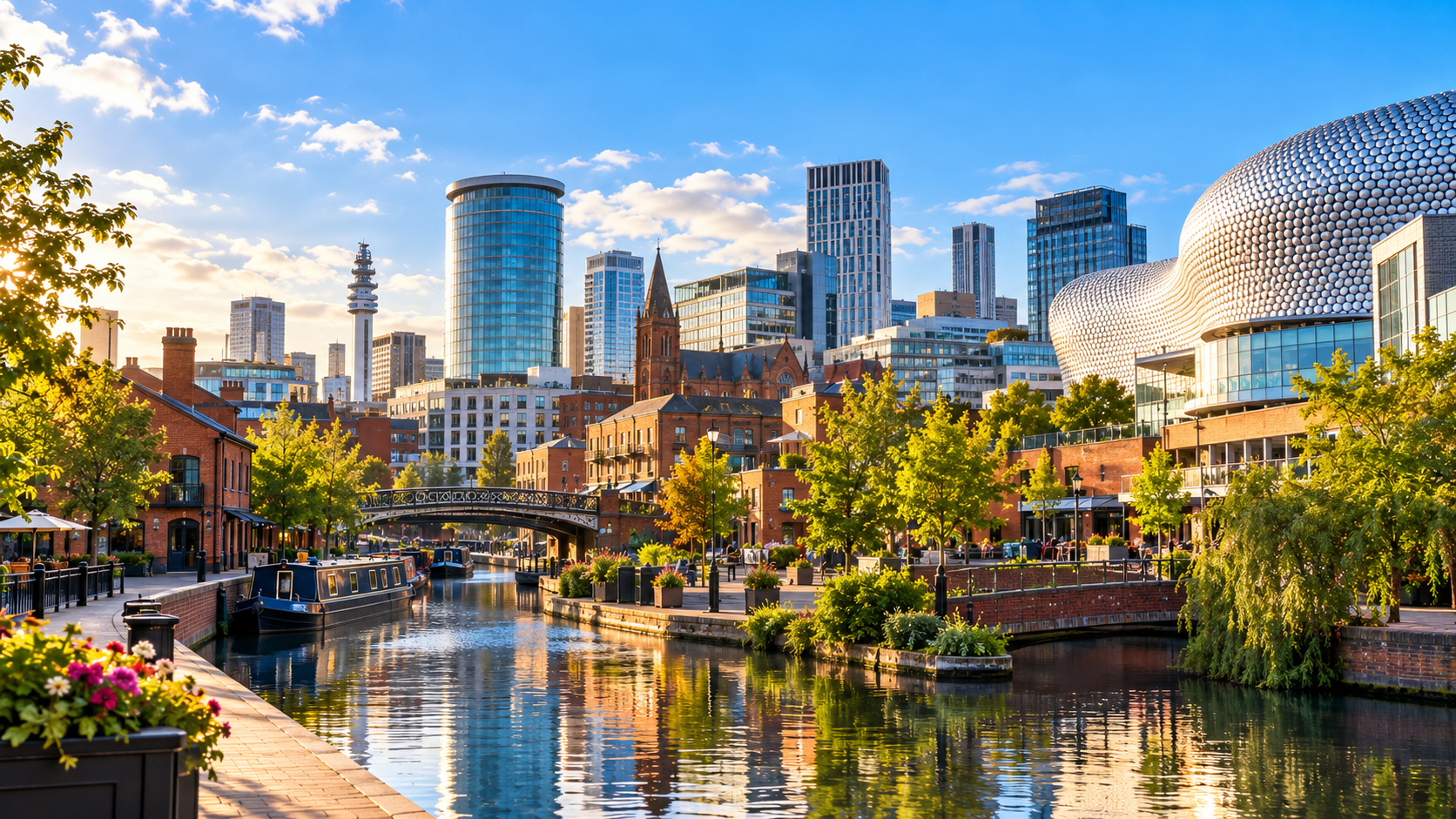
Thinking about moving to Birmingham? England’s second-largest city offers a very different lifestyle from smaller towns, combining major employment opportunities, universities, shopping and entertainment with established residential neighbourhoods, parks and excellent connections to the rest of the UK.
Located at the heart of the West Midlands, Birmingham is particularly well connected by rail and road, making it a practical base for people working both within the city and across the wider region. Birmingham New Street provides connections to destinations across the country, while the city's position near major motorways gives residents access to areas including Coventry, Wolverhampton, Solihull and beyond.
Birmingham also offers a particularly varied property market. Buyers can choose from city-centre apartments, Victorian and Edwardian terraces, suburban family houses and larger homes in some of the city's leafier neighbourhoods.
Official ONS figures show that the average Birmingham house price was approximately £234,000 in July 2026, while the average private rent was £1,099 per month in August 2026. First-time buyers paid an average of approximately £212,000, making Birmingham considerably less expensive than many locations in London and the South East.
In this complete guide, we'll explore house prices, rent, the best areas to live, schools, transport, jobs, shopping, parks, healthcare, safety and things to do in Birmingham, helping you understand what everyday life in the city could look like.
Is Birmingham a Good Place to Live?
Birmingham can offer an attractive combination of big-city amenities, employment opportunities and a wide choice of neighbourhoods.
One of the biggest advantages of living in Birmingham is variety. The experience of living in a city-centre apartment can be completely different from living in established residential areas such as Harborne, Moseley, Kings Heath, Edgbaston or Sutton Coldfield.
The city has a major retail and entertainment centre, several universities, extensive healthcare facilities, restaurants representing cuisines from around the world and a large cultural and events scene. At the same time, many residential neighbourhoods provide parks, local high streets and a more suburban atmosphere.
Housing costs are another consideration. Birmingham's average property price of £234,000 in July 2026 was below the West Midlands average of £251,000, although prices vary substantially between individual neighbourhoods and property types.
For renters, the average monthly private rent reached £1,099 in August 2026, compared with £982 across the West Midlands as a whole.
Because Birmingham is such a large and diverse city, choosing the right neighbourhood is particularly important. Transport, schools, property prices, local amenities and the character of an area can change considerably within only a few miles.
Birmingham at a Glance
📍 Location: West Midlands, England
🏙️ Setting: Major UK city at the heart of the West Midlands
💷 Average house price: Around £234,000 in Birmingham
🔑 First-time buyer average: Around £212,000
🏠 Average private rent: Around £1,099 per month
🚆 Rail: Birmingham New Street, Moor Street and Snow Hill provide extensive regional and national connections
🚗 Roads: Convenient for the M5, M6, M40 and M42 motorway network
🛍️ Shopping: Bullring, Grand Central, city-centre shopping and numerous neighbourhood high streets
🌳 Green space: Extensive parks and open spaces throughout the city
🎓 Universities: University of Birmingham, Birmingham City University and Aston University
💼 Employment: Major centre for professional services, healthcare, education, retail, technology and manufacturing
🏡 Popular areas: Harborne, Moseley, Kings Heath, Edgbaston and Sutton Coldfield
👨👩👧👦 Best suited to: Families, professionals, students, first-time buyers and people wanting big-city amenities with a wide choice of neighbourhoods
Where Is Birmingham?
Birmingham is located in the West Midlands in central England, making it particularly well positioned for travel to other parts of the country.
The city is surrounded by places including Solihull, Sutton Coldfield, West Bromwich, Walsall and Wolverhampton, while Coventry lies further to the east.
Its central location is one of Birmingham's major practical advantages. Residents can reach cities including London, Manchester, Liverpool, Bristol and Nottingham by rail, while Birmingham Airport provides domestic and international connections.
Getting Around Birmingham & Transport
Trains
Birmingham is one of the UK's major railway hubs.
Birmingham New Street is the city's principal station, providing services to destinations across the country. Birmingham Moor Street and Birmingham Snow Hill provide additional local and regional connections.
For people who need to travel regularly for work, Birmingham's extensive rail network is one of the city's strongest advantages.
Trams & Buses
The West Midlands Metro provides tram connections through Birmingham city centre and towards neighbouring parts of the West Midlands.
Birmingham also has an extensive bus network, making it possible to live in many parts of the city without depending entirely on a car.
However, journey times and frequency vary between neighbourhoods, so it's worth checking the actual commute from a prospective property rather than simply measuring its distance from the city centre.
By Car
Birmingham sits close to several of the UK's major motorways, including the M5, M6, M40 and M42.
This provides excellent regional road connectivity, but traffic congestion can be significant, particularly during peak periods.
Drivers should also be aware of Birmingham's Clean Air Zone, which covers roads within the A4540 Middleway. Depending on the vehicle, a daily charge may apply.
House Prices in Birmingham
Birmingham has a highly varied property market, with prices differing considerably between neighbourhoods and property types.
According to the latest ONS figures, the average Birmingham property price was approximately £234,000 in July 2026, up 2.5% from July 2025.
Average prices by property type were approximately:
Detached: £443,000
Semi-detached: £275,000
Terraced: £222,000
Flats and maisonettes: £145,000
The average price paid by a first-time buyer was approximately £212,000, while home movers paid around £277,000.
These city-wide averages are useful as a benchmark, but Birmingham's size means individual neighbourhoods can have very different property markets.
Renting in Birmingham
Birmingham also has a large rental market, serving everyone from students and young professionals to families and people relocating to the city for work.
The average private rent in Birmingham was approximately £1,099 per month in August 2026, according to the latest ONS data.
Average monthly rents by number of bedrooms were:
1 bedroom: £830
2 bedrooms: £1,003
3 bedrooms: £1,134
4 or more bedrooms: £1,578
Rental costs vary significantly by neighbourhood, property type and proximity to the city centre, universities and major transport links.
For anyone unfamiliar with Birmingham, renting initially can also provide an opportunity to experience a neighbourhood before deciding where to buy.
Best Areas to Live in Birmingham
Birmingham is a large city made up of many distinctive neighbourhoods, so choosing where to live can have a significant impact on your experience of the city.
Harborne
Harborne is a popular residential area south-west of Birmingham city centre, known for its lively high street, restaurants, cafés and established residential streets.
Its proximity to the University of Birmingham and Queen Elizabeth Hospital Birmingham makes it particularly convenient for people working in healthcare and education.
Housing ranges from terraced properties to larger family homes, and prices can be higher than the Birmingham average.
Moseley
Moseley is known for its independent cafés, restaurants, pubs and community atmosphere.
The neighbourhood combines attractive period housing with local green spaces and has long been popular with families and professionals looking for an established area outside the city centre.
Kings Heath
Neighbouring Kings Heath offers a busy high street, independent businesses, restaurants and access to parks and residential streets.
It provides a lively suburban environment while remaining relatively close to central Birmingham.
Edgbaston
Edgbaston is one of Birmingham's best-known residential areas and includes everything from apartments and terraces to substantial detached properties.
The area is close to the city centre and is home to major institutions including the University of Birmingham, as well as healthcare, sporting and leisure facilities.
Sutton Coldfield
Sutton Coldfield lies to the north-east of central Birmingham and offers a more suburban environment.
One of its major attractions is Sutton Park, an extensive National Nature Reserve covering more than 2,000 acres.
The area has its own town centre, schools, railway stations and residential neighbourhoods, making it particularly worth considering for households looking for more space while retaining access to Birmingham.
Birmingham City Centre
The city centre can appeal to people who prioritise restaurants, entertainment, shopping, nightlife and public transport.
Housing is dominated by apartments, with particularly popular residential locations around the Jewellery Quarter, Digbeth and canalside developments.
City-centre living can reduce the need for a car, although buyers and renters should consider service charges, parking and noise when comparing apartments.
Living in Birmingham with Children
Birmingham's size gives families access to a particularly wide range of schools, parks, sports facilities, libraries, museums and activities.
The experience of raising a family can vary considerably between neighbourhoods. Some parts of Birmingham provide a dense urban environment, while others feel much more suburban, with larger homes, gardens and extensive green spaces.
Popular family days out include Thinktank Birmingham Science Museum, Birmingham Botanical Gardens and the city's many parks, while attractions across the wider West Midlands are also easily accessible.
Families considering a move should research schools alongside their property search, as admissions arrangements and catchment considerations can influence where they choose to live.
Schools & Education in Birmingham
As one of the UK's largest cities, Birmingham has a substantial selection of primary schools, secondary schools, academies, grammar schools, independent schools and further education providers.
Rather than choosing an area based purely on a school's reputation, parents should check:
the latest Ofsted inspection
current admissions criteria
distance from the prospective property
whether a school uses catchment or other priority criteria
arrangements for in-year admissions
sixth-form provision where relevant
Admissions policies can change, so families should use the latest information from Birmingham City Council and the individual school when preparing an application.
Birmingham is also a major university city, with institutions including the University of Birmingham, Birmingham City University and Aston University.
Jobs & Employment in Birmingham
Birmingham is one of the UK's major employment centres, with opportunities across a broad range of industries.
Important sectors include professional and financial services, healthcare, education, technology, construction, retail, hospitality, manufacturing and engineering.
The city centre contains a substantial business district, while employment is spread across the wider Birmingham and West Midlands region.
Major healthcare and education institutions also provide significant employment, including University Hospitals Birmingham and the city's universities.
Birmingham's central location can also be valuable for people whose work involves travelling around the UK, particularly because of its extensive rail and motorway connections.
Shopping & Everyday Amenities
Birmingham provides one of the largest selections of shopping and everyday amenities outside London.
The Bullring and Grand Central form the heart of the city-centre retail district, with department stores, major brands, restaurants and Birmingham New Street station all concentrated within the surrounding area.
The city also has distinctive shopping districts, including the historic Jewellery Quarter, while neighbourhoods such as Harborne, Moseley and Kings Heath have their own local high streets.
Supermarkets, pharmacies, gyms, healthcare services and other everyday amenities are widely available throughout the city, although the exact choice varies by neighbourhood.
Parks & Green Spaces
Despite its reputation as a major industrial and commercial city, Birmingham has a large network of parks, waterways and open spaces.
Sutton Park is the standout example. At more than 2,000 acres, it provides woodland, heathland, wetlands, lakes and extensive walking routes.
Other popular green spaces include Cannon Hill Park, close to Edgbaston and Moseley, and numerous smaller parks distributed throughout Birmingham's residential neighbourhoods.
Birmingham is also famous for its canal network, with waterside walking routes extending through the city and into the wider West Midlands.
For people choosing between Birmingham neighbourhoods, proximity to a park or canal can make a considerable difference to everyday lifestyle.
Things to Do in Birmingham
Birmingham has a particularly wide range of attractions, entertainment and cultural activities, which is one of the advantages of living in a major city.
Museums & Culture
Birmingham Museum & Art Gallery is one of the city's best-known cultural institutions, with collections covering art, history and Birmingham's industrial heritage.
Families can also visit Thinktank Birmingham Science Museum, which combines interactive science exhibits with displays covering technology, engineering and natural history.
Jewellery Quarter
The Jewellery Quarter is one of Birmingham's most distinctive neighbourhoods and an important part of the city's industrial heritage.
Today, the area combines jewellery businesses and workshops with restaurants, cafés, bars, museums, offices and residential developments.
Birmingham's Canals
Birmingham's extensive canal network is another distinctive feature of the city.
Areas around Brindleyplace and Gas Street Basin combine waterside walking routes with restaurants, cafés and entertainment venues, while longer canal routes provide opportunities to explore different parts of the city on foot or by bicycle.
Entertainment & Events
As a major city, Birmingham regularly hosts concerts, theatre, comedy, exhibitions and major sporting events.
Venues include Symphony Hall, Utilita Arena Birmingham and the Birmingham Hippodrome, while the city's restaurants and nightlife provide plenty of options for evenings out.
Healthcare in Birmingham
Birmingham has extensive healthcare provision, including GP surgeries, dentists, pharmacies and several major hospitals.
Queen Elizabeth Hospital Birmingham is one of the city's largest hospitals and provides a wide range of specialist services.
Other hospitals and healthcare facilities serve different parts of Birmingham and the wider West Midlands.
Anyone moving with particular healthcare requirements should check the services available near their prospective neighbourhood, as travelling across such a large city can take considerably longer during busy periods.
Safety & Crime in Birmingham
Because Birmingham is a large city with more than a million residents, crime levels can differ substantially between neighbourhoods and even between nearby streets.
A city-wide crime figure therefore tells prospective residents relatively little about what living in a specific location will be like.
Before choosing a property, check recent neighbourhood-level crime information for the exact postcode or area you're considering through West Midlands Police.
It can also be useful to visit an area during the day, evening and weekend to assess factors such as lighting, traffic, parking, noise and how busy the surrounding streets become.
Pros and Cons of Living in Birmingham
Birmingham offers many of the advantages associated with a major city, but there are also practical considerations to take into account.
Advantages of Living in Birmingham
Wide choice of neighbourhoods
Birmingham offers everything from city-centre apartments to period terraces, established suburbs and larger family homes.
Strong transport connections
Its central UK location and extensive rail and motorway network make Birmingham particularly well connected to other cities.
Large employment market
Residents have access to jobs across sectors including professional services, healthcare, education, technology, engineering and retail.
Shopping and entertainment
Major shopping centres, restaurants, theatres, music venues, museums and sporting facilities provide plenty to do without regularly travelling elsewhere.
Universities and healthcare
Birmingham is home to major universities and healthcare institutions.
Green spaces
Areas such as Sutton Park and Cannon Hill Park provide extensive outdoor space, while the city's canal network offers additional walking and cycling routes.
Things to Consider Before Moving to Birmingham
Neighbourhoods vary considerably
The character, housing, transport connections and local amenities can change significantly between different parts of Birmingham.
Traffic and congestion
Driving across Birmingham can take time, particularly during peak periods.
Clean Air Zone
Drivers should check whether their vehicle meets the requirements of Birmingham's Clean Air Zone and whether charges would apply.
Rental costs
Although Birmingham's property prices remain below those of many locations in the South East, rents have increased and can be considerably higher in sought-after locations.
City-centre apartment costs
Anyone buying a flat should look carefully at service charges, lease terms, building management and parking arrangements, rather than considering the purchase price alone.
Moving to Birmingham with Movly
Once you've found the right home in Birmingham, there's still plenty to organise before moving day.
Movly brings the different parts of your move together in one place, helping you stay organised before, during and after your move.
With the Movly App, you can:
✔ Follow your personalised moving checklist
✔ Share moving tasks with your partner or family
✔ Use Smart Boxes to organise and track your belongings
✔ Compare utilities and broadband
✔ Find trusted removal companies
✔ Find move-in and move-out cleaning services
✔ Photograph and save meter readings
✔ Explore nearby schools, supermarkets, healthcare, transport and green spaces
✔ Access moving advice and practical guides
For a city as large as Birmingham, the Local Insights feature can be particularly useful when you're getting familiar with the amenities around your new home.
👉 Get Movly:
https://www.movly.uk/try
Final Thoughts: Is Birmingham Right for Your Move?
Birmingham offers a combination of big-city amenities, extensive employment opportunities, strong transport connections and a remarkably varied choice of neighbourhoods.
People who want to be close to restaurants, entertainment and public transport can consider the city centre and surrounding districts, while areas such as Harborne, Moseley, Kings Heath, Edgbaston and Sutton Coldfield provide alternatives for those looking for a more residential environment.
Property prices are also significantly below those found in many parts of London and the South East, although costs vary substantially between Birmingham neighbourhoods.
The size of the city makes researching the specific area and street particularly important. Schools, commuting times, public transport, crime levels, parking and access to green space can all differ considerably depending on where you live.
For people who want the opportunities and amenities of a major UK city while retaining a broad choice of housing and neighbourhoods, Birmingham provides plenty of options to explore.
Frequently Asked Questions About Moving to Birmingham
Is Birmingham a good place for families?
Birmingham offers families a wide choice of residential neighbourhoods, schools, parks, leisure facilities and activities. Areas such as Harborne, Moseley, Kings Heath, Edgbaston and Sutton Coldfield are among those families may consider, but school admissions, property prices and transport should be researched for the specific address.
Is Birmingham expensive to live in?
Housing costs vary considerably across the city. The average Birmingham property price was approximately £234,000 in July 2026, while average private rent was around £1,099 per month in August 2026. Some sought-after neighbourhoods are considerably more expensive than these city-wide averages.
What are popular areas to live in Birmingham?
Popular areas to explore include Harborne, Moseley, Kings Heath, Edgbaston and Sutton Coldfield. People wanting a more urban lifestyle may also consider the city centre, Jewellery Quarter and Digbeth.
Is Birmingham good for commuters?
Birmingham is one of the UK's major transport hubs. Birmingham New Street, Moor Street and Snow Hill provide extensive rail connections, while the M5, M6, M40 and M42 connect the wider region by road.
Can you commute from Birmingham to London?
Yes. Direct rail services operate between Birmingham and London, making occasional or regular travel possible. Anyone planning a daily commute should check current journey times, ticket costs and the distance between their home and station before deciding where to live.
Does Birmingham have good green spaces?
Yes. Birmingham has numerous parks and open spaces. Sutton Park is one of the largest urban parks in Europe, while Cannon Hill Park and the city's extensive canal network provide additional opportunities for walking and outdoor recreation.
Is Birmingham good for first-time buyers?
Birmingham has a broad property market ranging from apartments and terraces to suburban family houses. The average price paid by a first-time buyer was approximately £212,000 in July 2026, although prices vary substantially between neighbourhoods.
What should I check before moving to Birmingham?
Because Birmingham is such a large city, research the specific neighbourhood and street, rather than relying only on city-wide information. Consider current property prices or rents, schools, commuting times, public transport, parking, local amenities, crime information and access to green space.
References
Office for National Statistics – Housing Prices and Private Rents in Birmingham
https://www.ons.gov.uk/visualisations/housingpriceslocal/E08000025/
Office for National Statistics – Local Statistics for Birmingham
https://www.ons.gov.uk/explore-local-statistics/areas/E08000025-birmingham
Birmingham City Council – Official Website
https://www.birmingham.gov.uk/
Birmingham City Council – School Admissions
https://www.birmingham.gov.uk/schoolsadmissions
Birmingham City Council – Parks and Open Spaces
https://www.birmingham.gov.uk/parks
Transport for West Midlands – Public Transport
West Midlands Metro – Tram Services
https://www.westmidlandsmetro.com/
National Rail – Birmingham New Street Station
https://www.nationalrail.co.uk/stations/birmingham-new-street/
Birmingham City Council – Clean Air Zone
https://www.birmingham.gov.uk/cleanairzone
West Midlands Police – Local Crime and Neighbourhood Information
https://www.westmidlands.police.uk/area/your-area/
University Hospitals Birmingham – Queen Elizabeth Hospital Birmingham
https://www.uhb.nhs.uk/locations/queen-elizabeth-hospital-birmingham/
University of Birmingham
Birmingham City University
Aston University
Visit Birmingham – Official Visitor Guide
The ONS figures used in the article are current as of 16 September 2026 and confirm the £234,000 average house price, £212,000 first-time buyer average and £1,099 average monthly rent.