How to Declutter Before Moving House
How to Declutter Before Moving House: Save Time, Money and Stress
Moving house is the perfect opportunity to declutter your home. The fewer items you move, the less you'll spend on packing materials, removal costs and storage. It also means less time spent packing, transporting and unpacking things you no longer need.
According to research commissioned by the British Heart Foundation, 84% of Brits keep items in their homes that they no longer use. If you're like most people, there's a good chance you're carrying around belongings that no longer serve a purpose.
Decluttering before you move can make the entire process easier, cheaper and far less stressful.
Why Decluttering Before Moving Matters
Every item you choose to keep needs to be:
Packed
Moved
Unpacked
Stored in your new home
By reducing the number of items you own before moving day, you'll:
✅ Save money on packing supplies
✅ Potentially reduce removal costs
✅ Spend less time packing and unpacking
✅ Create a more organised new home
✅ Start your next chapter with less clutter
Clearer House, Clearer Mind
Decluttering isn't just practical, it can also benefit your mental wellbeing.
Research from the UCLA Center on Everyday Lives of Families found that people living in cluttered homes often experience higher levels of cortisol, the body's primary stress hormone, than those living in more organised environments.
If your home has accumulated years of belongings, you're certainly not alone.
Some of the most common items people hold on to include:
Old cables and chargers
Unused phones and electronics
Duplicate kitchen utensils
Clothes that no longer fit
Expired toiletries
Boxes and packaging kept "just in case"
Unread books and magazines
Moving house provides the perfect opportunity to reassess what you really need and let go of what you don't.
1. Start Early
As soon as you begin thinking about moving house, start decluttering.
The earlier you begin, the less overwhelming the process will feel.
Rather than tackling the whole house at once, focus on one room at a time:
Kitchen
Bedrooms
Bathrooms
Living areas
Garage
Loft
Storage cupboards
Small, consistent progress is far more effective than trying to do everything in a single weekend.
2. Declutter by Category
Instead of working room by room, some people find it easier to focus on categories of belongings.
For example:
Clothes
Books
Kitchenware
Toys
Decorations
Paperwork
This approach helps you see exactly how much you own and makes it easier to spot duplicates and unnecessary items.
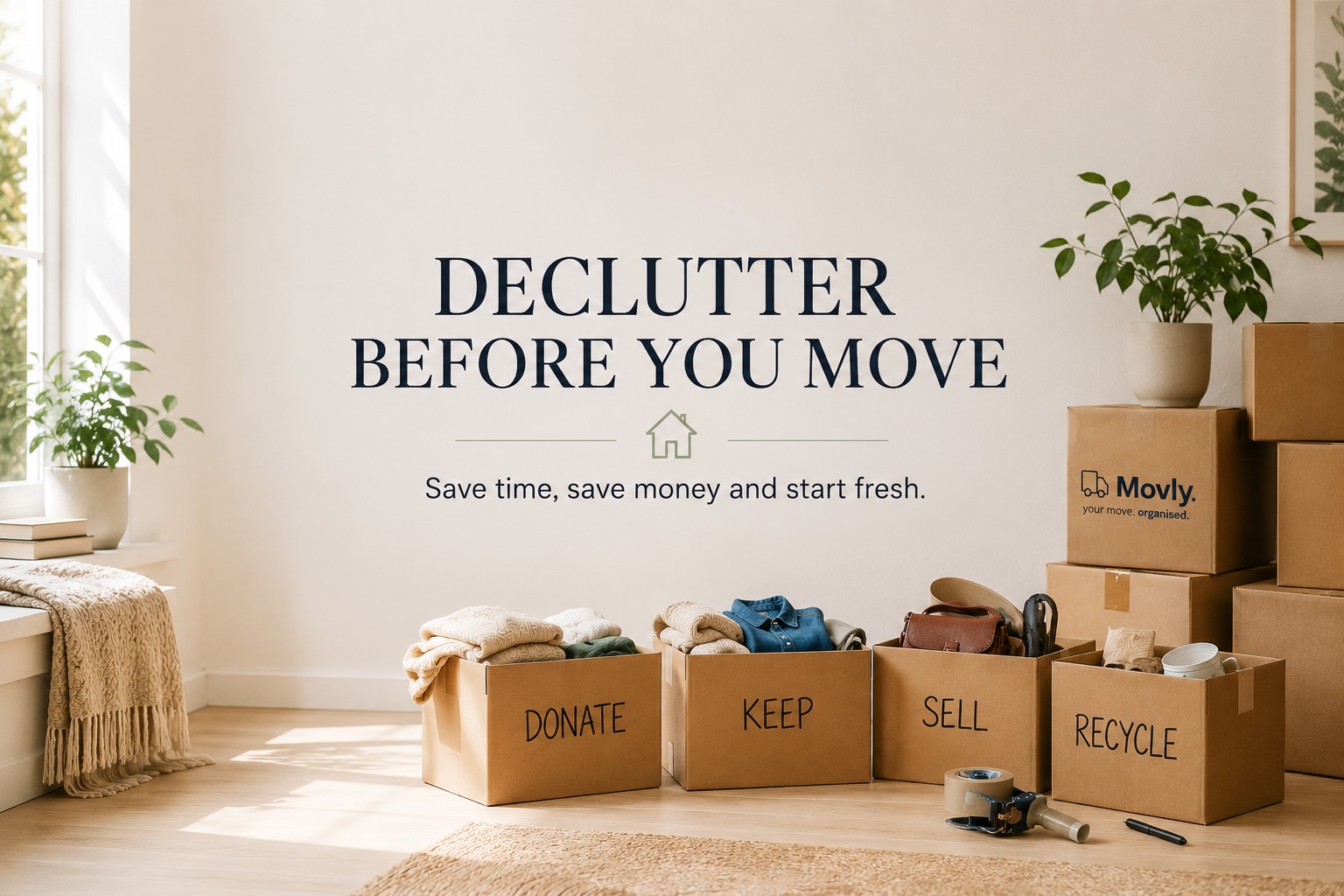
3. Use the Four-Box Method
One of the simplest ways to declutter is to sort every item into one of four categories:
Keep
Items you regularly use, need or genuinely love.
Sell
Valuable items that could generate extra money before your move. Selling unwanted items can help offset some of your moving costs.
Popular platforms include: eBay, Vinted, Gumtree, and Facebook Marketplace.
Recycle or Dispose
Broken, damaged or unusable items.
This method makes decisions quicker and helps prevent moving unnecessary belongings to your new home.
Donate
Items in good condition that could benefit someone else. Many UK charities accept donations of clothing, furniture and household items:
British Heart Foundation – Accepts clothing, furniture, electricals, and homeware through shops and free furniture collection services.
British Red Cross – Accepts clothing, accessories, books, and small household goods in their charity shops.
Sue Ryder – Takes clothing, books, bikes, furniture, and home items to fund palliative care and support services.
Oxfam – Accepts clothing, books, homeware, and sometimes furniture in many shops across the UK.
Furniture & Large Items
Emmaus UK – Accepts furniture and household goods to support people experiencing homelessness.
The Furniture Re-use Network – Connects local organisations that redistribute donated furniture and appliances to families in need.
Toys, Books & General Items
Barnardo's – Accepts toys, clothing, books, and baby items in charity shops.
Scope – Accepts clothing, books, toys, and homeware.
4. Be Honest About What You Actually Use
This is often the hardest part.
Many of us keep things because we think:
"I might need this one day."
In reality, many items sit untouched for years.
A useful question to ask yourself is:
"Have I used this in the last 12 months?"
If the answer is no, it may be time to let it go.
If you're struggling with the decluttering process, Marie Kondo's bestselling book The Life-Changing Magic of Tidying Up offers a helpful perspective on keeping only the things that genuinely add value to your life.
5. Don't Move What You Don't Need
Remember: every extra item means more packing, more lifting and more unpacking.
Moving house is the ideal opportunity to lighten the load and create a fresh start in your new home.
Sometimes the most valuable thing you can take with you is less stuff.
Quick Decluttering Rule
📦 If you haven't used it in the last 12 months and it has no sentimental value, consider donating, selling, recycling or disposing of it.
It's a simple rule that can dramatically reduce the number of unnecessary items you move.
Stay Organised During Your Move
Once you've decluttered your home, keeping track of everything else involved in moving can quickly become overwhelming.
From changing your address and arranging utilities to packing room by room, there are dozens of tasks to remember.
Movly App helps keep everything organised with:
Personalised moving checklists
Helpful reminders
Utility setup guidance
Address change tracking
Local information about your new area
The goal is simple: make moving house less stressful and more organised.
Final Thoughts
Decluttering before moving house is one of the easiest ways to save time, reduce stress and lower moving costs.
Start early, be honest about what you use, and remember that every item you leave behind is one less thing you'll need to pack, move and unpack.
Good luck with your move and enjoy the exciting new chapter ahead. 🏡📦
FAQ:
Is moving house a good time to declutter?
Absolutely. Moving house is one of the best opportunities to reassess what you own and avoid bringing unnecessary items into your new home. Many people find it easier to maintain an organised home after a thorough declutter.
What should I get rid of before moving?
Common items people choose to declutter before moving include:
Clothes they no longer wear
Broken electronics
Old cables and chargers
Duplicate kitchen items
Expired toiletries
Unused furniture
Boxes and packaging kept "just in case"
Should I donate or sell unwanted items?
Both are great options. Donating is usually the quickest way to remove unwanted items, while selling can help you earn extra money towards moving expenses.
How can Movly help with moving house?
Movly App helps keep your move organised with personalised moving checklists, reminders, utility guidance, address change tracking and useful information about your new area, making it easier to stay on top of every moving task.
Sources
British Heart Foundation: British Heart Foundation Declutter Challenge
UCLA Center on Everyday Lives of Families: Research on clutter and stress levels