7 Things to Sort Before Moving Day: The UK Moving Checklist You Don’t Want to Forget
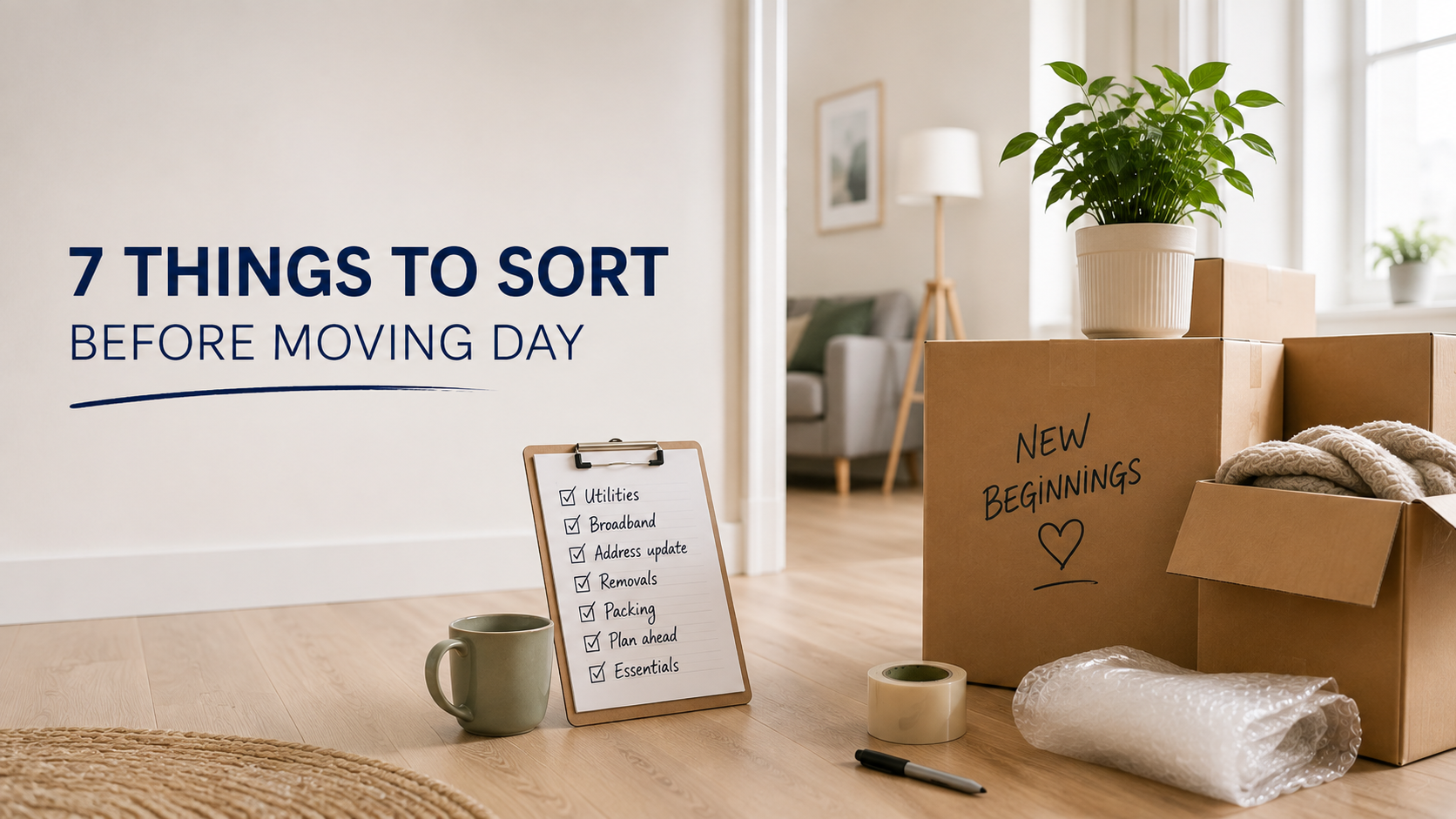
Moving day has a funny way of arriving much faster than expected.
At first, your move feels comfortably far away. Then suddenly you are surrounded by boxes, trying to remember whether you told the energy supplier, wondering when the broadband will be connected and searching through emails for your removal booking.
Packing is only one part of moving house. Some of the jobs that cause the biggest headaches are the less visible ones: utilities, Council Tax, broadband, address changes, cleaning, removals and dozens of smaller tasks competing for your attention.
The easiest way to make moving day feel more manageable is to deal with these jobs before you are standing in a half-empty house wondering what you’ve forgotten.
Here are seven important things to sort before moving day in the UK - and a few ways Movly App can help you keep everything together.
1. Arrange Your Broadband
Broadband is easy to overlook because, unlike packing, there isn't a physical reminder sitting in front of you.
But arriving at your new home without internet can become frustrating very quickly, particularly if you work from home, have children who use streaming services or rely heavily on connected devices.
Before moving, check:
whether your current provider serves your new address
what broadband speeds are available
whether you are still within your existing contract
whether early termination charges apply
when service can be activated at your new property
💙 Movly Tip
Compare broadband providers and arrange your connection through Movly before moving day, so you can get online as quickly as possible after you move
2. Sort Your Gas and Electricity
Energy is one moving task where a few minutes of preparation can prevent billing problems later.
Citizens Advice recommends telling your existing gas and electricity supplier that you are moving and giving at least 48 hours' notice.
On the day you leave, take meter readings, submit them to your supplier and keep a record. You should also provide a forwarding address for your final bill.
I would go one step further: Take photographs of your meters.
It gives you a useful record of the readings when you leave. When you arrive at the new property, take readings there too and contact the property's existing supplier. You will normally initially be supplied under what's known as a deemed contract before deciding whether to remain on that tariff or switch.
Quick moving-day energy checklist
Old home: photograph meters → submit final readings → provide forwarding address.
New home: photograph meters → identify supplier → submit opening readings → review your options.
💙 Movly Tip
You can compare and arrange your gas and electricity suppliers directly through Movly, making it easy to organise your utilities before you move and helping ensure everything is ready when you arrive in your new home.
3. Update Your Council Tax
Council Tax doesn't simply follow you to your new address.
When moving, you should tell the relevant local authority about the change so your Council Tax account can be closed or updated appropriately.
Depending on where you are moving, this may mean notifying:
Your old council that you are leaving, and your new council that you are moving in.
You will commonly need information such as your old and new addresses, your moving date and details about who will be living at the property. Exact requirements vary between councils.
And remember: updating Council Tax doesn't automatically update your details everywhere else. For example, DVLA has separate processes for updating your driving licence and vehicle log book when you change address.
💙 Movly Tip
Instead of trying to remember every piece of moving admin yourself, add these jobs to your Movly moving checklist and work through them one at a time. Moving becomes much easier when you can actually see what you've already completed and what's still outstanding.
4. Start Your Address Changes Before Moving Day
Changing your address sounds like one job.
It isn't.
It can easily become dozens of individual tasks.
Think about:
Money
banks
credit cards
pensions
insurance providers
Government and official records
DVLA
electoral registration
Council Tax
Health
GP
dentist
other relevant healthcare providers
Everyday services
broadband
utilities
subscriptions
deliveries
memberships
Trying to remember every organisation from memory is exactly how important changes get missed. One useful trick is to check your bank statements and email inbox. Regular payments, subscriptions and account emails can reveal companies you've completely forgotten about. Mail redirection can provide an additional safety net while you work through the list, but it shouldn't replace updating important organisations directly.
💙 Movly Tip
Treat changing your address as a mini-project, rather than one checkbox. Movly helps you keep track of the organisations and address-related tasks involved in your move, so you are not relying on memory while simultaneously packing your entire home.
5. Book and Confirm Your Removal Service
Moving everything from one property to another is often one of the biggest logistical parts of moving day. If you are using professional help, don't simply book it and forget about it.
Before moving day, confirm:
arrival time
collection address
destination address
contact number
parking arrangements
access restrictions
stairs or lifts
particularly large or heavy items
what's included in your service
payment arrangements
Also think carefully about access at your new property.
Can the van park nearby?
Are there parking restrictions?
Does an apartment building require you to reserve the lift?
Is there somewhere safe and practical to unload?
These details can seem insignificant several weeks before moving day. At 8am with a van outside your house, they are suddenly very important.
💙 Movly Tip: Need a van or removal service?
You can find and book removal van services through Movly, helping you organise the practical side of your move without jumping between multiple websites. It's part of the idea behind Movly: your moving plan and the services you need to actually complete that move can live together in one place.
Don't Forget About Cleaning
Cleaning isn't technically one of our seven main tasks, but it deserves a special mention because it's very easy to underestimate.
Depending on your circumstances, you might need to arrange:
an end-of-tenancy clean
cleaning before handing over your old property
a deep clean of your new home
carpet cleaning
oven cleaning
general moving-day cleaning
If you are renting, check your tenancy agreement and the property's condition requirements rather than assuming a particular professional service is compulsory. And if you are buying, having your new property cleaned before your belongings arrive can make settling in considerably nicer.
💙 Movly Tip: Need a cleaner?
You can also find and book cleaning services through Movly. So instead of searching for cleaners separately while also dealing with packing, removals and moving admin, you can arrange practical moving services as part of the same moving journey.
6. Plan Moving Day Itself
Most moving checklists concentrate on everything leading up to the move. But moving day deserves its own plan. Think through the day from the moment you wake up in your old property until you go to sleep in your new one. Prepare an essentials bag or box that stays with you rather than disappearing into the removal van.
Consider including:
phone chargers
important documents
medication
toiletries
toilet roll
drinks and snacks
basic cleaning supplies
children's essentials
pet essentials
a change of clothes
basic tools
anything you will need during your first night
And perhaps most importantly: Know exactly where your new keys are coming from.
If you are buying, understand the handover arrangements. If you are renting, confirm collection with your landlord or letting agent.
There are few things less enjoyable than arriving outside your new home with a van full of furniture and no way of getting inside.
💙 Movly Tip
Your moving-day jobs shouldn't live on a random piece of paper. Use your Movly personalised checklist and reminders to keep track of what needs doing and when, so you can concentrate on the actual move rather than constantly wondering:
“What have I forgotten?”
7. Organise Your Packing and Boxes
You can pack everything perfectly and still make unpacking unnecessarily difficult.
The problem usually isn't packing.
It's finding things afterwards.
Instead of writing only:
KITCHEN
try:
KITCHEN -> pans, utensils, baking trays
Better still, number your boxes.
For example:
Kitchen -> Box 04
This becomes particularly useful when you urgently need one specific item.
Imagine arriving at your new home after a long moving day and asking: “Where did we pack the kettle?”
Opening eight kitchen boxes isn't much fun.
💙 Movly Tip: Scan your boxes as you pack
This is exactly why Movly includes Smart Box Tracking. Organise your moving boxes as you pack so it's easier to identify where your belongings are once you arrive. Instead of searching through box after box, you have created an organised record of what you have packed. It turns packing from:
“I'm sure it's in one of these boxes…” into something much more manageable.
Things People Often Remember Too Late
Even organised movers forget things.
Usually, they are not the obvious jobs. They are the little things that don't feel urgent until suddenly they are.
Before leaving, double-check:
meter readings
spare keys
parking arrangements
broadband activation
address changes
Council Tax
prescriptions and medication
pet arrangements
freezer contents
borrowed items
chargers
cleaning arrangements
removal arrangements
And check the less obvious physical places too.
The loft.
The shed.
The garage.
Behind doors.
The dishwasher.
The washing machine.
The garden.
That box in the cupboard you haven't opened for three years has an incredible ability to become important approximately ten minutes after the removal van leaves.
Your Moving Timeline
4–8 Weeks Before Moving
Start decluttering, create your moving checklist, research or arrange removals, check broadband availability and begin working through the bigger jobs.
This is also a good point to set up your move in Movly, so your checklist and upcoming tasks are organised before things become hectic.
2–4 Weeks Before Moving
Start packing non-essential belongings, work through address changes and confirm the services you will need.
If you are going to need a removal van or cleaner, don't leave arranging them until the last moment.
1 Week Before Moving
Confirm your removal arrangements, prepare your essentials box, check access and parking and aim to have most non-essential belongings packed.
48 Hours Before Moving
If you haven't already done so, notify your existing energy supplier.
Review your checklist and make sure valuables, medication and important documents won't accidentally disappear into the removal van.
Moving Day
Take final meter readings.
Keep keys and documents accessible.
Check every room.
Keep your essentials with you.
And before you close the door for the final time:
Check the loft one more time.
Seriously.
Why Moving House Feels So Difficult to Organise
The difficult part isn't necessarily any individual moving task. It's the number of unrelated things happening simultaneously.
You might be arranging broadband while packing the kitchen, waiting for your solicitor, changing your address, finding a cleaner, arranging a removal van and trying to remember whether somebody needs to read the electricity meter.
Individually, they are manageable. Remembering all of them at the right time is harder. That's where having one organised moving system becomes considerably more useful than relying on memory.
Your Whole Move. One App. 💙
This is exactly why we created Movly.
Moving house isn't just about packing boxes.
It's checklists. Reminders. Broadband. Utilities. Address changes. Cleaning. Removals. Boxes. Your new area. And dozens of smaller jobs that suddenly need your attention at the same time.
Instead of keeping one checklist on your phone, removal details in an email, utility information somewhere else and handwritten notes scattered around the house, Movly helps bring your move together in one place.
Use Movly to help:
✓ Follow your personalised moving checklist
✓ Keep track of important tasks and reminders
✓ Organise your belongings with Smart Box Tracking
✓ Manage moving-related utilities and services
✓ Explore broadband and utilities options
✓ Find and book cleaning services
✓ Find and book removal van services
✓ Explore useful information about your new area
The idea is simple:
You don't have to remember everything. Movly will. 💙
Frequently Asked Questions
What should I organise first when moving house?
Start with anything requiring advance booking or something that could cause problems if left until the last minute.
Removal services, broadband, utilities and important moving administration should generally be tackled early.
Packing can happen gradually. Finding an available removal service the night before moving day is considerably more difficult.
When should I tell my energy supplier I'm moving?
Citizens Advice recommends giving your gas and electricity supplier at least 48 hours' notice before you move.
Take final readings when leaving your old property and opening readings at the new one. Keeping photographs of both readings is also sensible.
Should I book a cleaner when moving house?
It depends on your property and circumstances.
Some people clean themselves, while others arrange professional help for an end-of-tenancy clean, their old property or the new home before unpacking.
If you are renting, check your tenancy agreement and the required condition of the property.
Movly users can find and book cleaning services through the app, keeping this alongside other moving tasks.
Can I arrange removals through Movly?
Yes. Removal van services can be found and booked through Movly, allowing you to organise practical moving services alongside the rest of your move.
Do I need to tell the council when I move?
Yes. You should notify the relevant council about your move so that your Council Tax account can be dealt with correctly.
Remember that this doesn't automatically change your address with every government service. For example, DVLA address changes are handled separately.
How early should I arrange broadband before moving?
Start investigating broadband several weeks before moving rather than waiting until the final few days.
Availability and speeds can vary by address, and some connections may require additional arrangements.
Movly can help you keep broadband alongside the other tasks involved in preparing your new home.
What should I keep with me on moving day?
Keep anything you would struggle to manage without for several hours or overnight.
That might include keys, identification, documents, medication, chargers, valuables, toiletries, snacks and essentials for children or pets.
Do not put irreplaceable documents or essential medication somewhere inside a removal van full of boxes.
What's the best way to organise moving boxes?
Label boxes with both the destination room and a description of their contents.
For example:
Box 12 - Kitchen -> kettle, mugs, tea & coffee
Movly's Smart Box Tracking can take this organisation further by helping you keep track of your packed belongings during the move.
What are the most commonly forgotten moving tasks?
People often remember the obvious physical jobs, such as packing, but overlook administrative tasks including address changes, Council Tax, meter readings, broadband, parking arrangements and final account updates.
Cleaning and access arrangements for removal vehicles can also get left surprisingly late.
How can I make moving house less stressful?
Start earlier than you think you need to.
Break the move into smaller stages and keep your tasks organised in one central place instead of relying on memory, separate notes and endless browser tabs.
That's ultimately what we designed Movly to do:
Plan the move. Know what's next. Get it done. Start enjoying your new home.
References
For the published article, I would keep the references authoritative and UK-specific:
GOV.UK - Council Tax guidance
Citizens Advice - Moving home and your energy supply
Citizens Advice - Moving home and your water bills